DIY Tiny House build stories

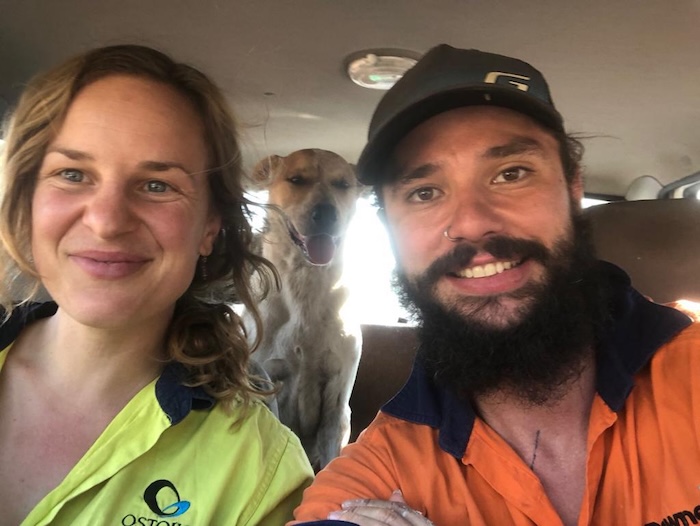
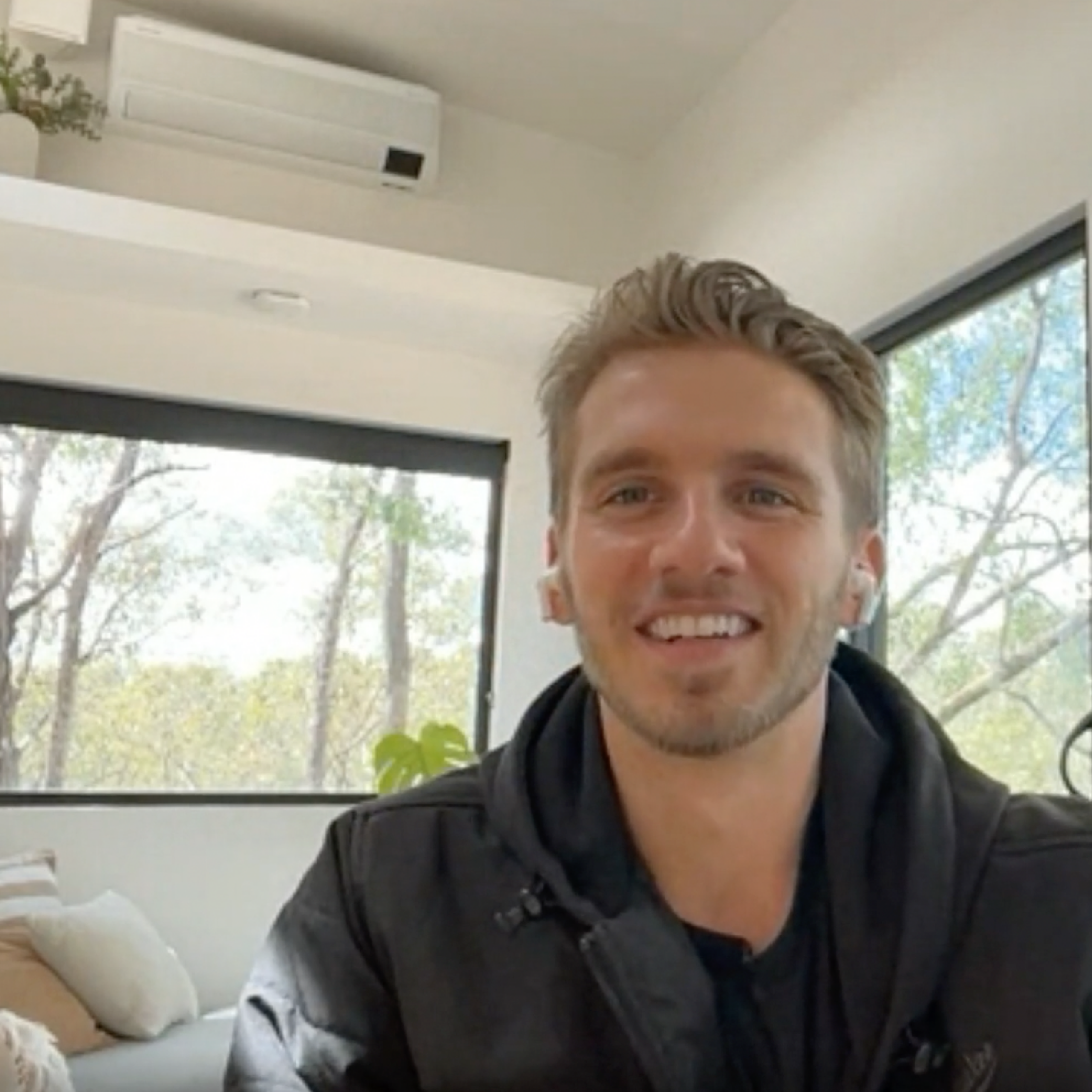
Aaron & Amanda: DIY Tiny House Expanding Candid Tiny House E2, S3

DIY Tiny House build stories
Candid Tiny House podcast

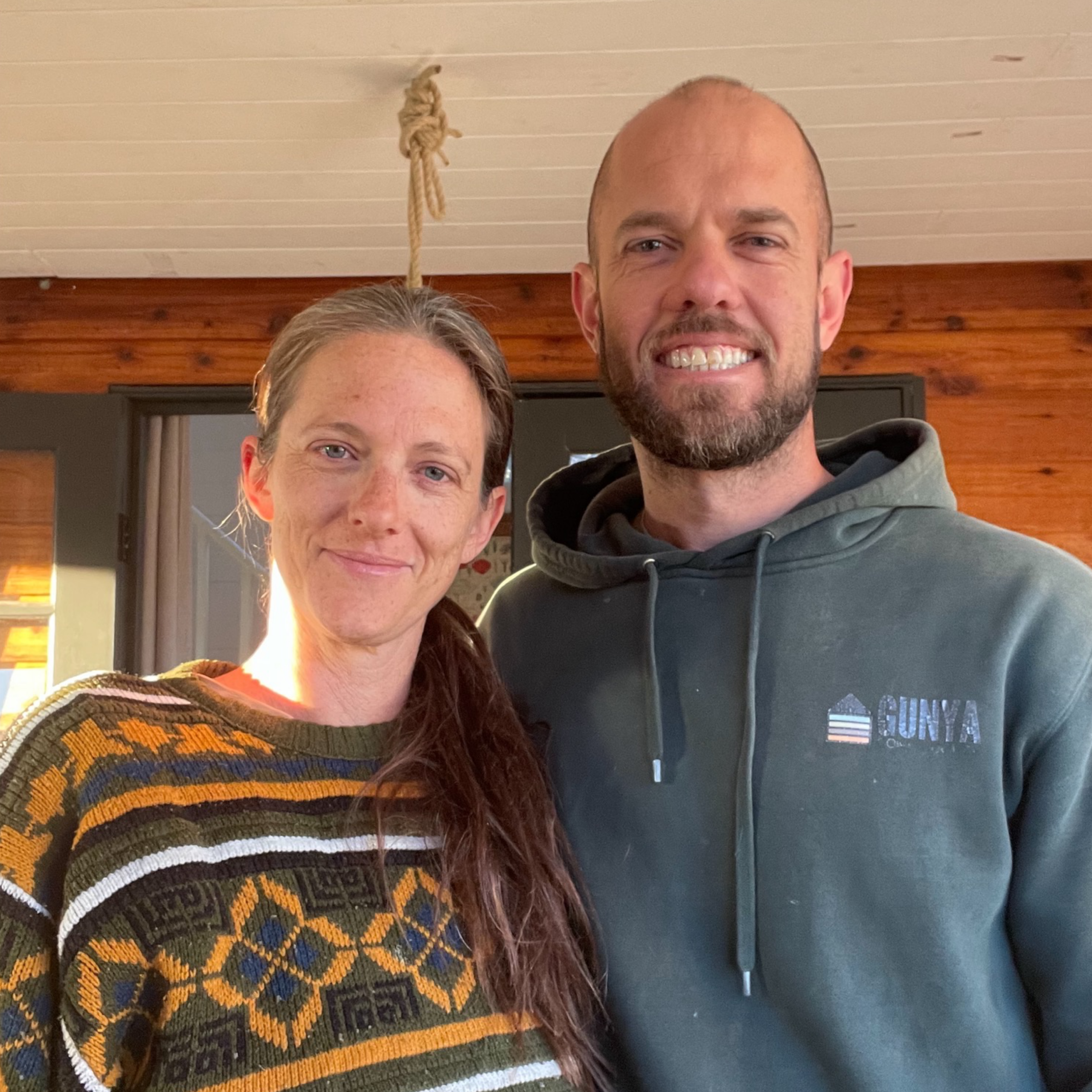
Aaron & Amanda

Candid Tiny House Podcast E2, S3

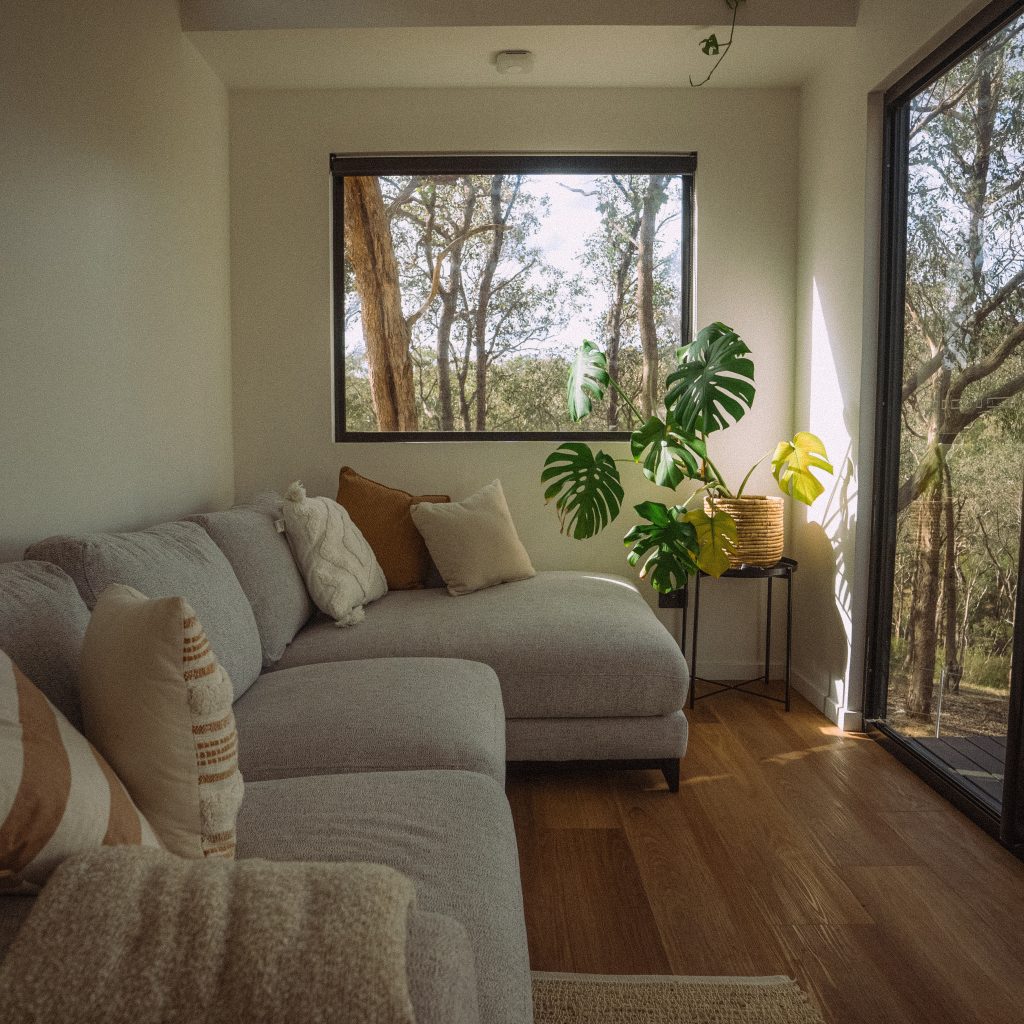
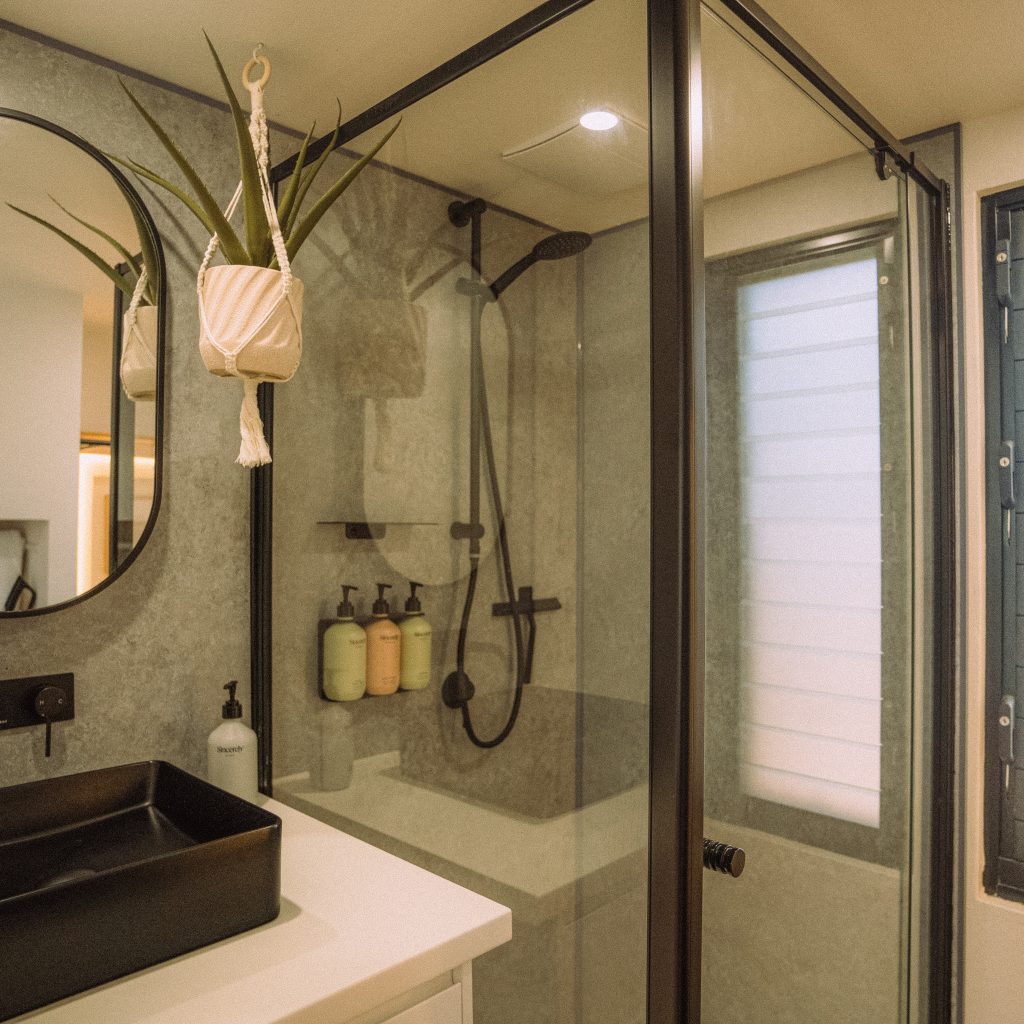
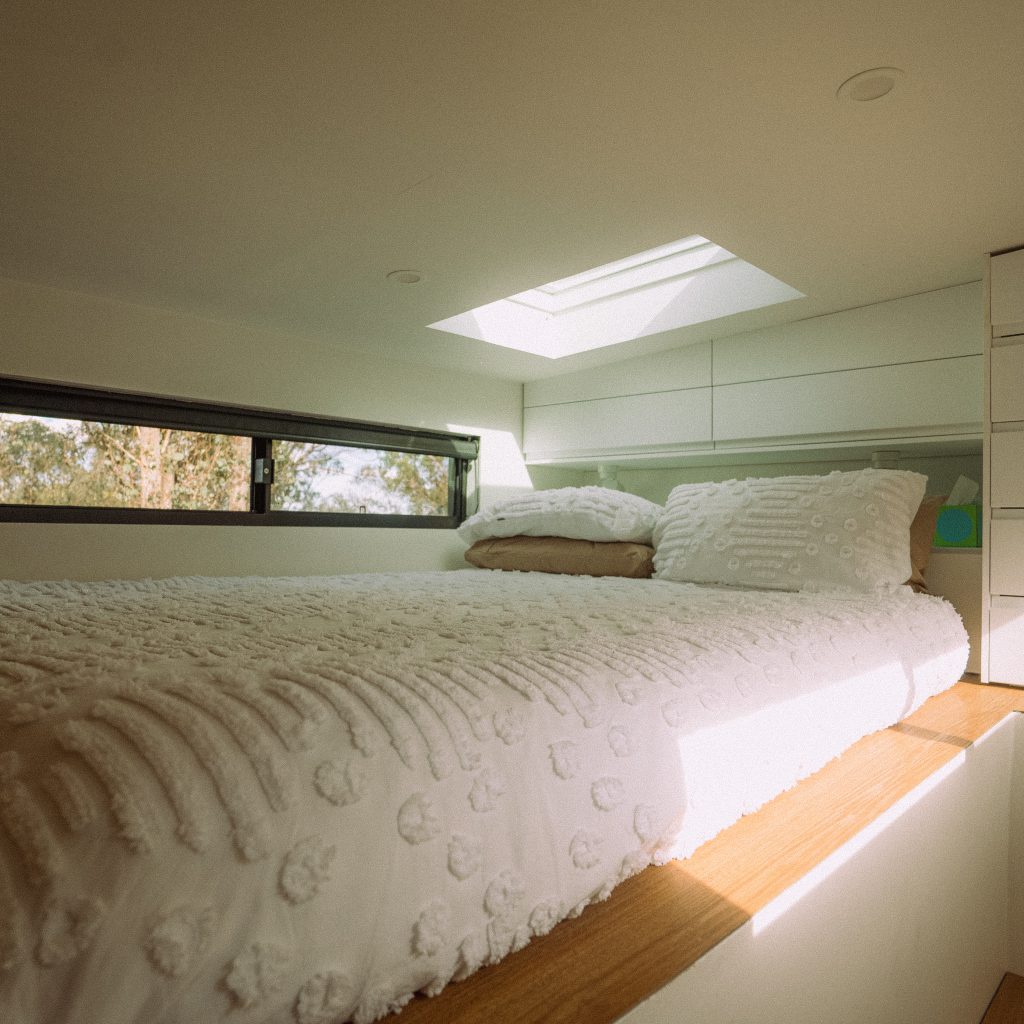
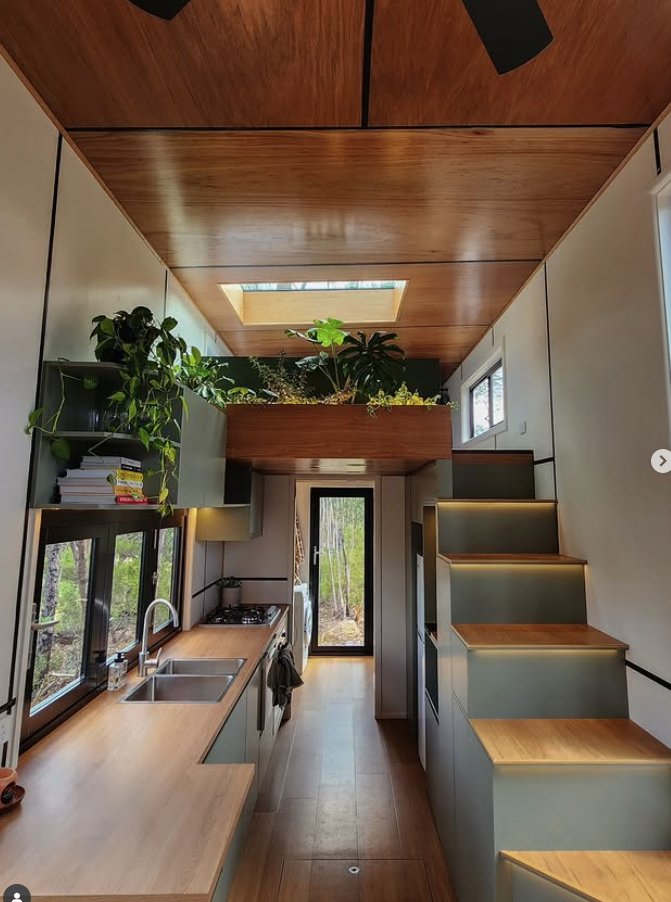
A DIY Tiny House that Expands and Evolves...

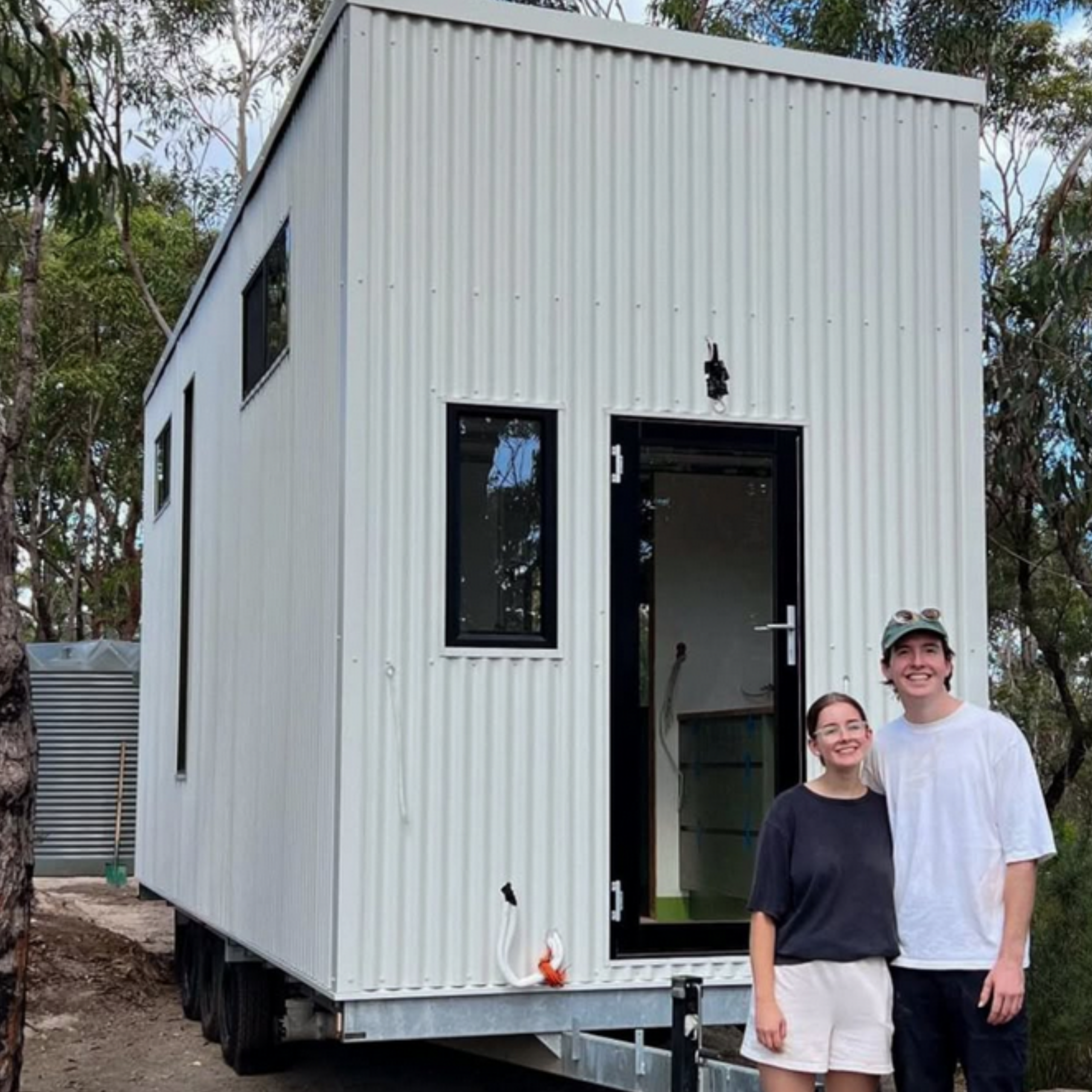
When Aaron and Amanda set out to build their tiny house on wheels, they weren’t chasing perfection.

They were chasing possibility.

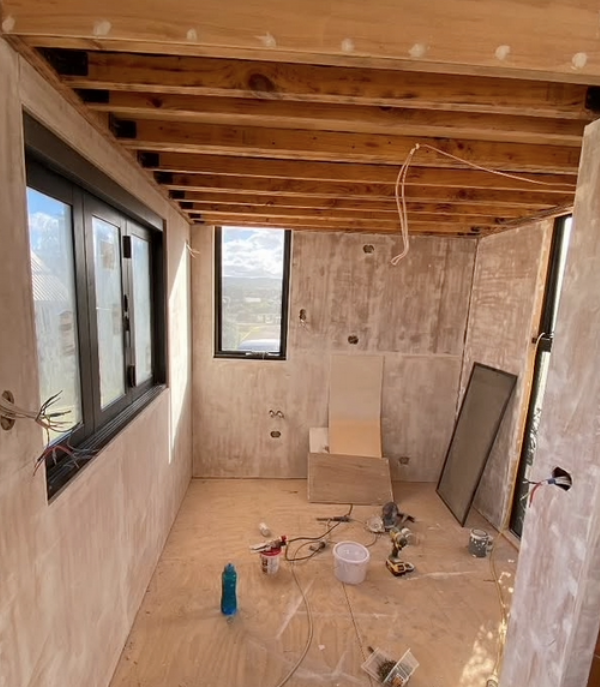
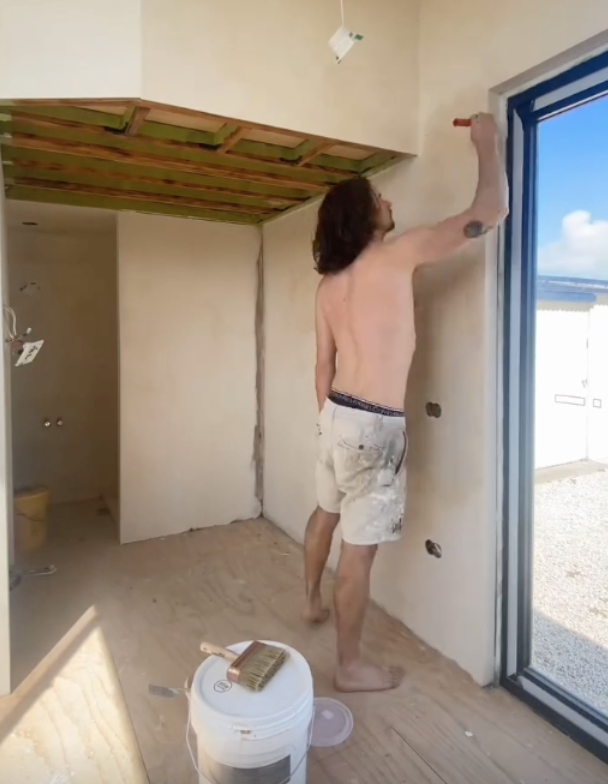
With Aaron’s background as a carpenter and the steady support of his dad—a retired builder—they had the skills, the space, and the determination to make it happen. But what unfolded wasn’t a clean, linear build. It was something far more honest—and far more valuable for anyone considering a DIY tiny house in Australia.

Because this isn’t just a story about building a tiny house.

It’s about what happens after.


“You Might Have the Skills… But Not These Skills”

For many tradespeople, a tiny house on wheels can feel like familiar territory.

Timber framing. Cladding. Fixing out interiors.

But Aaron is quick to offer a reality check.

“And I think almost a little bit of having to swallow your own pride too. Like oh, I’m a builder, or I’m a carpenter, I know how to do this, but it’s almost like—well, yeah, you may have a skill set but you don’t necessarily have a skill set that’s within this category. You might have to learn a few new things too.”

A tiny house on wheels isn’t just a small house.

It’s a structure that behaves like a vehicle—where weight, movement, and constraints change everything. And that shift in mindset is often one of the biggest hurdles for experienced builders stepping into the tiny house space for the first time.


Social Media vs Reality: The Weight Problem No One Sees

Like many people drawn to tiny house living, Amanda began with inspiration.

Beautiful, polished images. Clean lines. Light-filled interiors.

But behind those images was something less visible—and far more critical.

Weight.

“And that’s what I was looking at—the polished versions. I’m like ‘oh, we could do this!’ and Aaron’s like ‘it just does not look the right weight’. So that was a learning as well, because what you see is social media versus reality… I would be showing him these beautiful glossy houses, but Aaron was learning—there’s no way that looks underweight.”

It’s a common disconnect in the tiny house world.

What looks good online doesn’t always translate to something that can legally and safely travel on Australian roads. And for Aaron and Amanda, that tension between inspiration and feasibility became a defining part of their build.


A Build Without a Blueprint

Unlike many builds that start with detailed plans and fixed budgets, this one unfolded in real time.

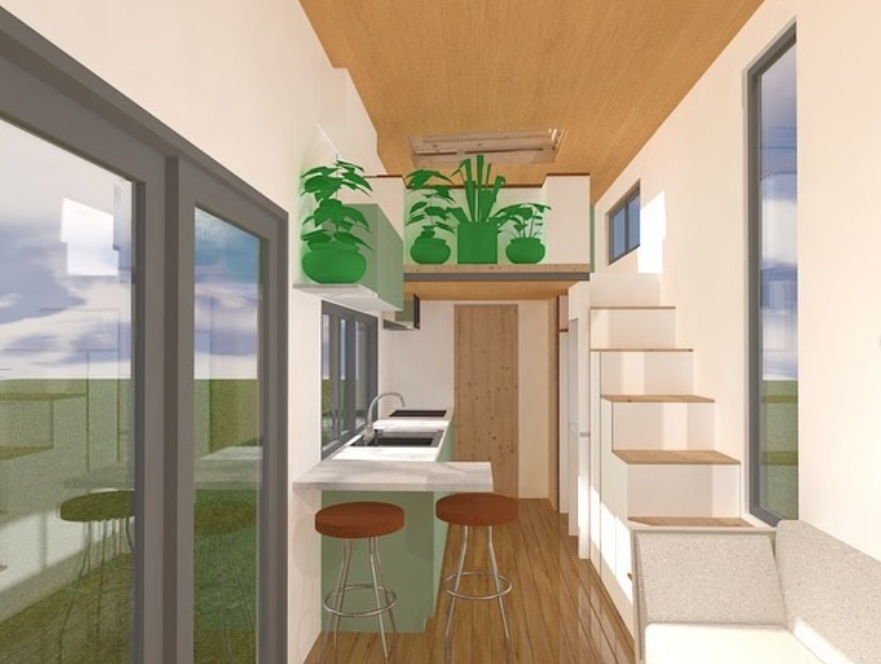
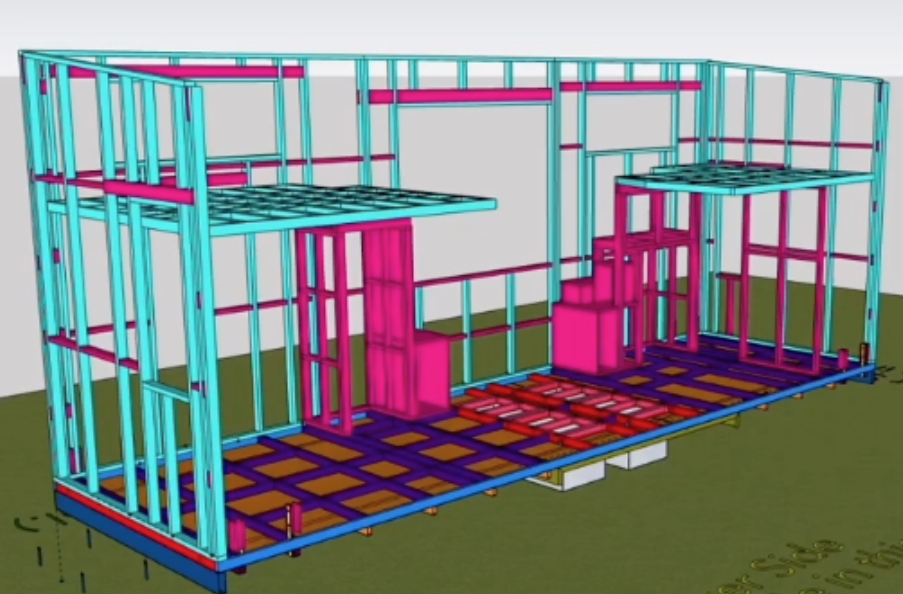
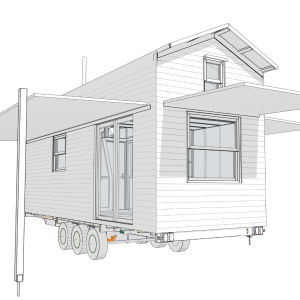
“We didn’t have a strict budget or a design. Like—we sat down and sketched it out, and we built a little 3D model with a hard cardboard you can get from Officeworks. We sort of glued that together. But we were very hap-hazard with this build.”

Amanda laughs as she reflects on how far they drifted from that original vision:

“Very ad-hoc, as we went. Because our house looks nothing like that little 3D thing! We changed it so many times along the way.”

This flexibility gave them freedom—but it also introduced trade-offs, some of which only became clear once they were living in the space.


The Hidden Cost of Reclaimed Materials

Like many tiny house builders, Aaron and Amanda were drawn to reclaimed materials.

It felt sustainable. Affordable. Full of character.

But the reality was more complicated.

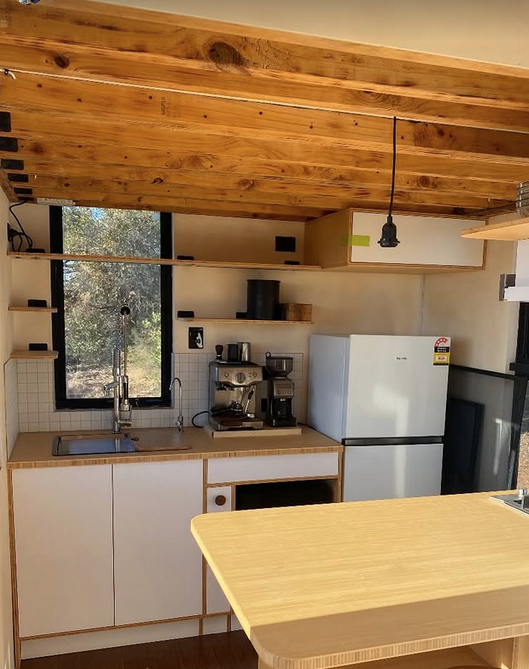
Second-hand French doors seemed like a great find—until they spent countless hours stripping lead paint, repainting, installing… and then living with the consequences.

Drafts. Air leaks. Ongoing inefficiency.

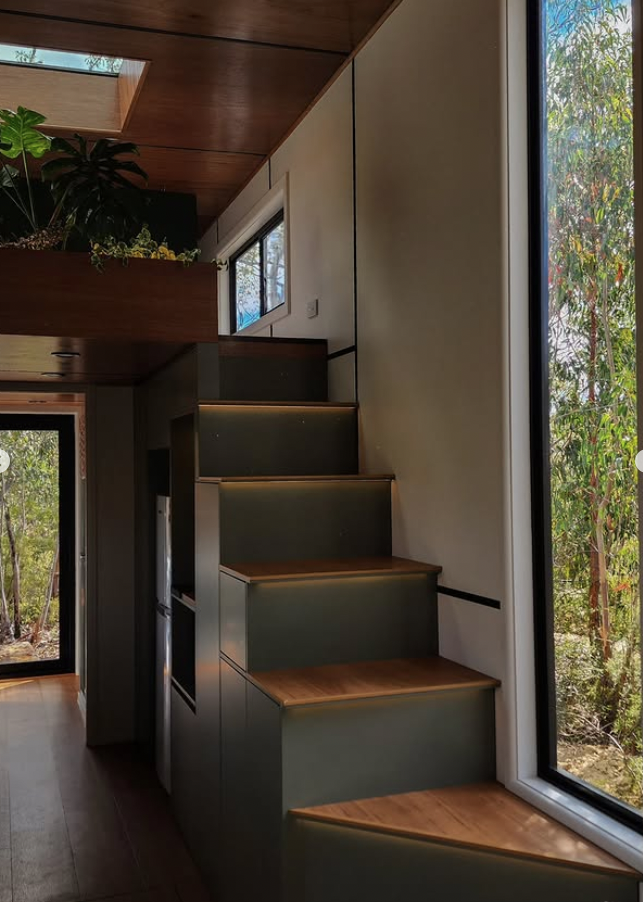
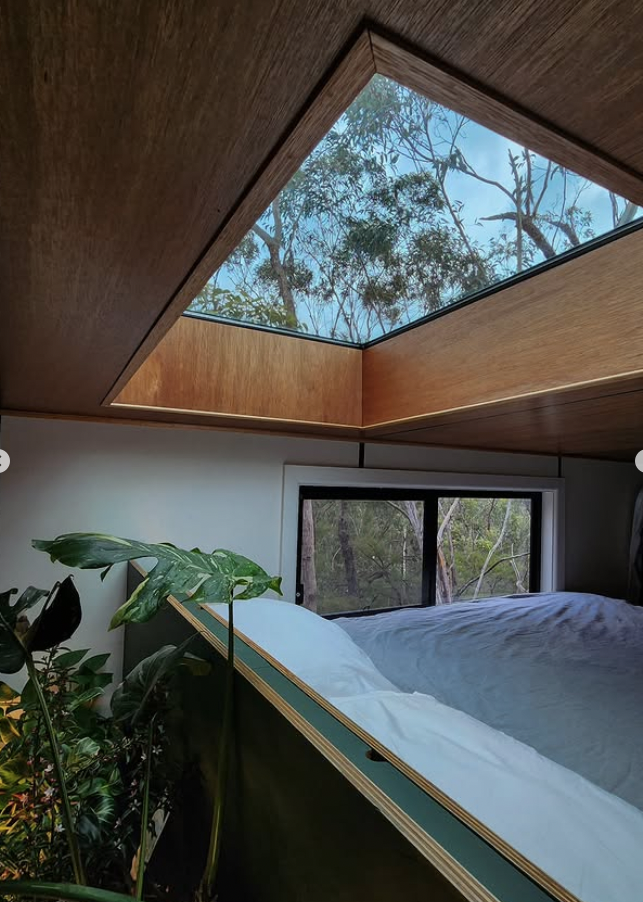
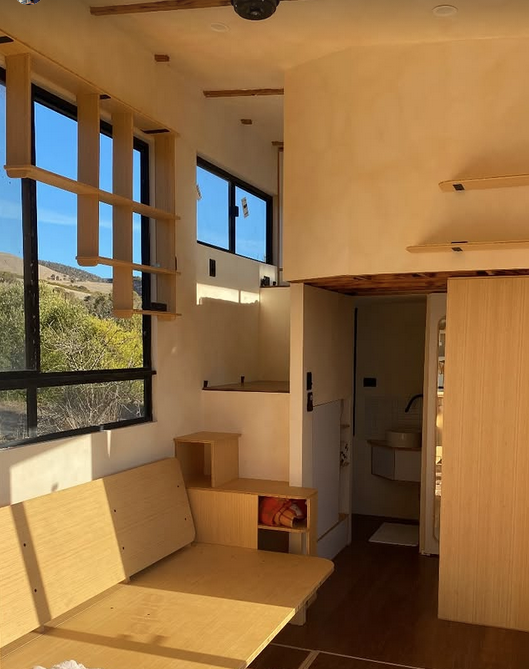
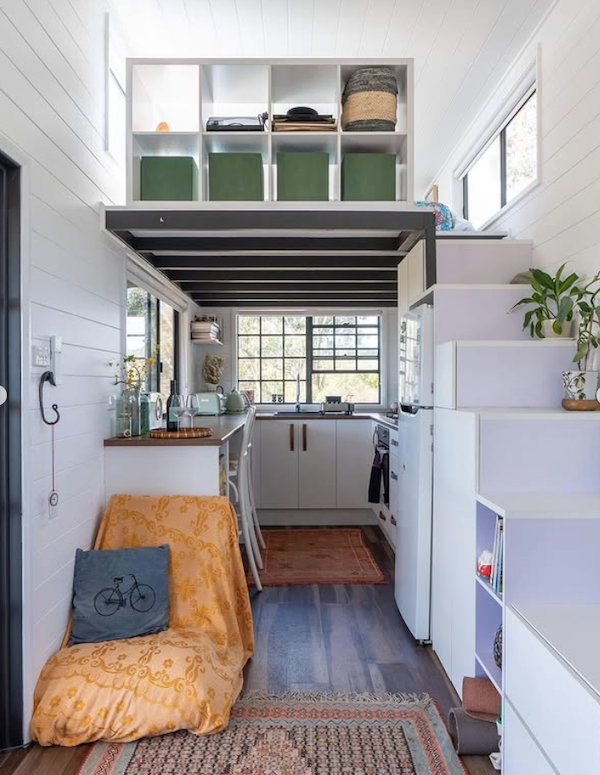
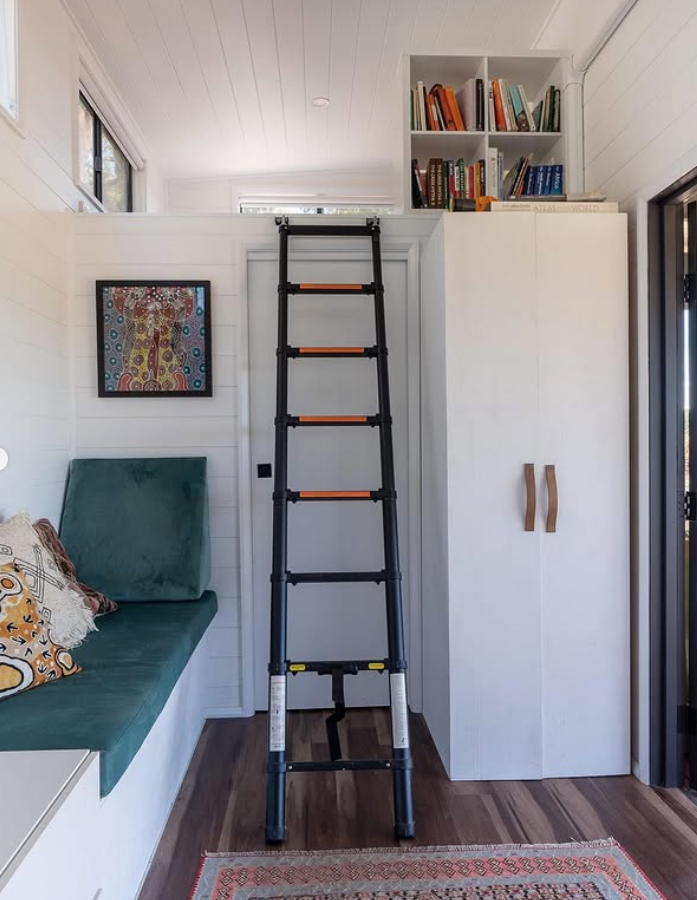
Similarly, reclaimed windows shaped more than just the look of the house—they dictated the structure itself. The height of those windows determined the loft height, ultimately leaving Aaron with less space than he would have liked.

In a conventional build, these compromises might be manageable.

In a tiny house, every millimetre matters.


“There’s No Escape in a Tiny House”

Tiny house living is often romanticised as simple, peaceful, and freeing.

And it can be.

But it also comes with a level of intensity that’s hard to understand until you experience it.

“There’s no escape in a tiny house. In every room you are in that same room.”

It’s a simple statement—but it captures one of the most overlooked aspects of tiny living.

Space isn’t just physical. It’s emotional. Psychological. Relational.

And over time, that reality shapes how people use—and adapt—their homes.


From Tiny House to Expanding Home

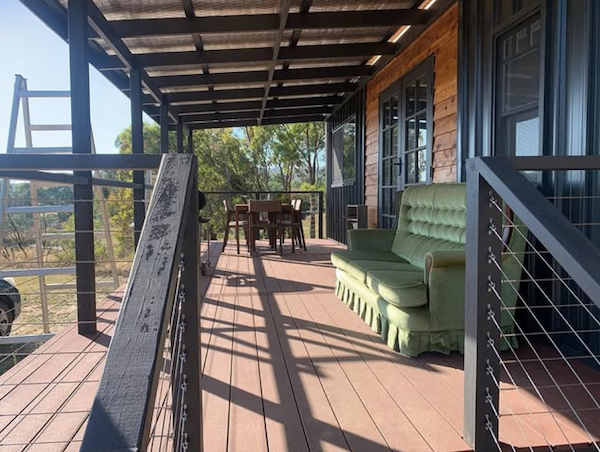
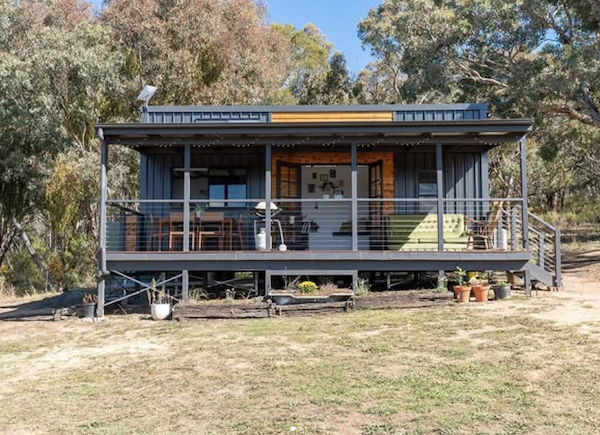
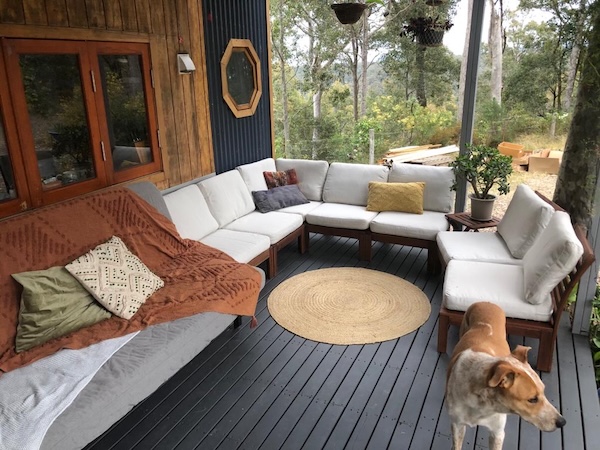
After completing their build and living in it for a while, Aaron and Amanda built a deck and then they roofed it.

And in doing so, they didn’t just add outdoor space—they fundamentally changed the performance of their tiny house.

“We noticed when we first moved down here—we have a deck on the house now with a roof, which is shading quite a lot of the house from the, because we’re north facing, from that northern sun, and that deck has cooled the house down tremendously. But before that we were just getting baked. And because our house is monument so it’s dark anyway and it’s drawing heat, we were really, really hot.”

In the Australian climate, this kind of adaptation isn’t just about comfort—it’s about livability.

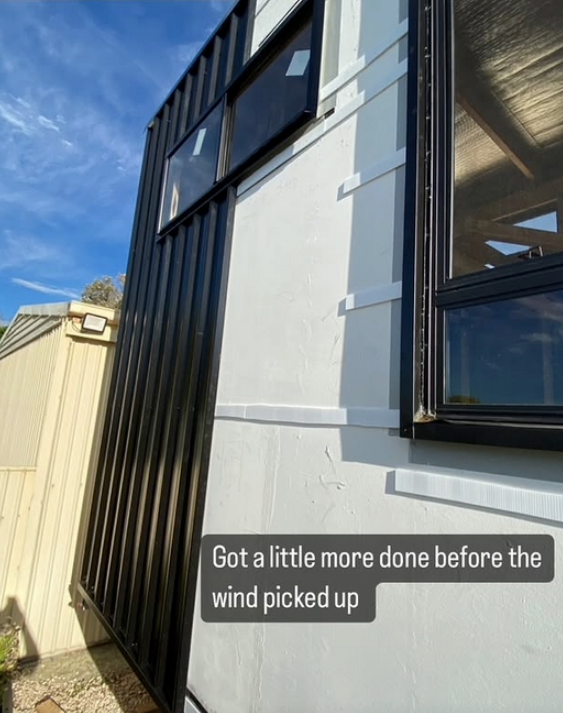
Dark external cladding, like Monument, can absorb significant heat. Without adequate shading, tiny houses can quickly become uncomfortably hot, especially in summer.

The addition of the deck—and crucially, the roof—created shade, reduced heat gain, and introduced a new kind of living space that extended beyond the trailer itself.


Building Together

Behind every stage of the build was a quiet but powerful factor: support.

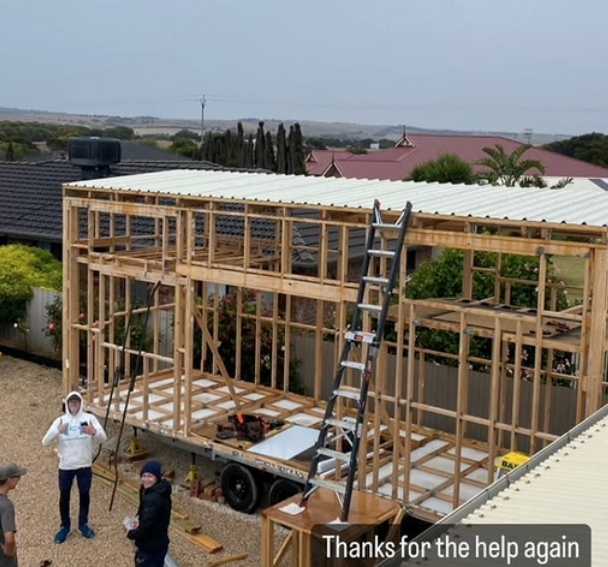
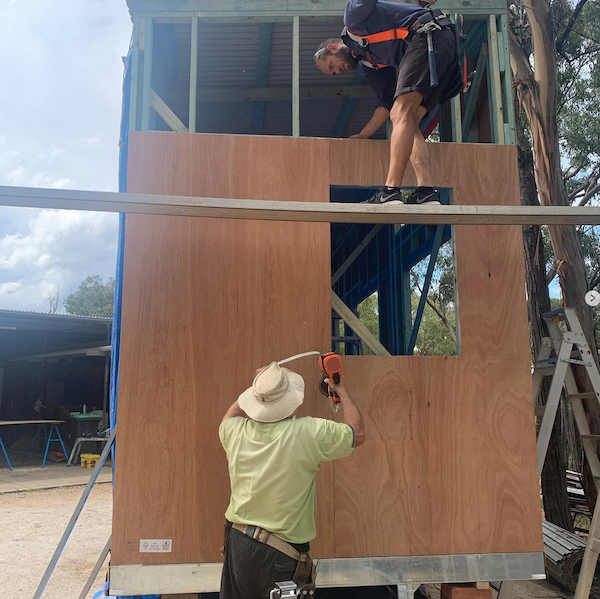
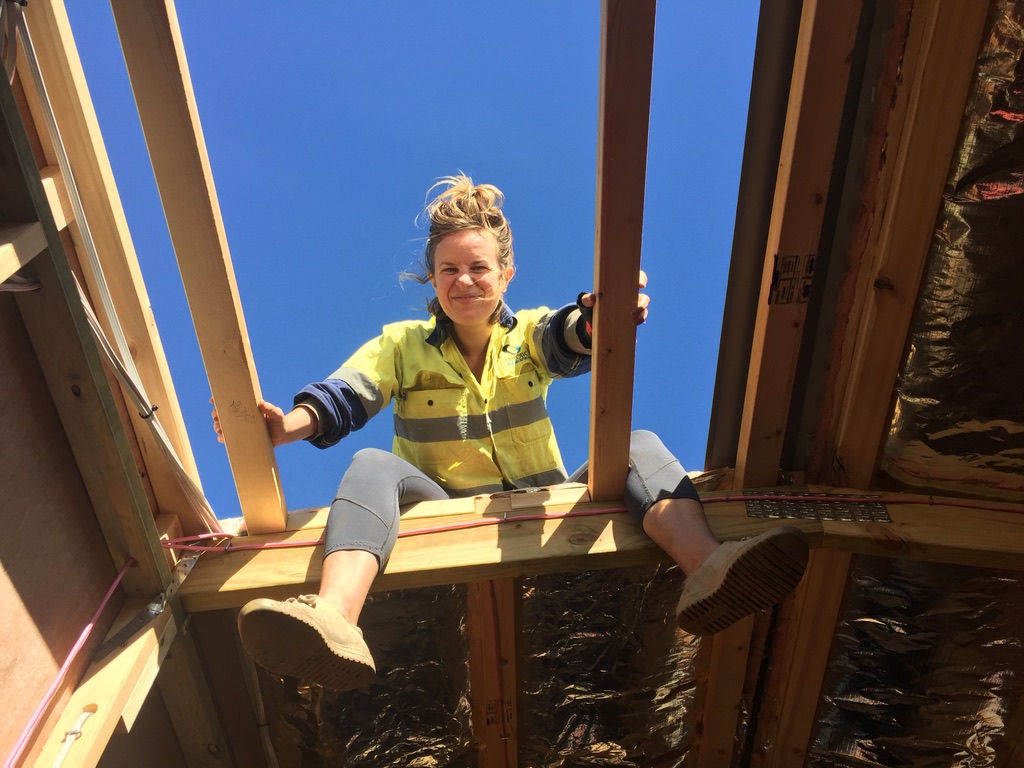
“My father is a licensed builder so that helps, straight off the bat, and the ability to be able to build it on family property, that was another huge help… And there are a lot of tasks that just require two people. You can’t do it by yourself. And when you’re at heights, it’s even more dangerous, so he was a massive help.”

Tiny house builds are often portrayed as solo projects.

But in reality, they’re rarely done alone.

Whether it’s lifting walls, installing roofing, or simply staying safe on site, having another set of hands—and someone you trust—can make all the difference.


A Tiny House That Keeps Changing

Three years on, Aaron and Amanda are still living in their tiny house—but the building hasn’t stopped. 

Like many tiny houses, it didn’t reach a final, finished state and stay there. It kept evolving. Adjusting to the climate. Responding to what worked—and what didn’t. Growing alongside the family living in it, and expanding to accommodate them!

Because this is the part of the tiny house journey that rarely makes it onto social media—the long-term reality. The iterations. The refinements that only come after years of living in a small space.

And to see where their tiny house has landed now…

You’ll need to watch the episode, above.


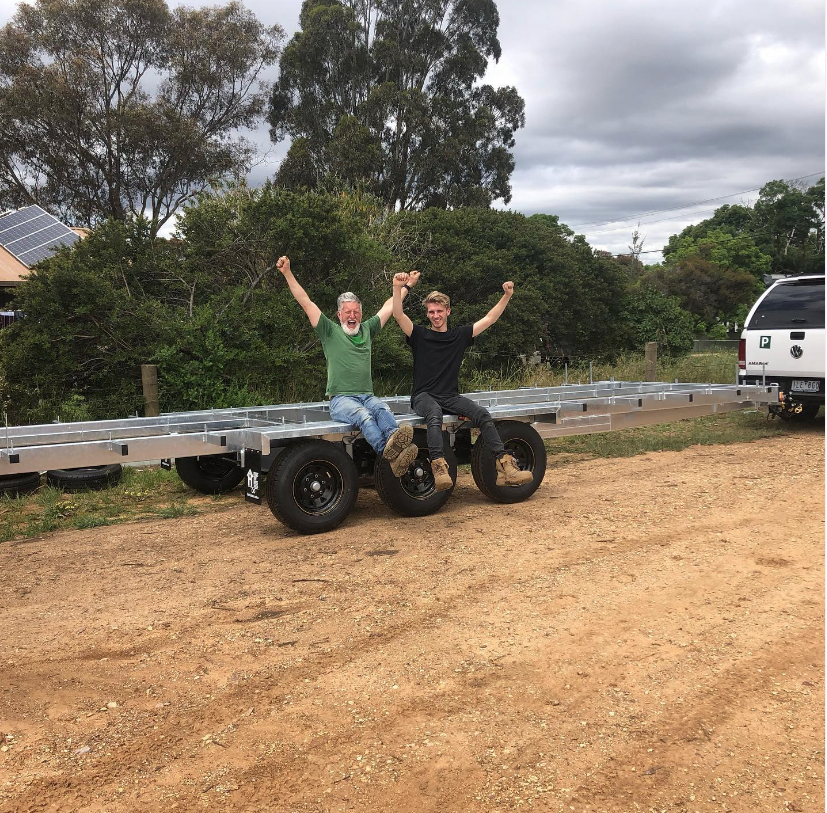
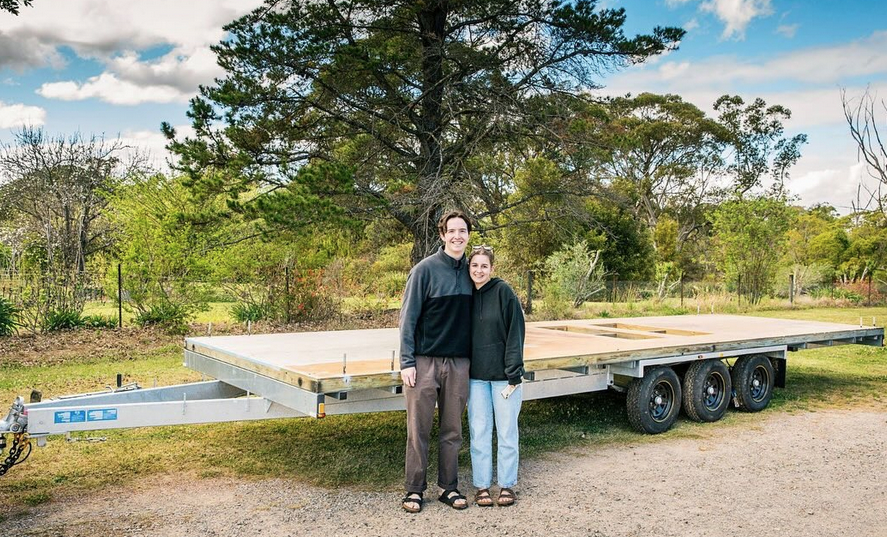
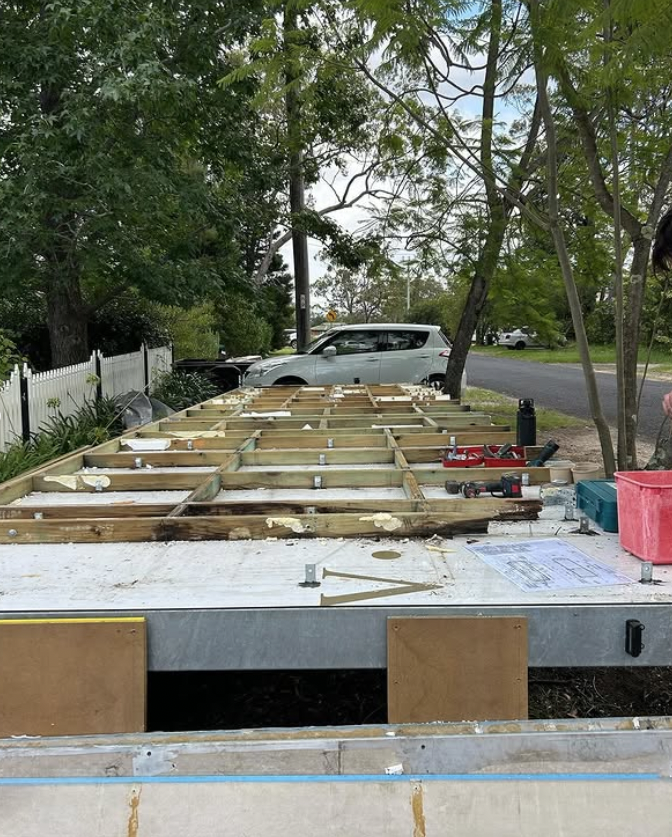
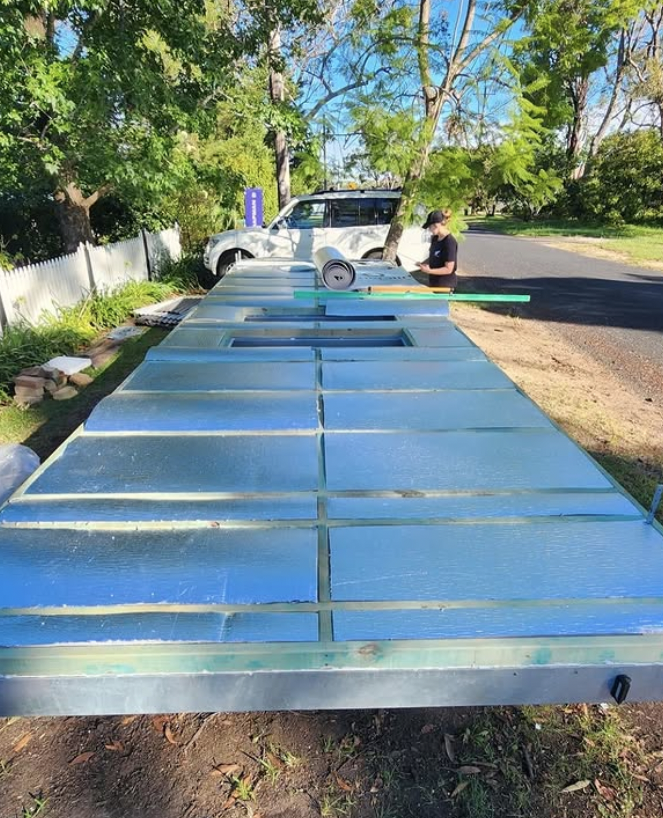
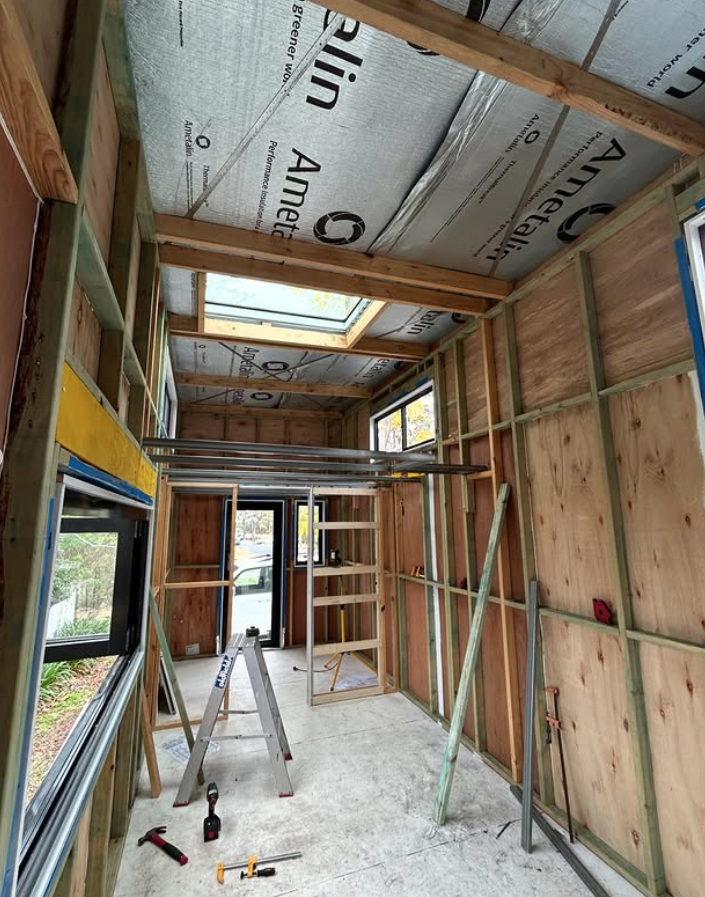
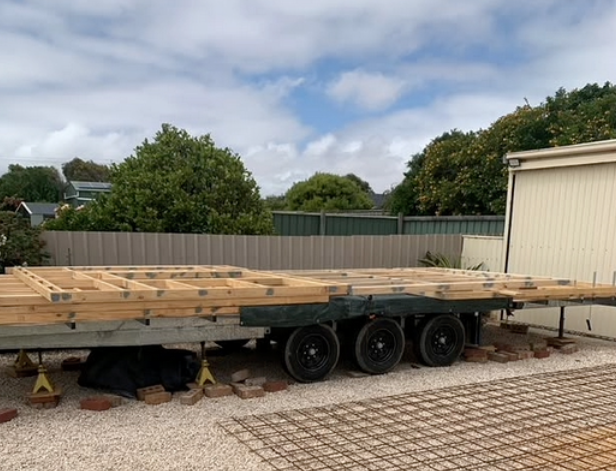
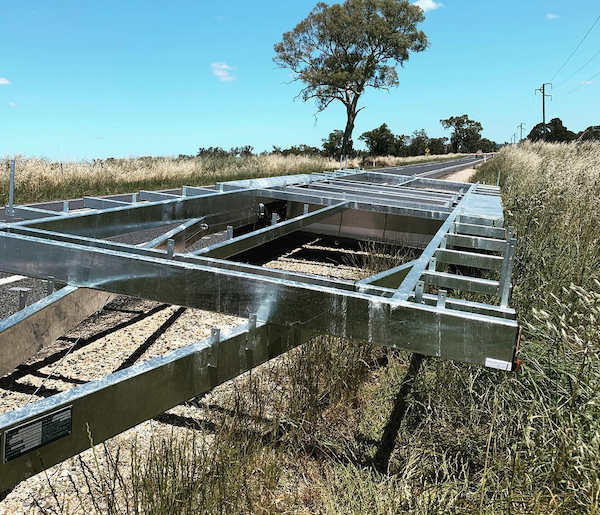
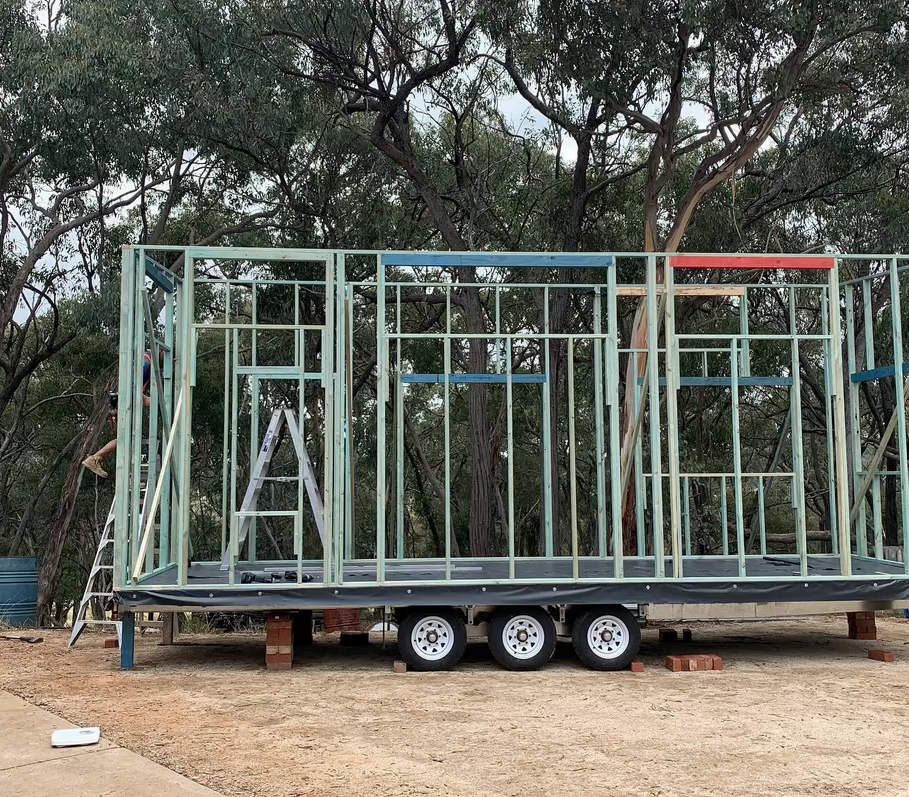
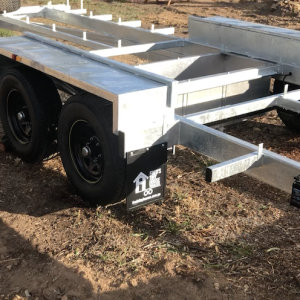
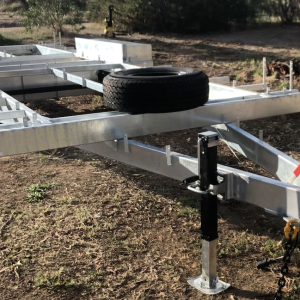
tiny_house_trailer_transport_hot_dip_galvanised_8_meters
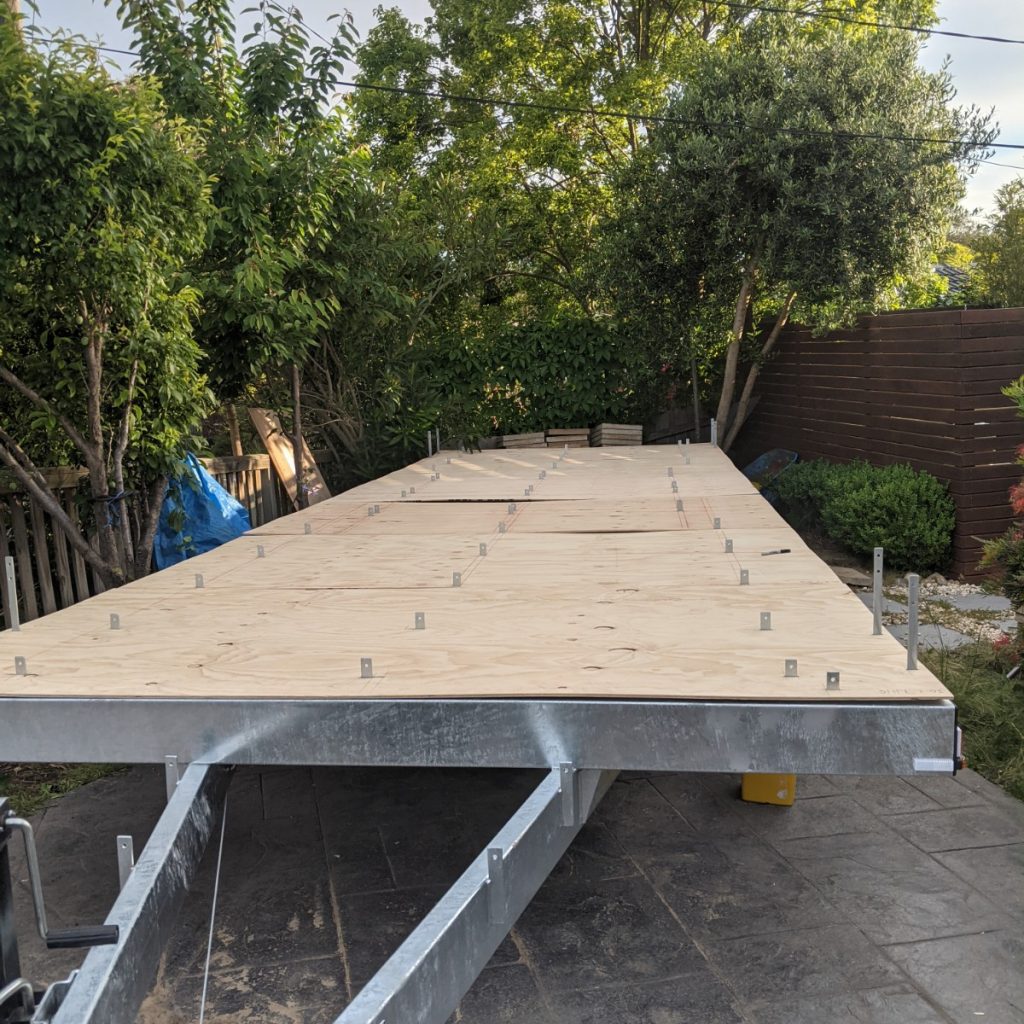
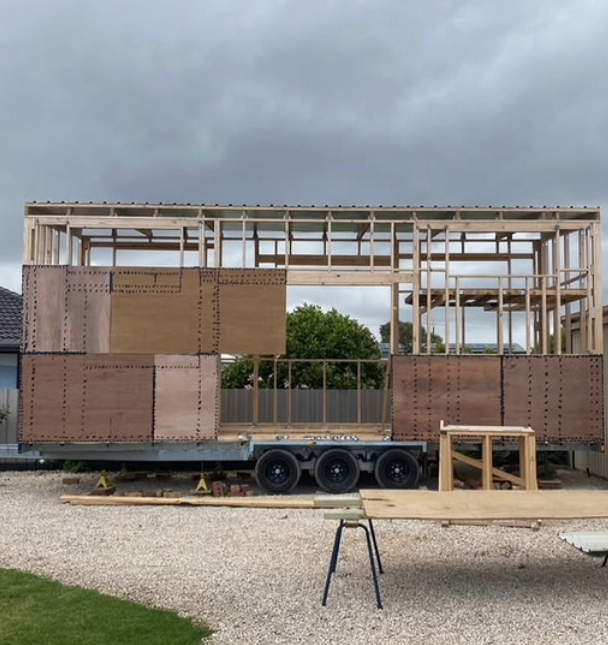
tiny_house_diy_plywood_bracing
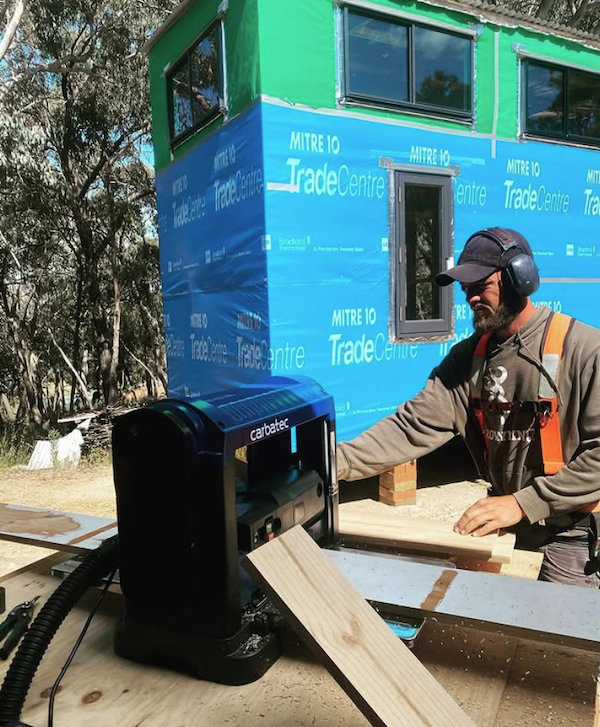
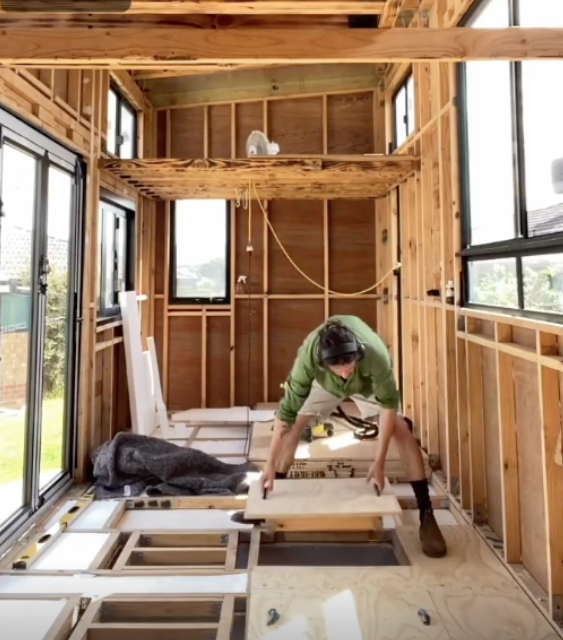
tiny_house_diy_carpenter_8_meter_tiny_house
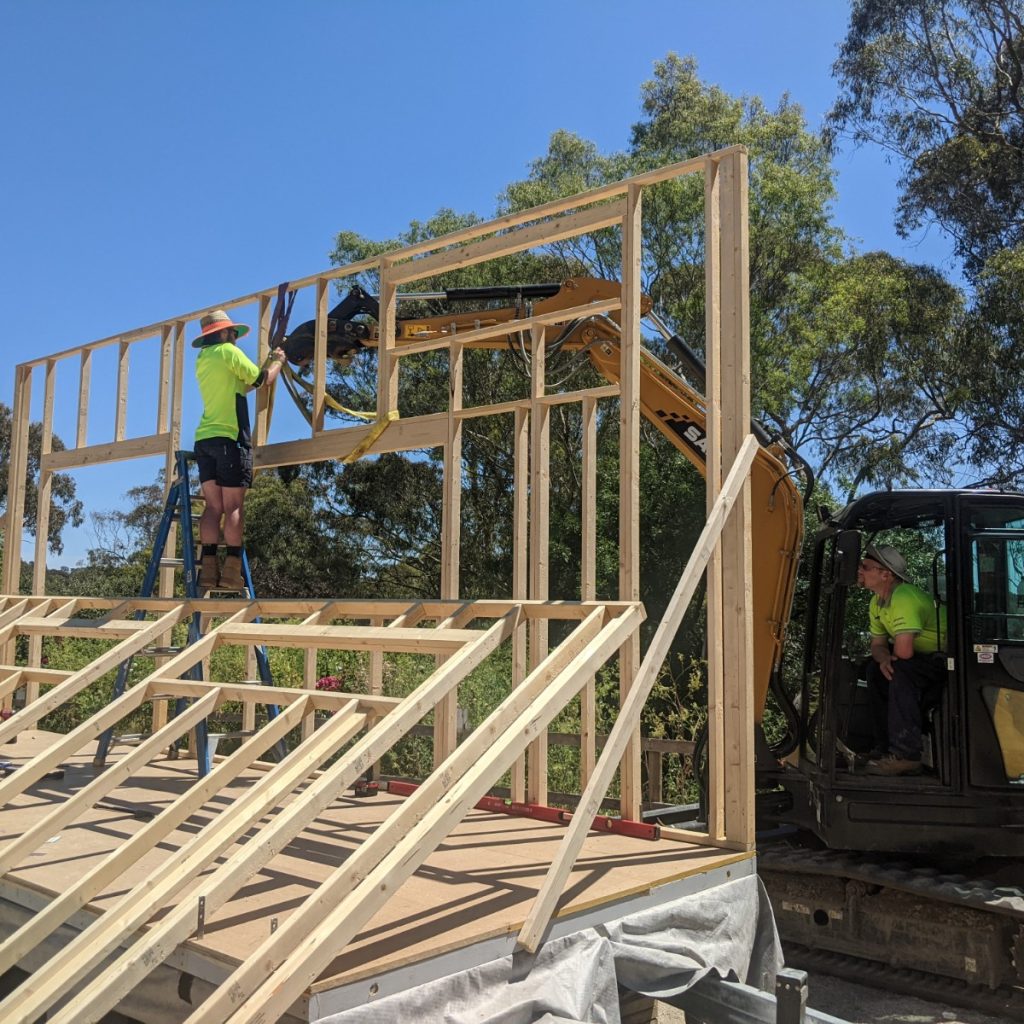
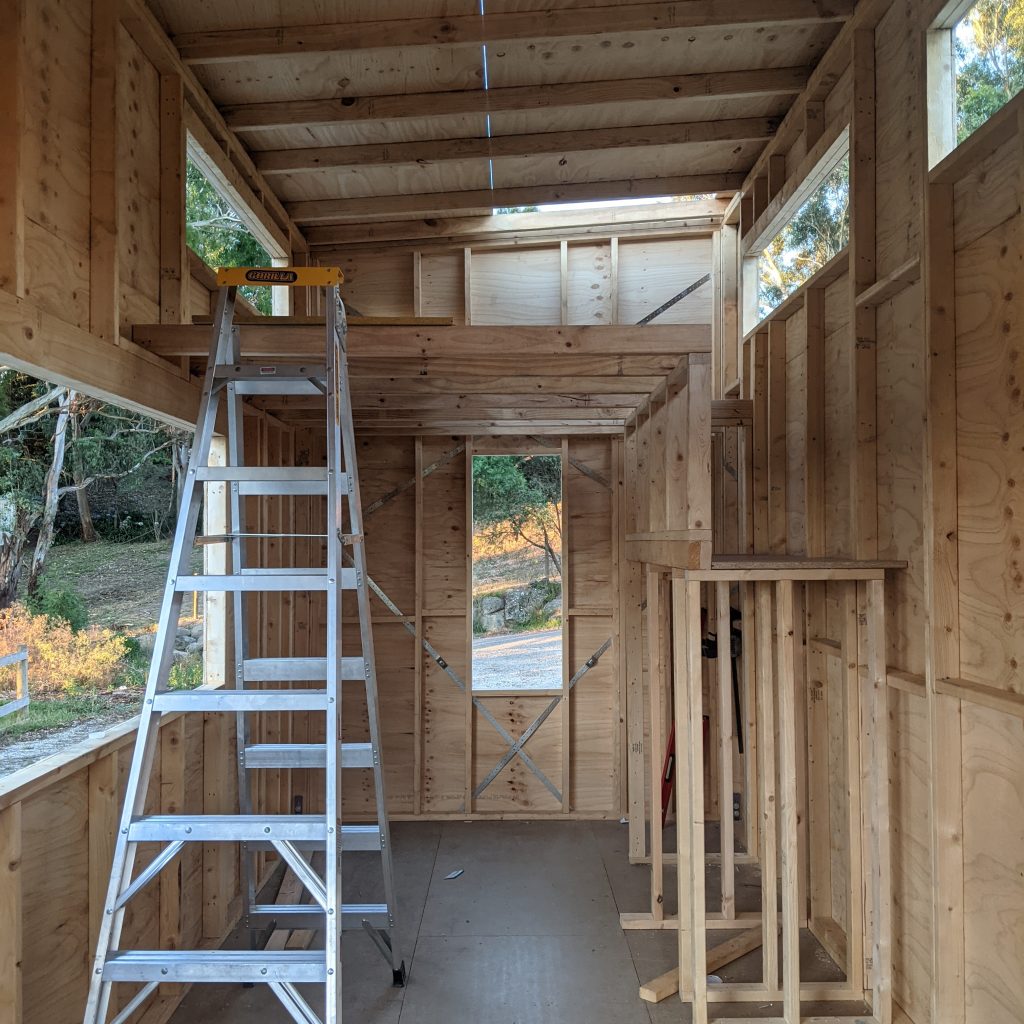
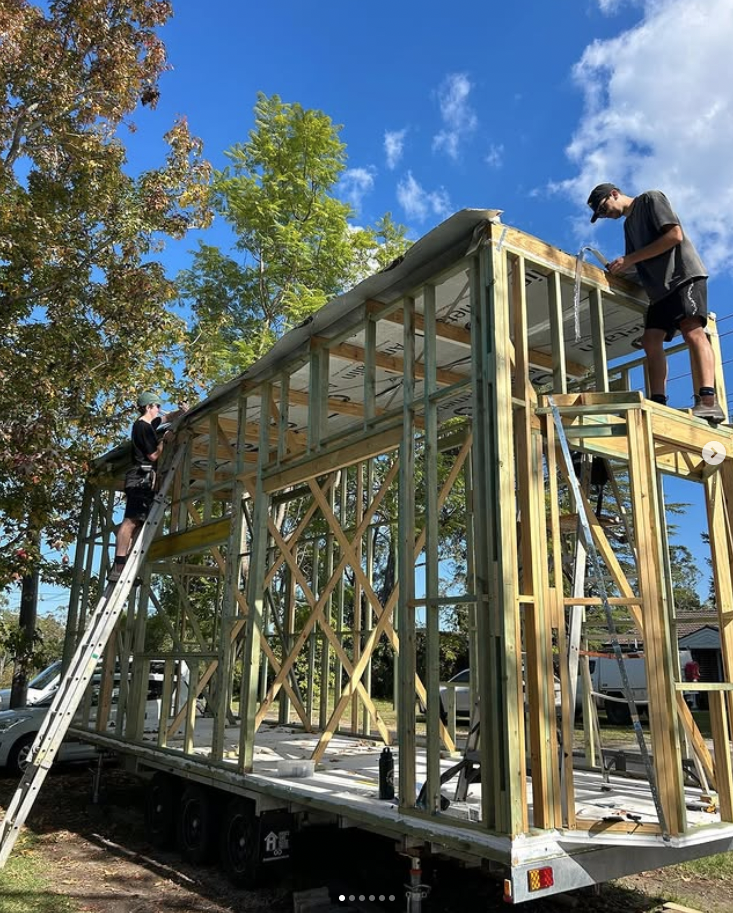
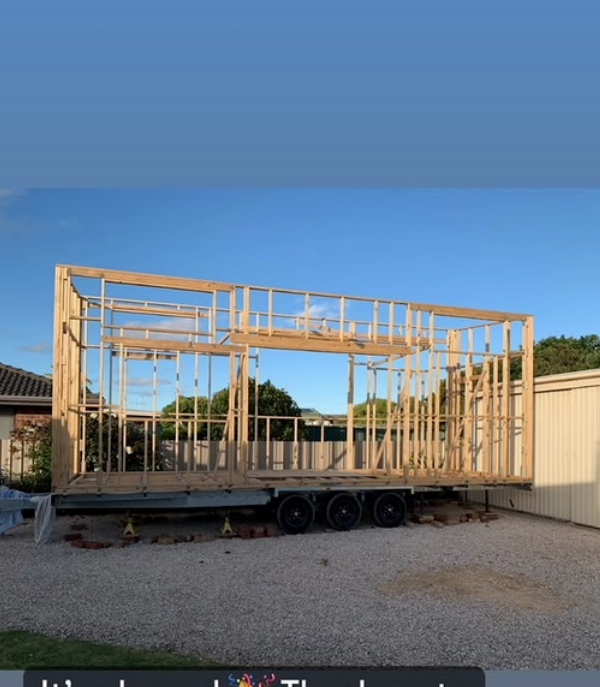
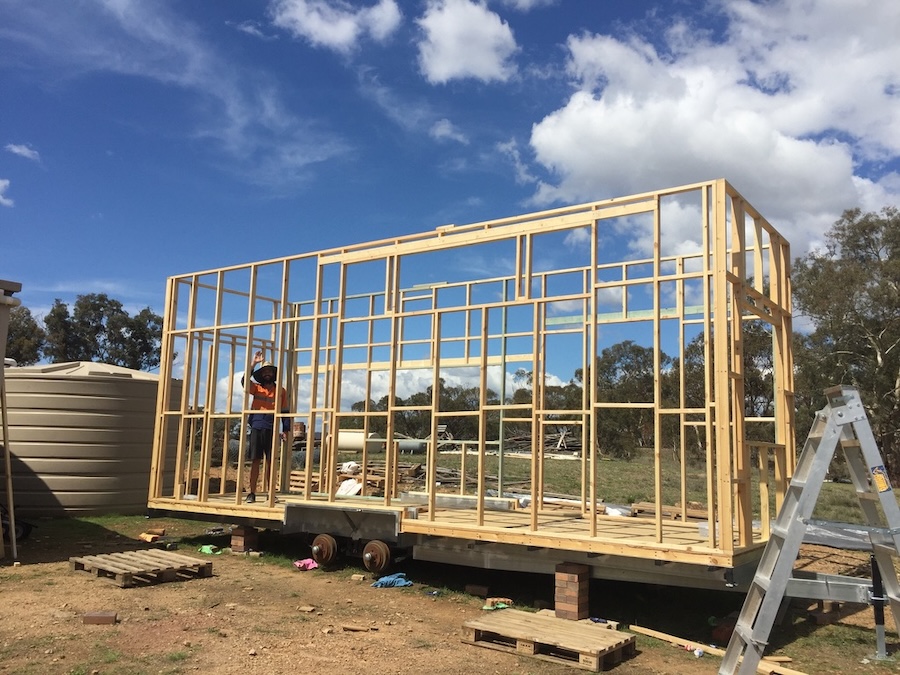
tiny_house_framing_stage_with_loft_bracing_ply
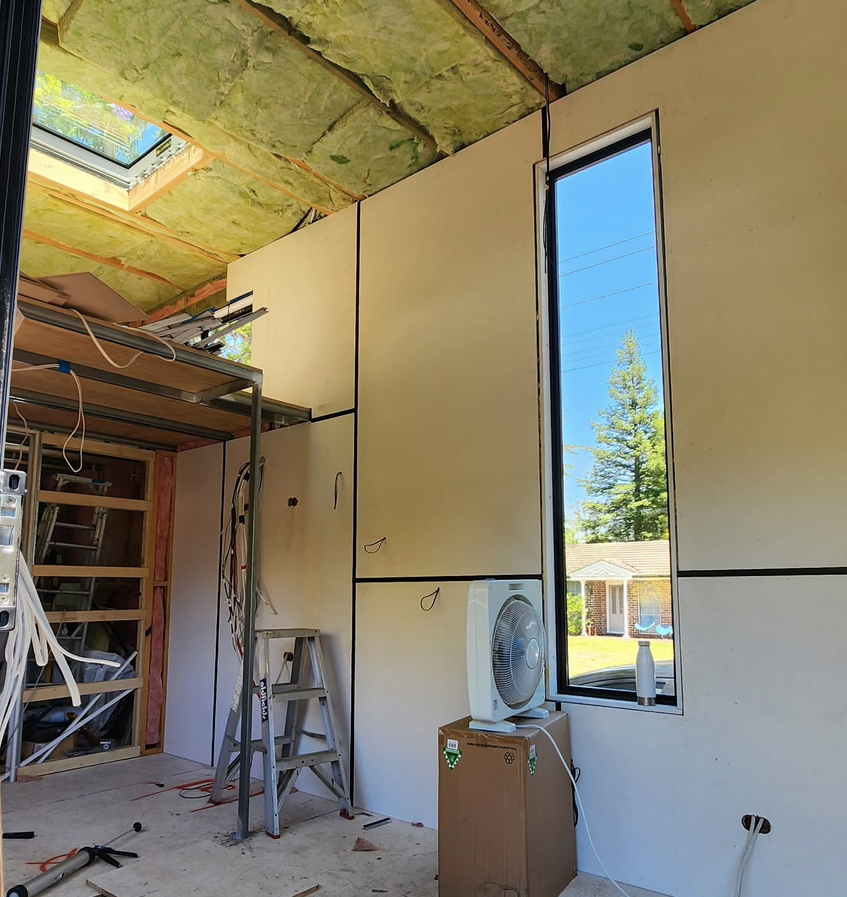
tiny_house_construction_UCM_attaching_trailer_to_frame
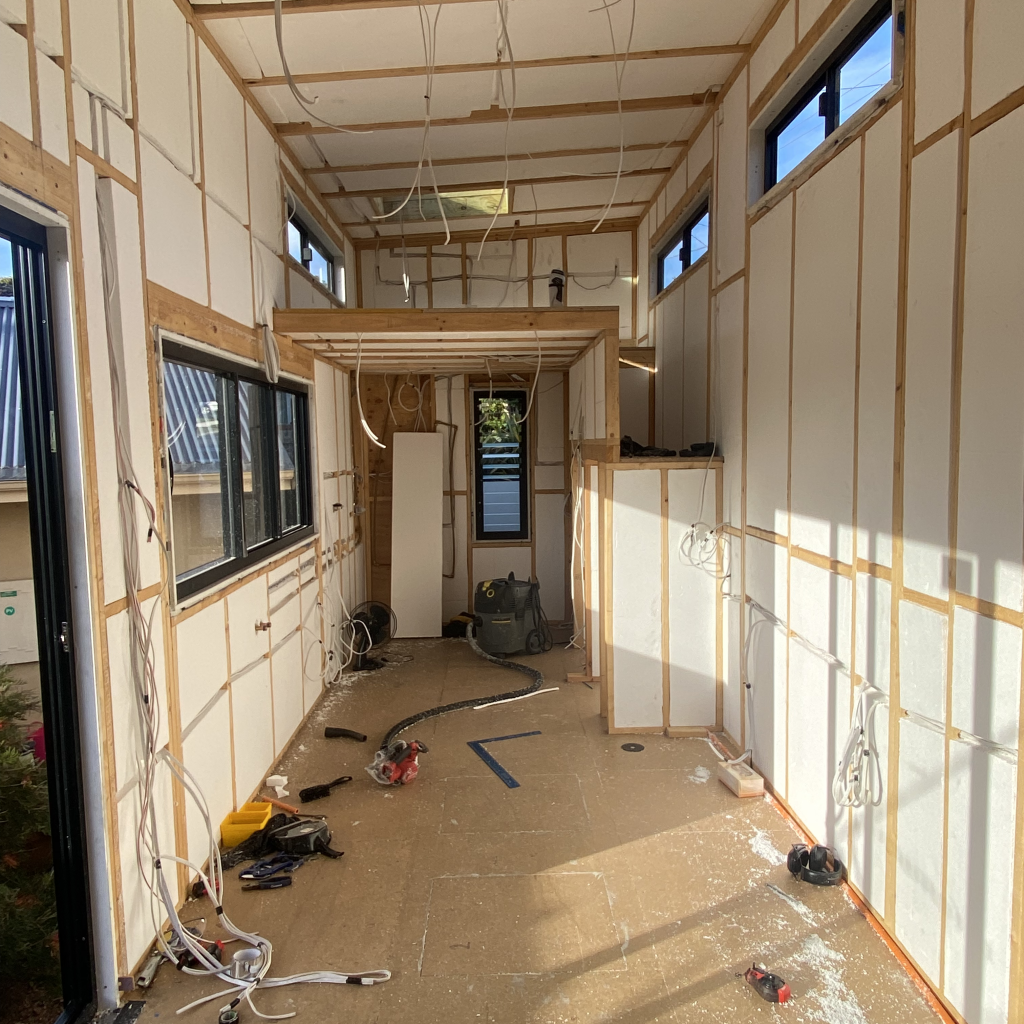
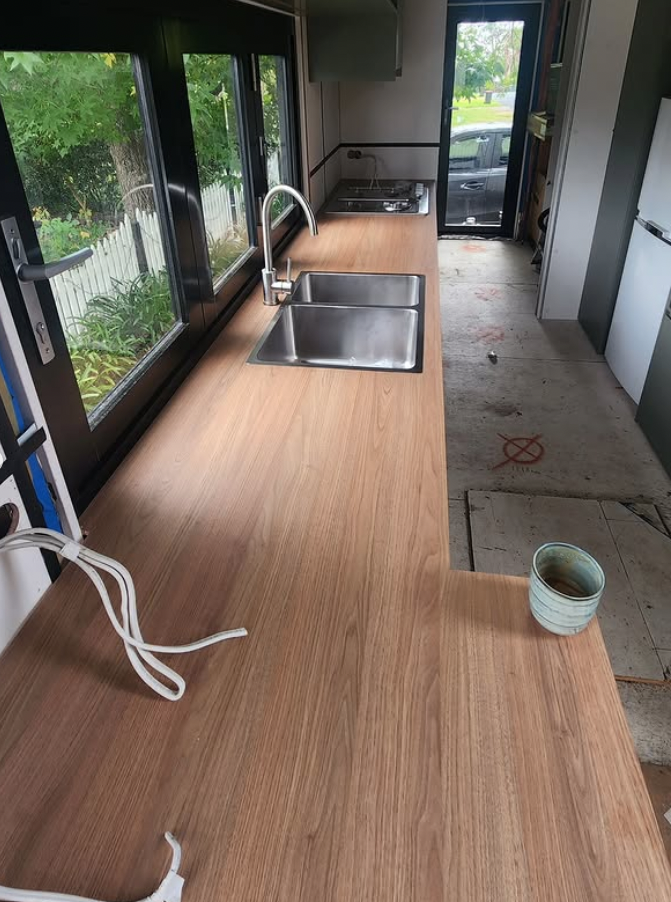
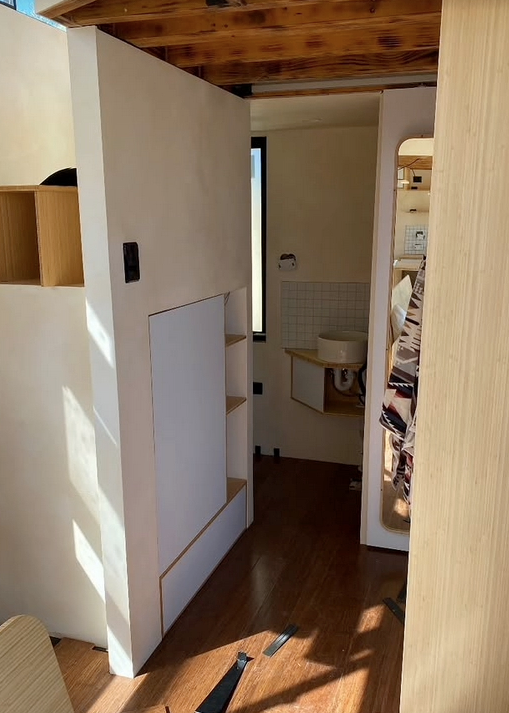
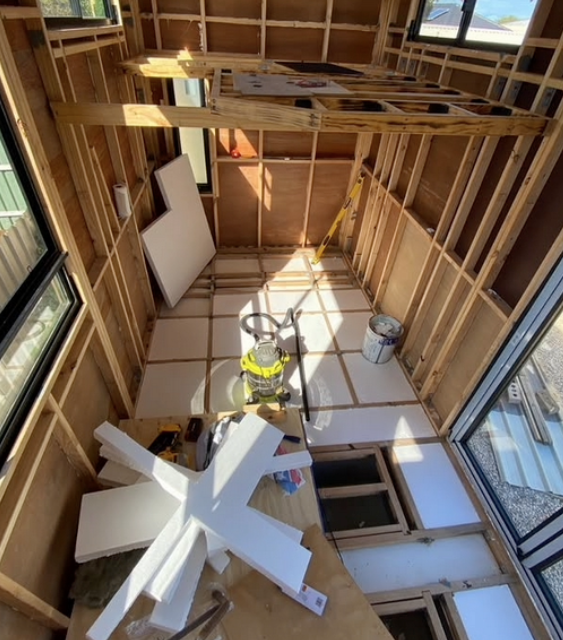
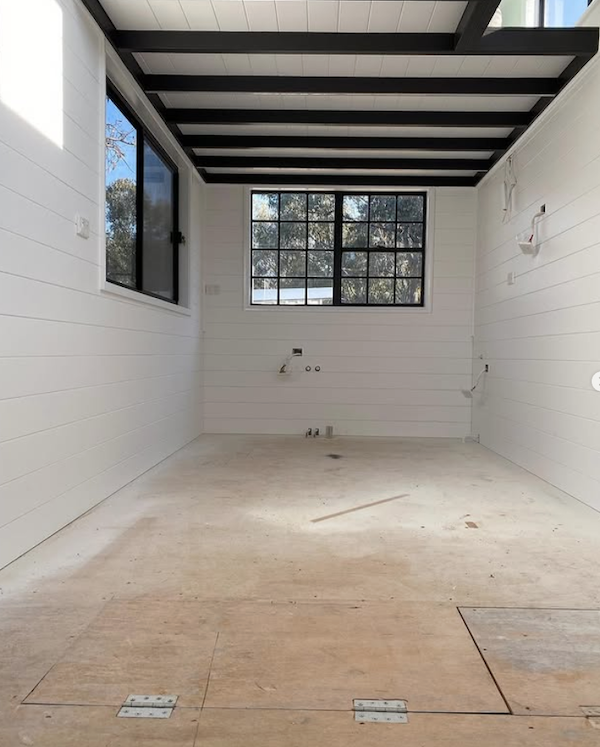
tiny_house_white_kitchen_under_construction
tiny_house_fridge_in_stairs_cabinets
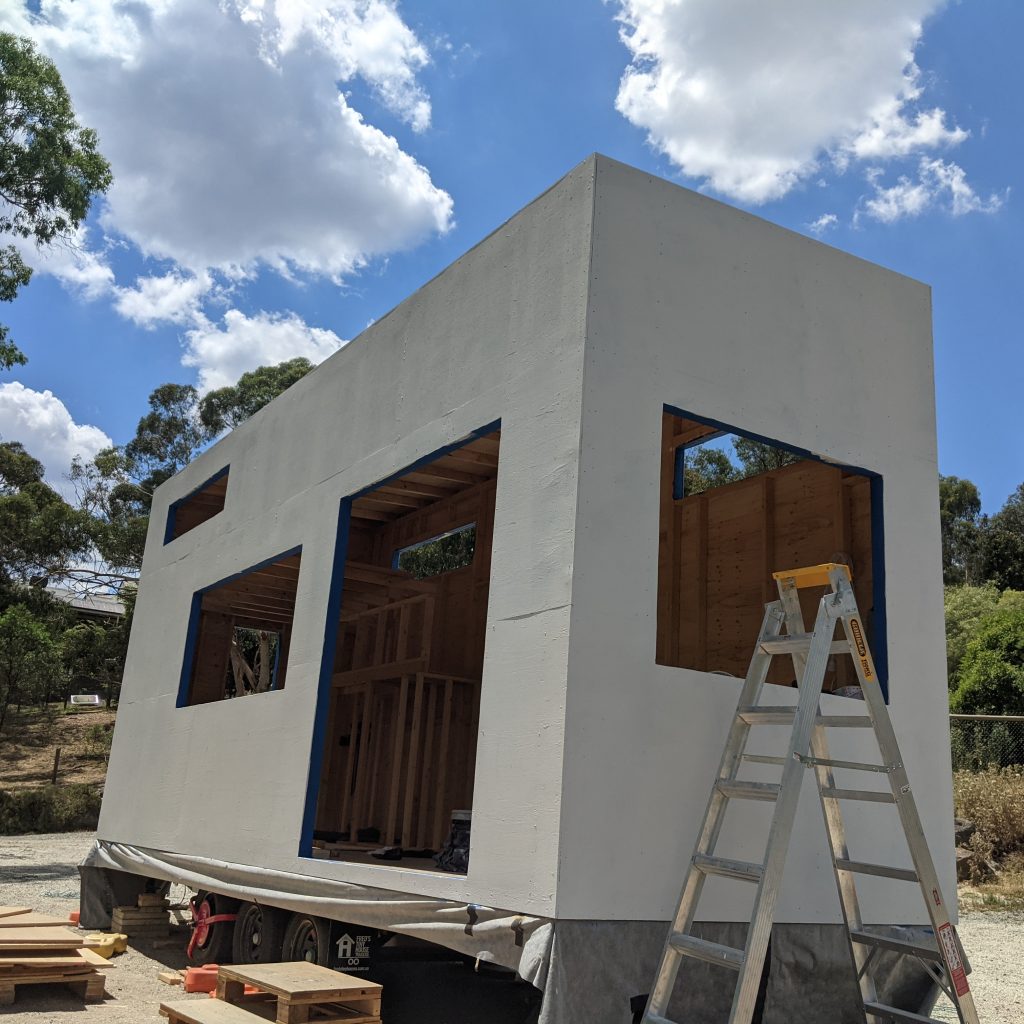
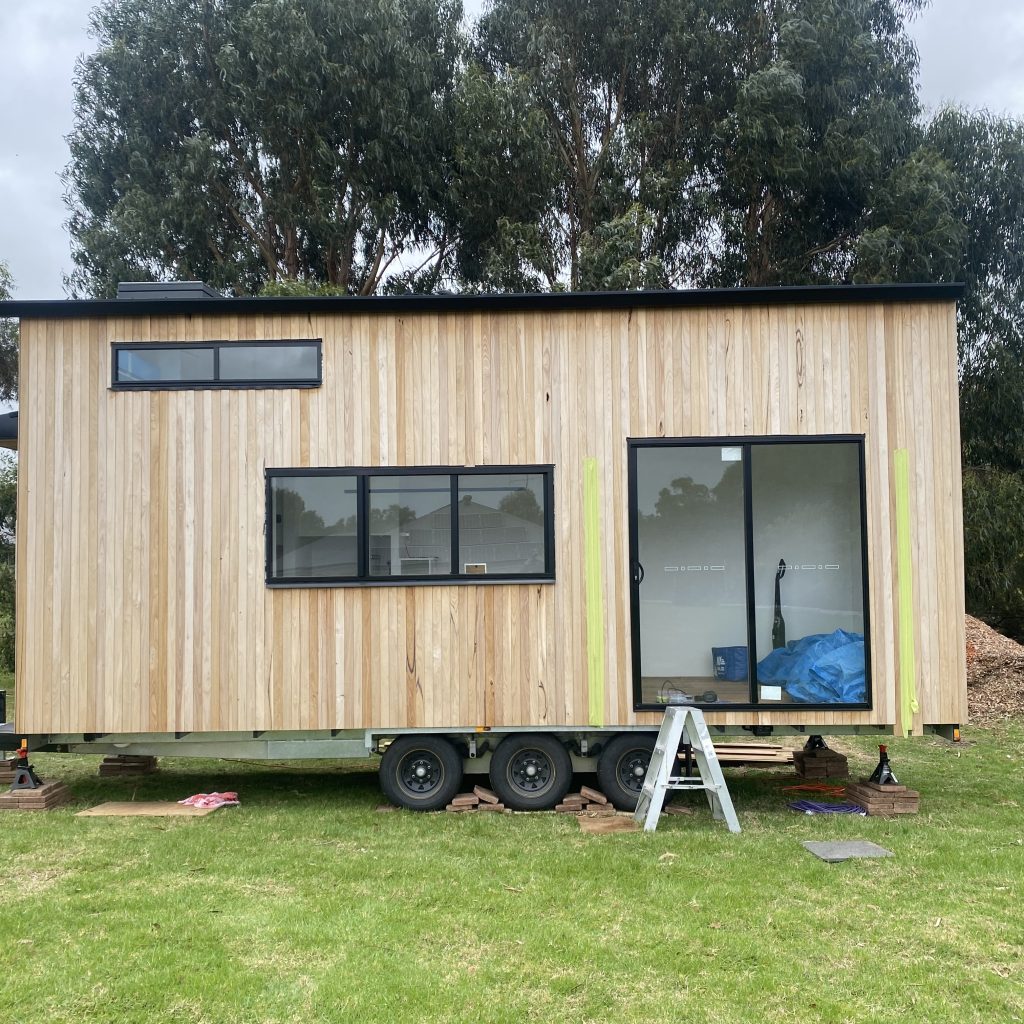
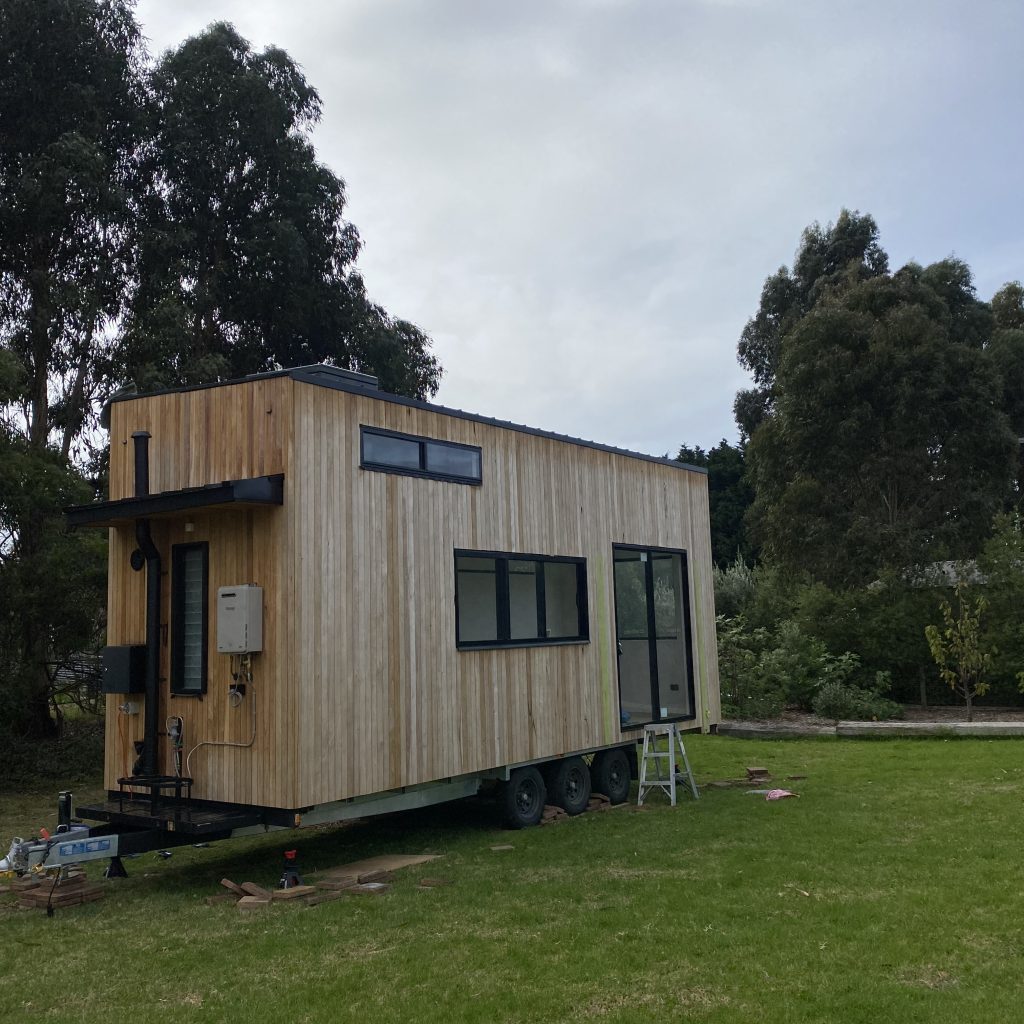
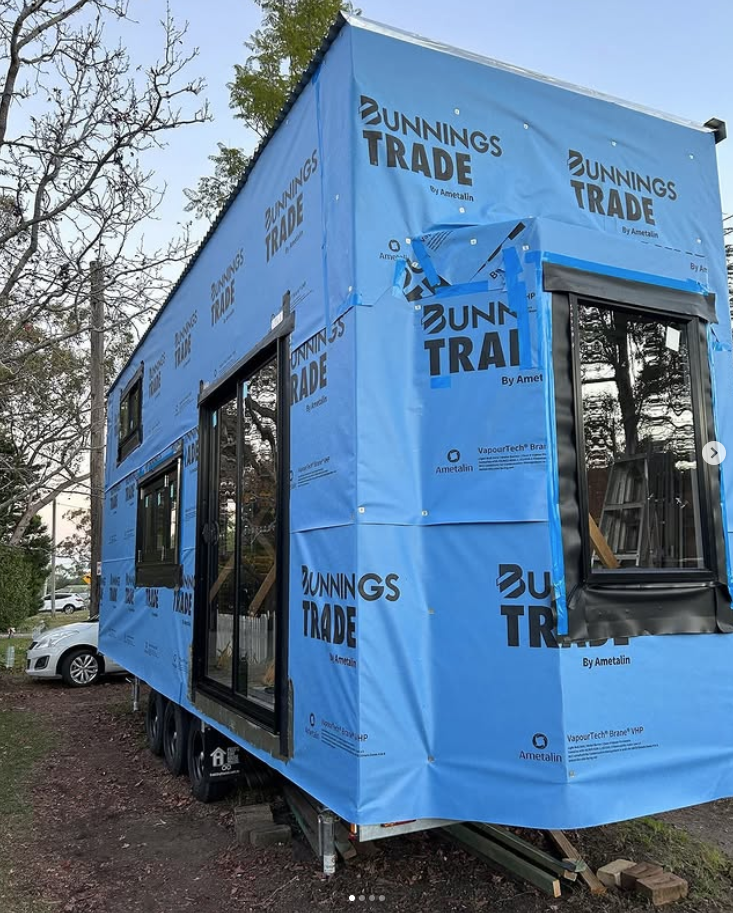
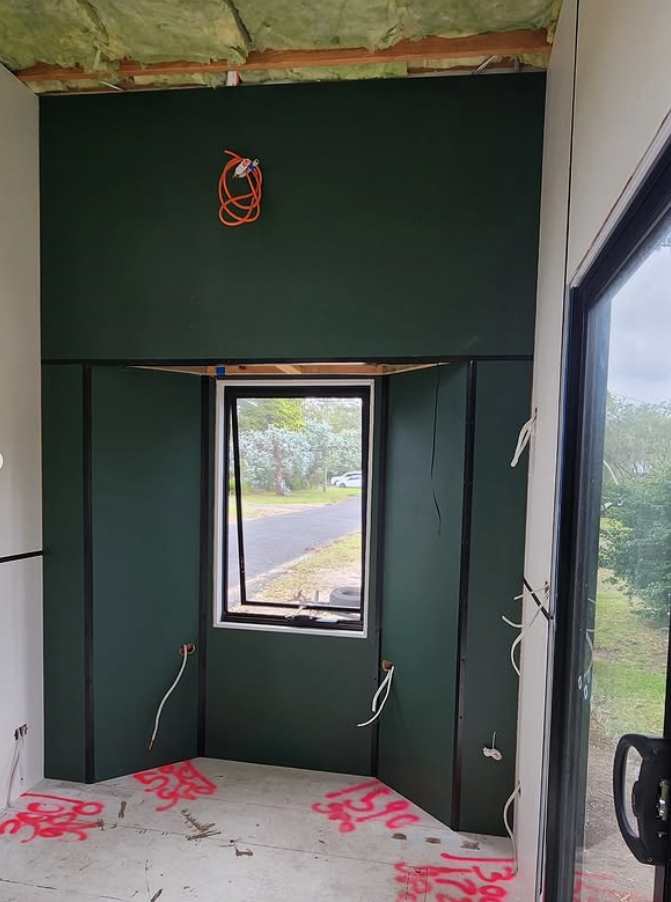
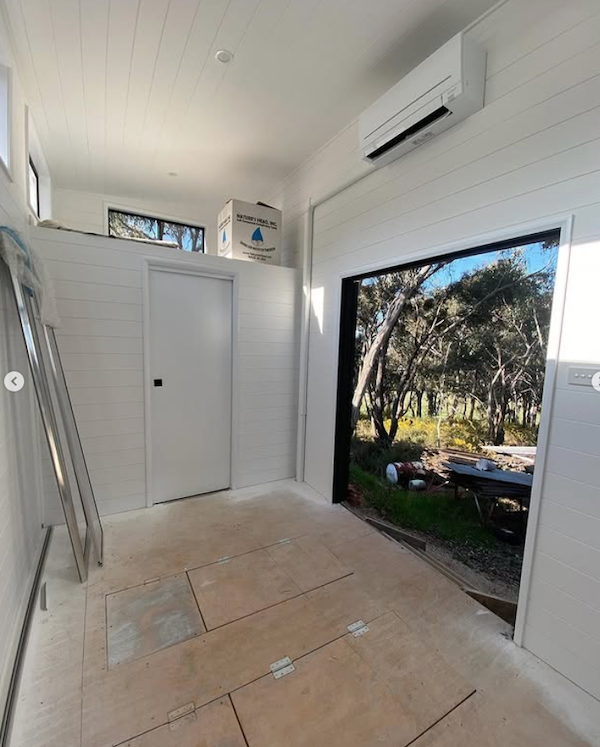
tiny_house_under_construction
Tiny House deck for shade and outdoor living space
tiny_house_big_deck_french_doors

Trailer Details

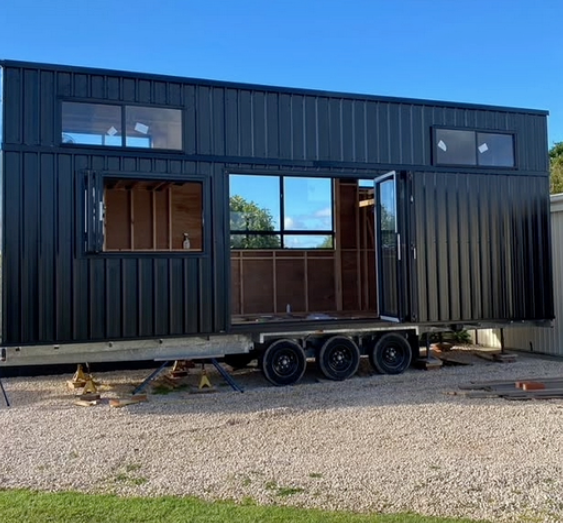
  • Length: 8 meters
  • Width: Standard 2.4 meters wide
  • Style: Flat Top
  • Finish: Hot Dip Galvanized 
  • Build Period: 2 Years
  • Build: DIY from Builder, Carpenter 

You can do this too!

Aaron & Amanda started their tiny house building journey by taking How To Build A Tiny House – The Australian Online Course with at Tiny House University.

They took all the knowledge that they gained in that course and bought a Fred’s Tiny House Trailer. They then DIY built their tiny house on wheels on Aaron’s father’s property, where they still live. 

Start here:
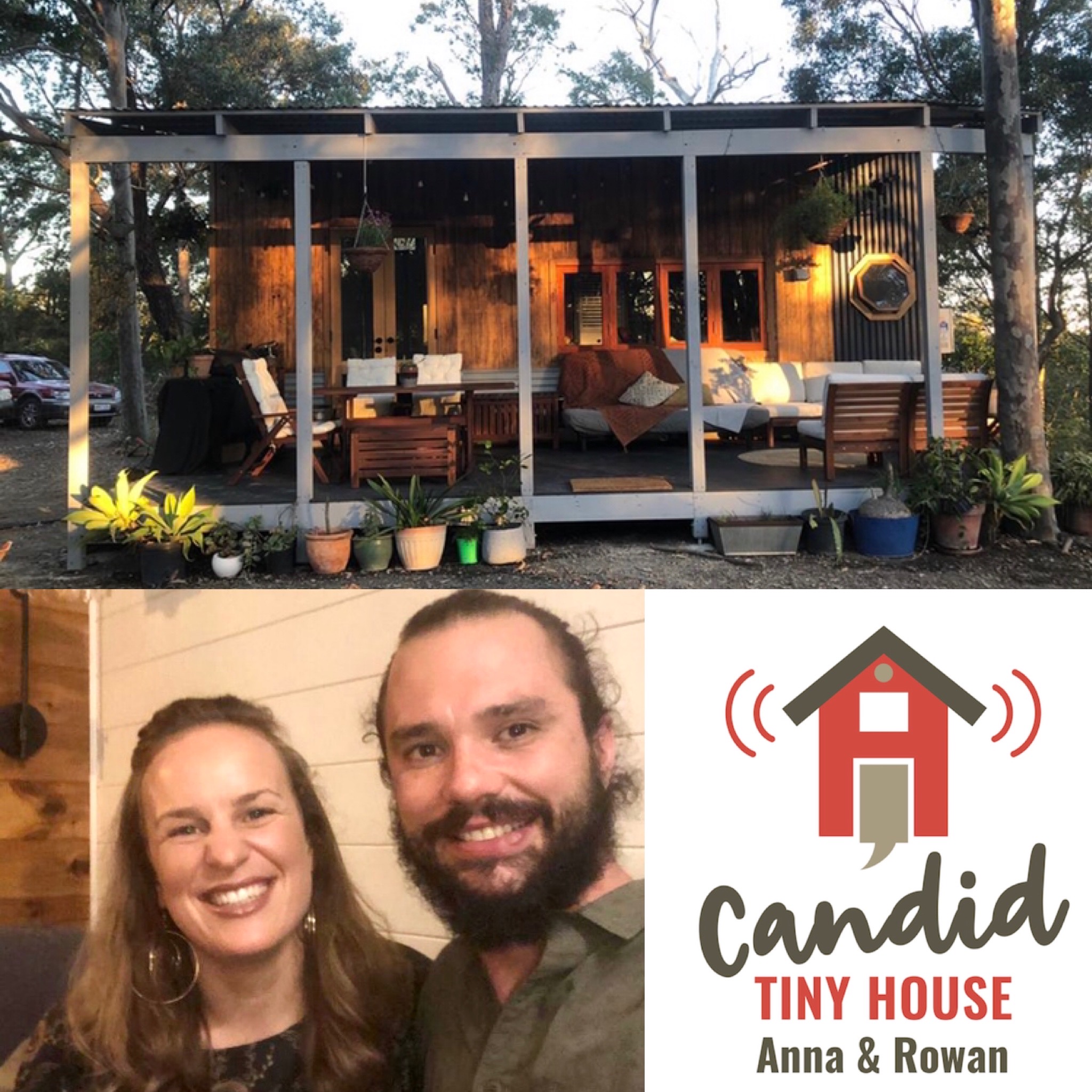
Anna and Rowan Candid Tiny House Interview and tour

Anna & Rowan E5, S1 Candid Tiny House Podcast

Anna and Rowan Candid Tiny House Interview and tour

Anna & Rowan E5, S1 Candid Tiny House Podcast

Candid Tiny House podcast

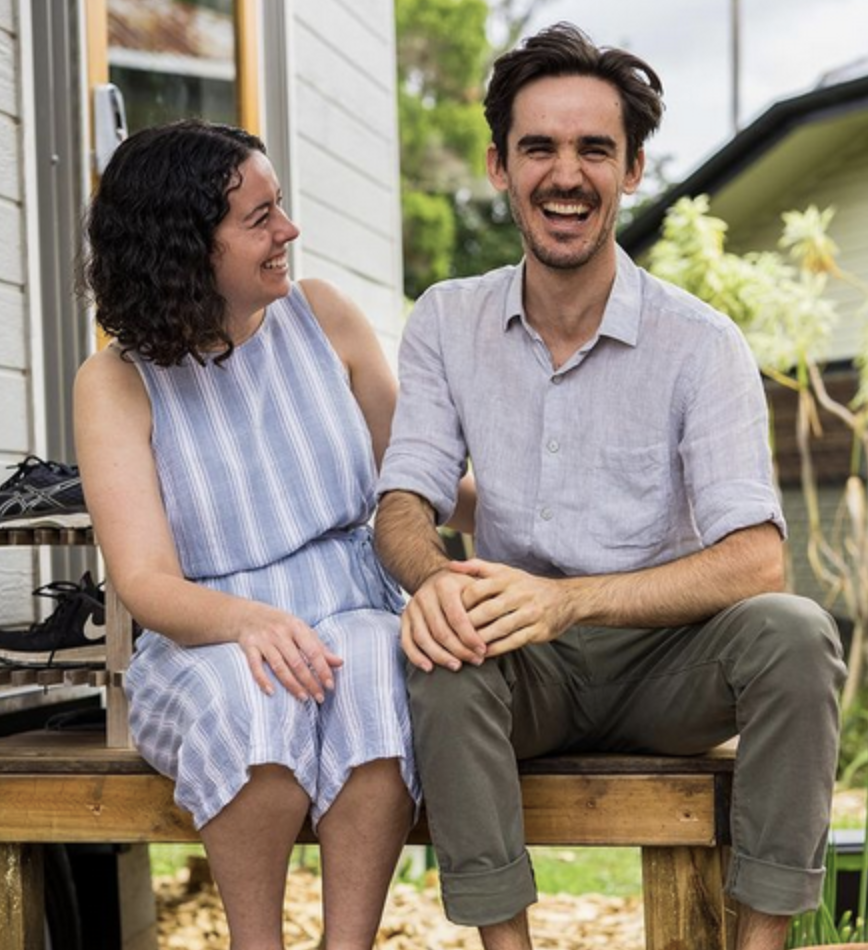
Building a Tiny House Together: Anna & Rowan’s Story

When people think about the risks of building a tiny house, a few big ones usually come to mind:

  • Hostile council regulations that can leave you feeling defeated.

  • Shoddy building techniques that can cause long-term damage.

  • Poor design choices that make the space unliveable.

  • Budget blow-outs that stall the project and drain savings.

These risks are well known. But there’s another one, less talked about, yet just as important: the risk of losing your relationship. Building a home together—especially one on wheels—can stretch couples physically, emotionally, mentally and financially. And once the house is built, adjusting to life in such a small space can be another test entirely.

That’s why Anna and Rowan’s story is so encouraging. Their journey of building a DIY, off-grid tiny house on wheels in Canberra, towing it up to Newcastle, and settling into tiny living isn’t just about logistics, insurance, or weight management (though they faced all of those challenges too). At its heart, their story is about how building a tiny house together actually brought them closer as a couple.

Fast-Tracking a Relationship

When Anna and Rowan bought their Fred’s Tiny Houses Trailer, they’d only been together for eight months. For most couples, that’s still the “figuring each other out” stage. But committing to a build project of this scale fast-tracked everything.

“It totally fast-tracked our relationship,” Anna said. “We got to know each other very well, very quickly.”

Rowan agreed: “I think it was really good for us to build together because it helped us learn to communicate more clearly. We’ve gotten more experience as a couple, as opposed to if we hadn’t built the tiny house.”

Building a Tiny House, Building Communication

The couple worked on their house nearly every day for a year. Like all builders, they faced injuries, long hours, weight and budget stresses, and the nerve-wracking process of transporting the finished home. Yet instead of letting the stress wear them down, they used the project as a way to practice repairing and reconnecting.

“There’ll be intense moments in building,” Anna explained. “Then sometimes we’ll come out afterwards and be like, ‘Sorry, I was a little bit short with you.’ ‘It’s okay, so was I.’”

Rowan added, “I think we’re really good at that, knowing that we were getting a bit intense in the moment and then apologising afterwards.”

Sometimes their repair moments were even playful. “Ro has this really nice thing,” Anna laughed, “where when we bring things up confrontationally, at the end he’s like, ‘Are we still friends?’ And I say, ‘Yeah we’re still friends,’ and we hug it out.”

Shared Vision, Shared Strength

Another stroke of good fortune: Anna and Rowan discovered they shared the same vision for design and aesthetics. “That made it easier for us to build together,” Rowan said. Instead of clashing over style or layout, they found alignment—and that kept the project moving.

By the time they moved in, both agreed their relationship had only grown stronger. “I think we’re definitely stronger for it,” Rowan said. “A hundred percent!” Anna added. “Building a tiny house together is a huge test, and I think it can make or break a couple for sure.”

The Takeaway

Anna and Rowan’s story is proof that building a tiny house isn’t just about nails, trailers, and insulation. It’s about resilience, teamwork, and the kind of communication skills that can hold a couple together in the toughest of times.

If you’re considering building your own tiny house—especially with a partner—their story is one to take heart from. Yes, it’s stressful. Yes, there are risks. But if you approach the build with openness, patience, and the willingness to repair, it can also be one of the most rewarding experiences of your life.

🎧 Hear more: Listen to their full interview on the Candid Tiny House Podcast (available on your favourite podcast app) for insights on building, transporting, and living in a tiny house together.


Anna and Rowan DIY Tiny House on wheels Australia Build window
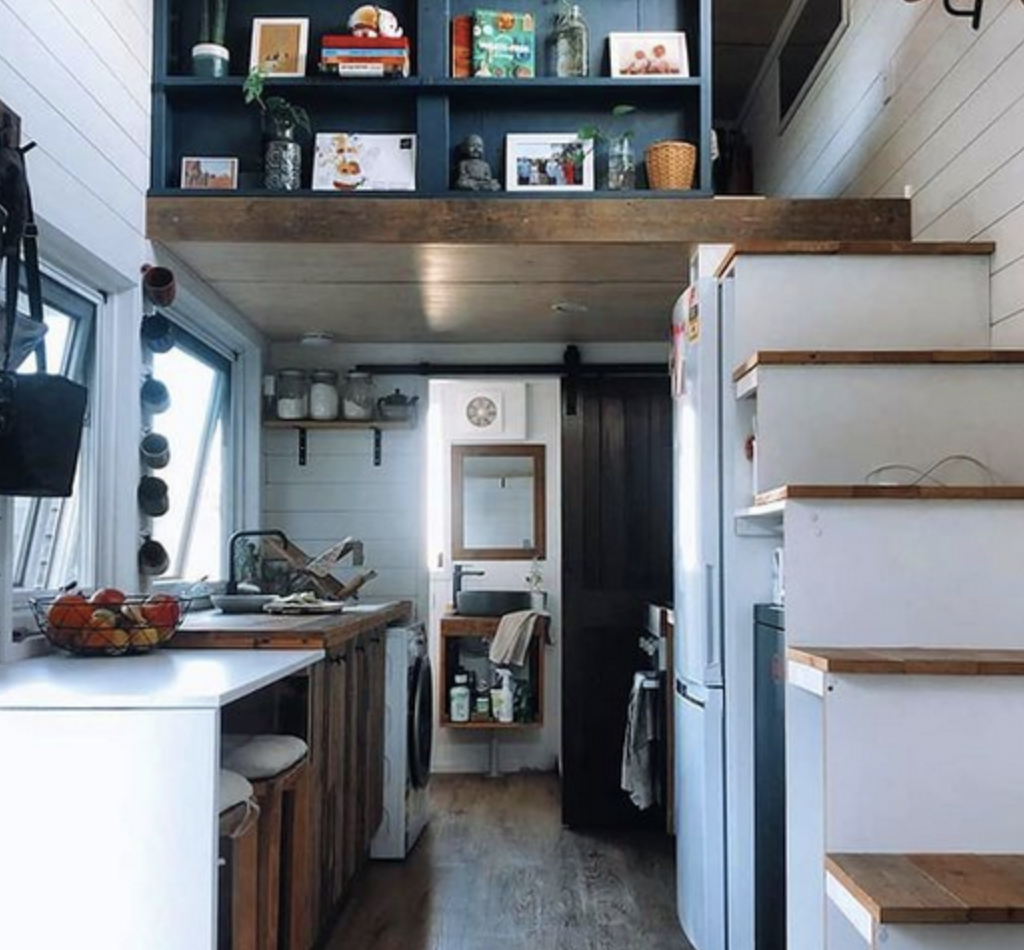
Anna and Rowan DIY Tiny House on wheels Australia Build kitchen
Anna and Rowan DIY Tiny House on wheels Australia Build deck
Anna and Rowan DIY Tiny House on wheels Australia Build roof

Trailer Details

  • Length: 7.8m

  • Width: 2400mm

  • Style: Protruding Wheel Guard DuraGal Finish

  • Trailer received: September 2019

  • Build started: January 2020

  • Move-in date: August 2021

You can do this too!

Anna and Rowan started their tiny house building journey by attending a Weekend Workshop with Fred’s Tiny Houses.

They took all the knowledge that they gained in that course and bought a Fred’s Tiny House Trailer. They then built a successful tiny house which they continue to live! 

Start here:
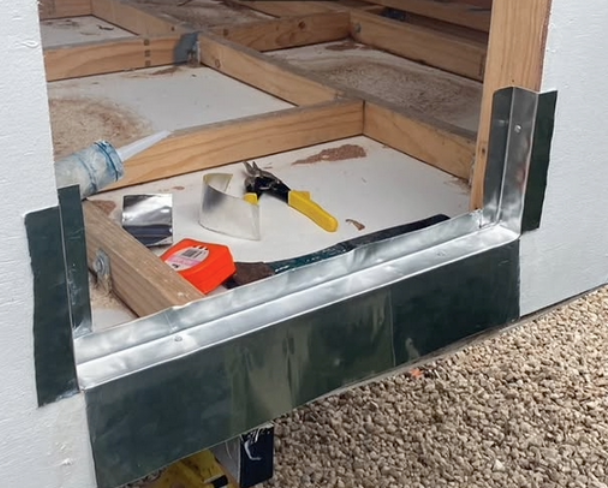
Anna and Rowan DIY Tiny House on wheels Australia Build going to timber yard
Candid Tiny House Season 1, Luke and Jess, DIY Tiny House Builders

Luke and Jess E1, S1

Candid Tiny House Season 1, Luke and Jess, DIY Tiny House Builders
Candid Tiny House podcast

Luke and Jess: Episode 1, Season 1 of Candid Tiny House Podcast

Taking a Leap...

Luke and Jess had only bought a mattress together, by way of a joint purchase as a couple, before they decided to buy a trailer and build a tiny house on it.

It seems like a big leap of commitment, courage and faith in their abilities to live and work together… and it is.

On a very tight time line (six months to be exact) they ordered their tiny house trailer, built their tiny house as first-time builders, quit their jobs, moved the tiny house from Victoria to Queensland and moved themselves too. “Admittedly that’s one thing that we did regret, that we didn’t take more time on it, because we really did push ourselves,” reflects Luke.

The ultra-tight building timeline had them building for long hours, seven days a week on Luke’s parents property in regional Victoria. “The physical toll was pretty significant from building like that. My shoulder was sore from drilling into our (steal) frame” Luke said. “Same, I had to go to an osteopath twice from painting!” Jess added, laughing. On finding the right time-frame for a tiny house build, she suggested: “I think its about finding that sweet-spot of enough time to do it right and to be ok and be well, but to push yourself a little bit so that you can get in it and start living in it as soon as possible.”

And while they shouldered almost all of the burden of building their tiny house on wheels, they also had plenty of help. Luke commented: “Lean on your family and friends … it really made it easier, and realistically made it possible, to have all those helpers. Because we wouldn’t have got it done in that time otherwise.”

And they did get it done in time to move it up to Brisbane where Jess had enrolled in a Psychology Honours program. The council regulations on living in a tiny house on private property are particularly favourable in Brisbane, so it reduced the couple’s stress over where to park their tiny house. “That was probably the scariest thing – thinking about where we were going to put it[…] it was always that little bit of an undercurrent – where were we gonna end up?” reflected Luke.

Luke and Jess focused on living with a small footprint in lots of ways for the next two years in their off-grid tiny house, saving money all the while. And when 2020 rolled around with all it’s surprises: Covid-19, closed borders and lockdowns, Luke and Jess felt the distance from their families in Victoria acutely.

So it was time to leap again! After two years of studying, working, mending clothes, growing veggies and making music in Brisbane, Luke and Jess looked at their changing needs and decided to return to Victoria. With the money they saved from living in their tiny house, they managed to buy a little cottage near Jess’s parent’s place in Gippsland sight-unseen. Instead of towing the tiny house south again, they decided to sell it in Brisbane. That meant that they could either reduce their mortgage on the cottage or use the tiny house sale money to help them find additional housing in Melbourne so that Jess could be closer to her Masters of Psychology course.

So while their journey of living in a tiny house has come to an end, their appreciation of it’s benefits have not. “We attribute being able to buy that house to living in this tiny house for two years”, said Luke. And on all their leaps, Jess comments: “That’s just us making our dreams happen. They’ve been chasing and evolving so we just jump in to make it happen.”

Listen to the full interview with Luke and Jess wherever you get your podcasts.

In the podcast long-form interview they spoke candidly about their:

  • Decision to build a tiny house,
  • Challenges and stresses as well as their excitement while building on a tight schedule,
  • Experiences with towing the tiny house and hiring a towing company,
  • What it was like to live in a tiny house together as a couple, and
  • How living in a tiny house has supported them to study, live lightly and reach their financial goals. 
Candid Tiny House Season 1, Luke and Jess, DIY Tiny House Builders

Trailer Data:
Length: 7.2 meters
Width: 2400mm
Style: Protruding Wheel Guard
Date received trailer: September 2018
Date started working on house: September 2018
Date moved in: March 2019

Tiny House Data:
Height: 4.25meters
Roof: Scillion
Cladding Materials for internal and external cladding: Shiplap and Corry combined
Climate/location: Brisbane QLD
Number of people it houses: 2 Adults

You can do this, too!

Luke and Jess started their tiny house building journey by attending a Weekend Workshop with Fred’s Tiny Houses.

They took all the knowledge that they gained in that course and bought a Fred’s Tiny House Trailer. They then built a successful tiny house which they lived in for two years, saving enough money to launch themselves into the next phase of life. 

Start here:
Candid Tiny House Season 1, Luke and Jess, DIY Tiny House Builders
Ho w To Recognise a well built tiny house trailer

How To Recognise a Well-Built Tiny House Trailer Series – A Frame Draw Bar

Part 1: A-Frame Draw Bar

Ho w To Recognise a well built tiny house trailer

How To Recognise a Well-Built Tiny House Trailer When You See One:
When shopping for a tiny house trailer, it’s vital to know the difference between a well-designed, durable trailer and one that may fail under pressure. Many trailer manufacturers compete on price, and while their lower costs might seem attractive, they often come at the expense of quality and safety. Here’s what to look for to ensure your trailer is built to last.

Beware of Short A-Frame Drawbars

One common way manufacturers cut costs is by designing short A-frame drawbars. By using less steel, they reduce expenses, but this compromises the trailer’s structural integrity.

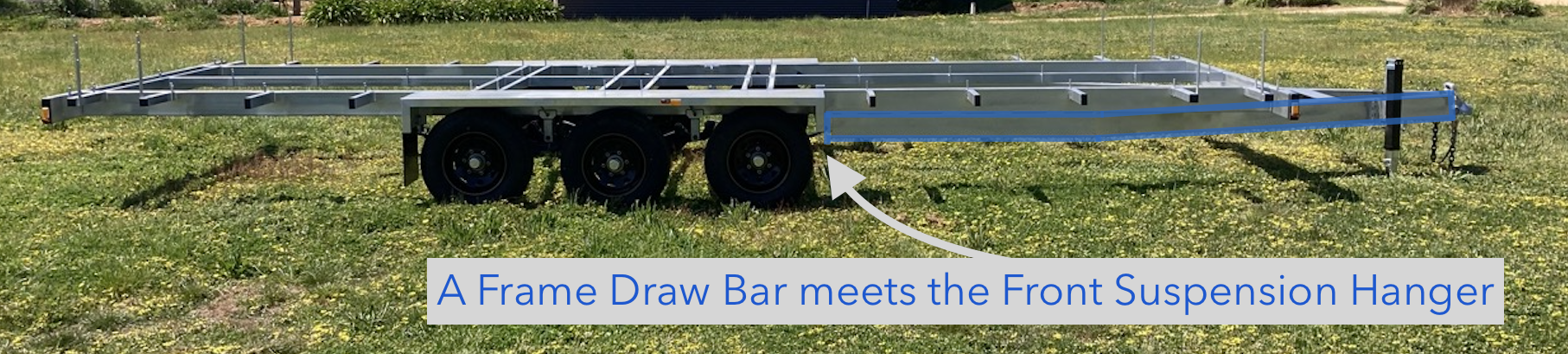
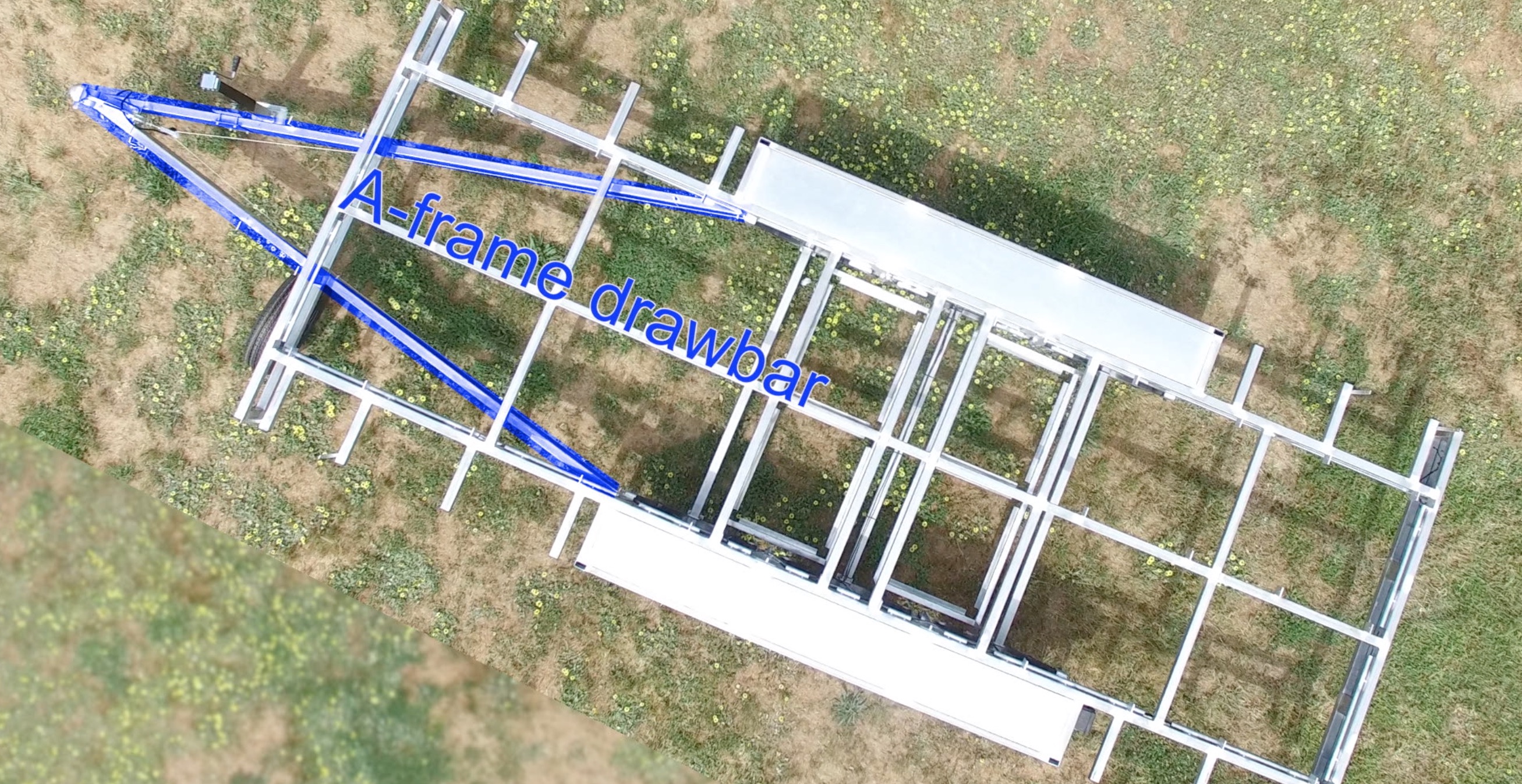
The Vehicle Assessment Signatory Scheme (VASS) engineers, who specialise in making vehicles safe for Victorian roads, recommend that drawbars extend all the way to the front suspension hanger. This design choice isn’t just a suggestion—it’s essential for strength and durability.

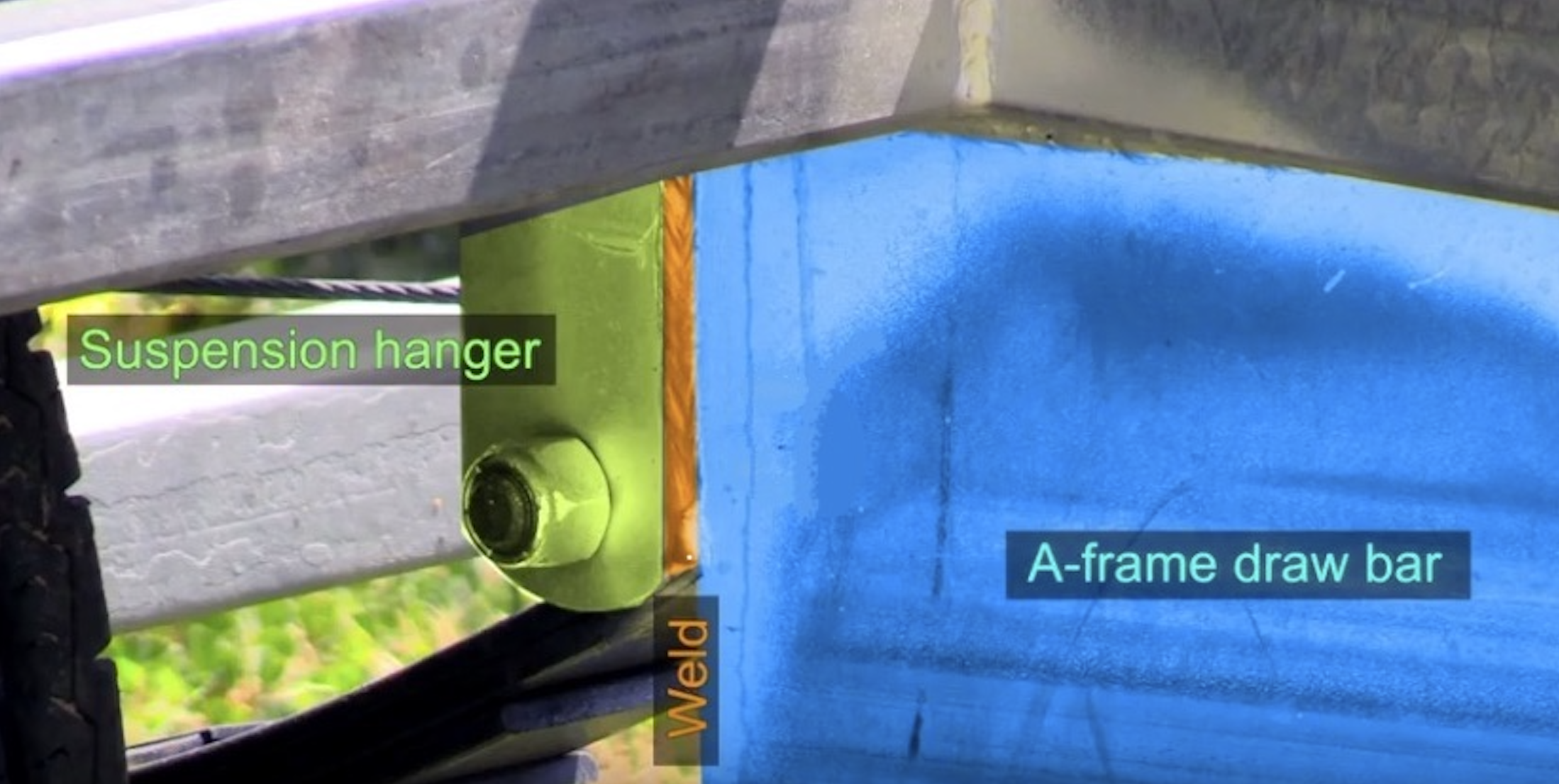
When the A-frame drawbar connects to the front suspension hanger, it allows for a critical vertical weld to secure the components together. Without this weld, the drawbar’s connection to the chassis rail alone is far weaker. This shortcut results in an inferior trailer that may also pose serious safety risks.

Why Strength Matters

A short, poorly designed A-frame drawbar increases the likelihood of the drawbar breaking free from the trailer’s main body during transport. Imagine this happening with a 3,500kg tiny house on top—the consequences could be catastrophic.

Saving a few thousand dollars on a trailer might seem like a good idea, but the real cost of a poorly built trailer can far exceed your initial savings. From financial losses to potential accidents, the risks simply aren’t worth it.

Quality Over Cost

At Fred’s Tiny Houses, we never cut corners when it comes to your safety. We prioritise quality over cost-saving shortcuts to provide you with a trailer that’s as strong and reliable as your dream home deserves. We believe true freedom isn’t just about living in a tiny house; it’s also about the peace of mind that comes with knowing your home’s foundation is secure.

Conclusion When choosing a tiny house trailer, always prioritize strength and safety over price. Check that the A-frame drawbar extends to the front suspension hanger and is reinforced with vertical welds. Your safety, and the safety of others, is invaluable. Don’t settle for anything less than a tiny house trailer that is built to last.

What to look for:
How to recognise a well-built tiny house trailer
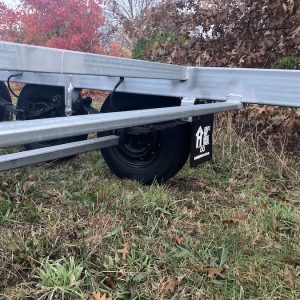
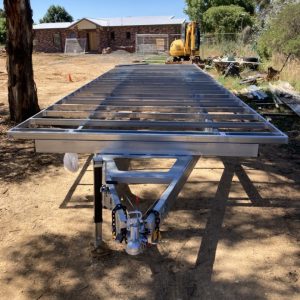
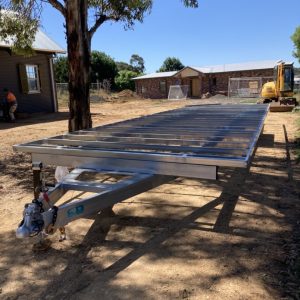
All Fred's Tiny House Trailers meet Vehicle Engineer recommendations by extending the A-Frame Draw Bar to meet the front suspension hanger.
How to recognise a well built tiny house trailer
The A-Frame Draw Bar (in blue) is attached to the front suspension hanger (green) with a veritcle weld (orange) as recommended by Vehicle Engineers.

What to avoid:

What to avoid in a tiny house trailer
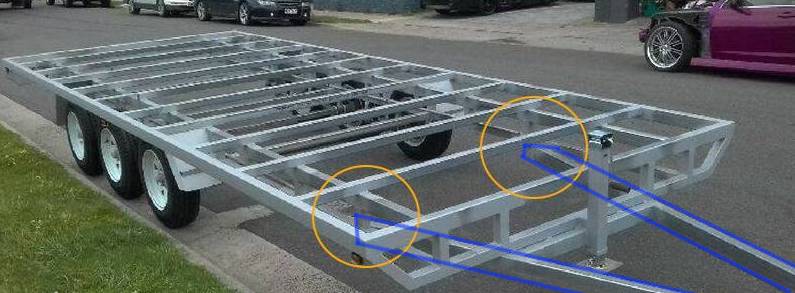
Example of another company's tiny house trailer where the A-Frame Drawbar attaches to the chassis rail only and does not extend to the front suspension hanger.
What to avoid in a tiny house trailer
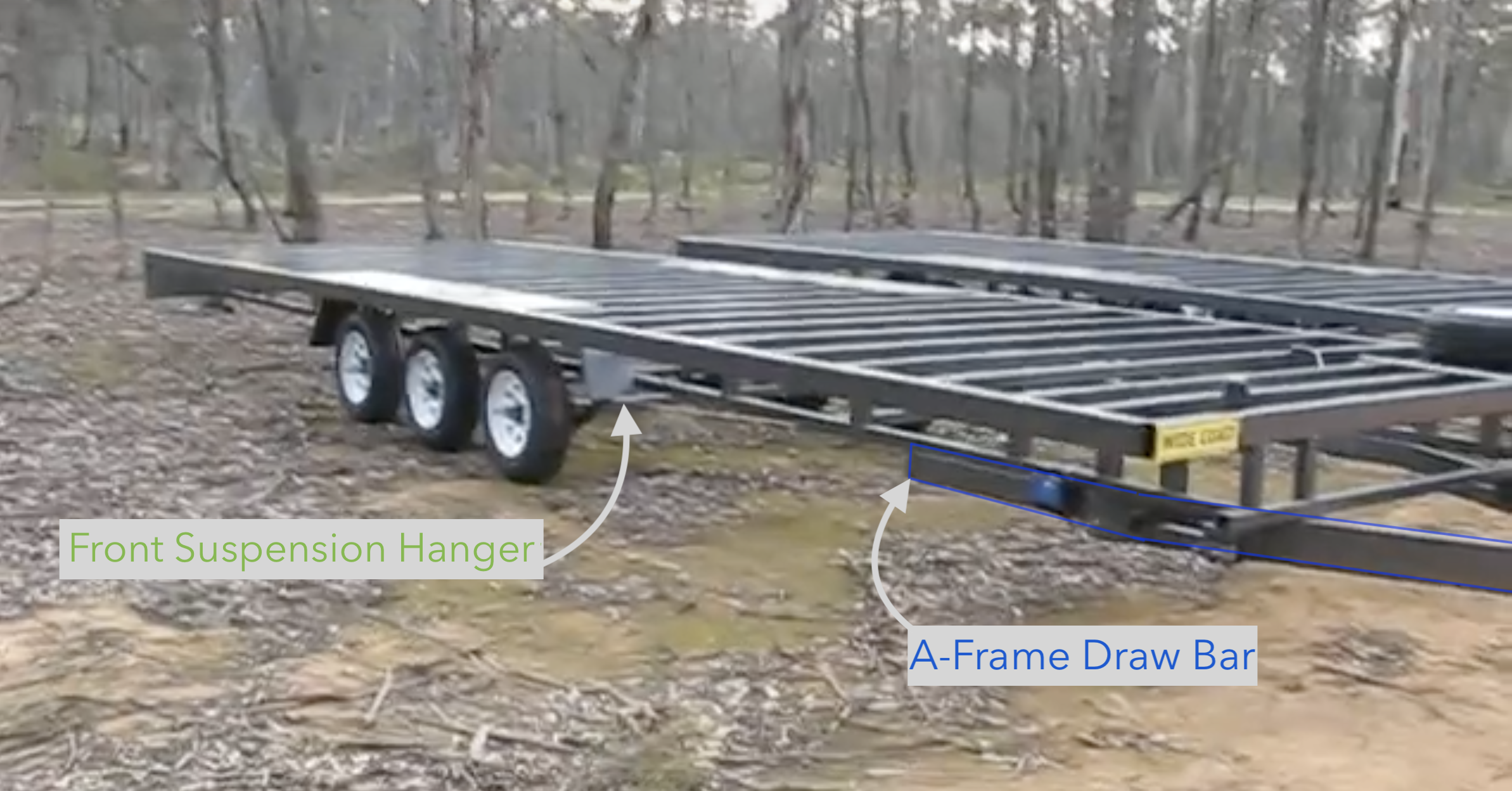
There is a long gap between the A Frame Draw Bar and the front suspension hanger. This is a weak trailer design.

Tiny House Trailer Purchase Guide:

We have written a Tiny House Trailer Guide for the Australian Tiny House Association (ATHA) to help you make informed decisions about your tiny house trailer purchase.

Fred's Tiny Houses ATHA Memebers

Shop Trailers and Tiny House Plans