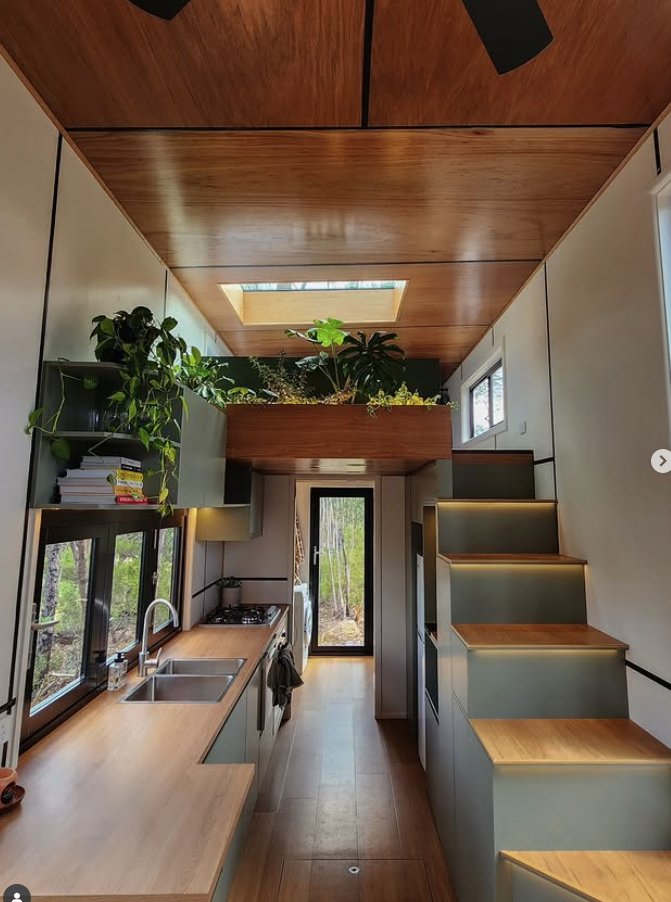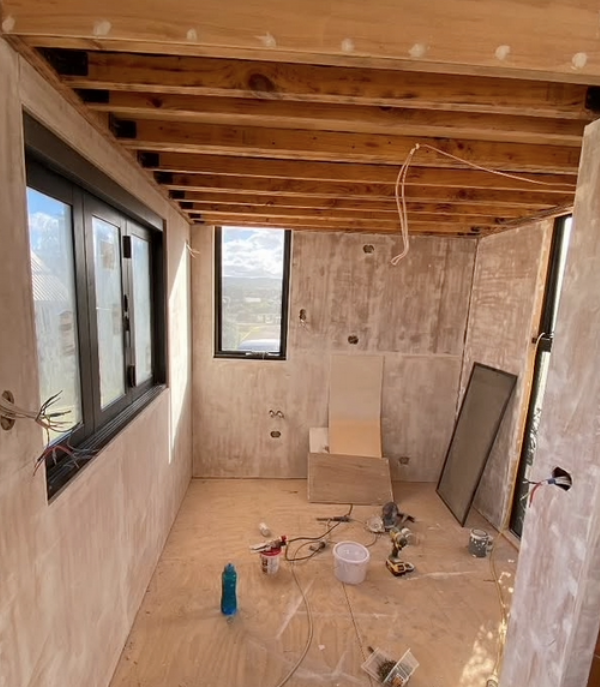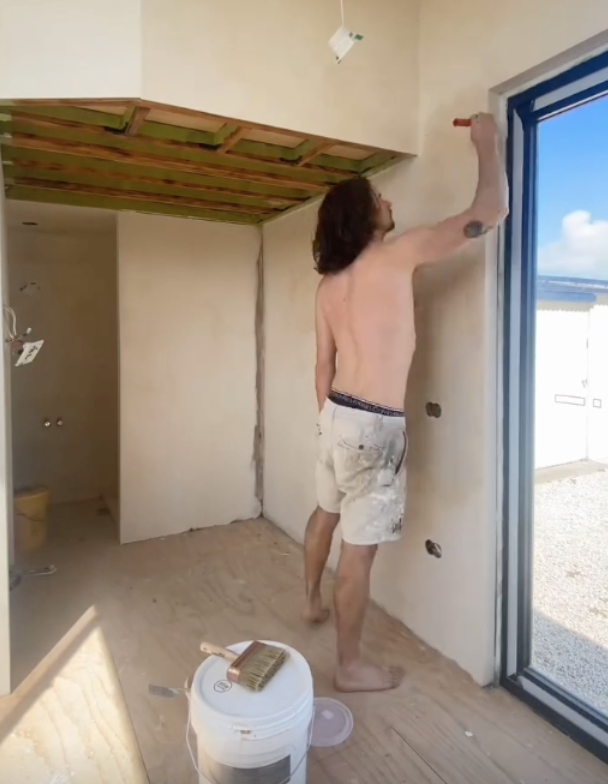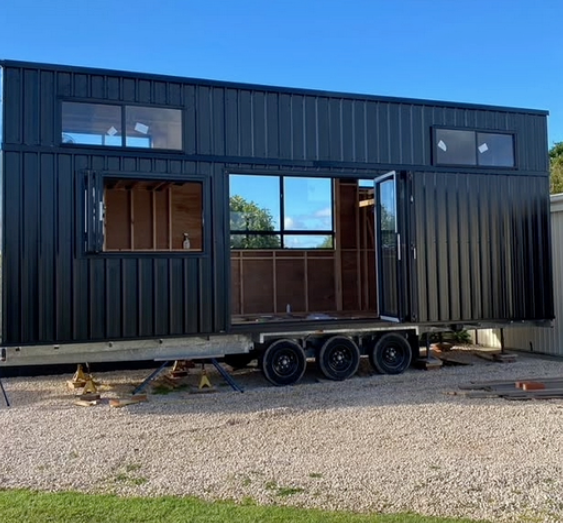


DIY Tiny House build stories

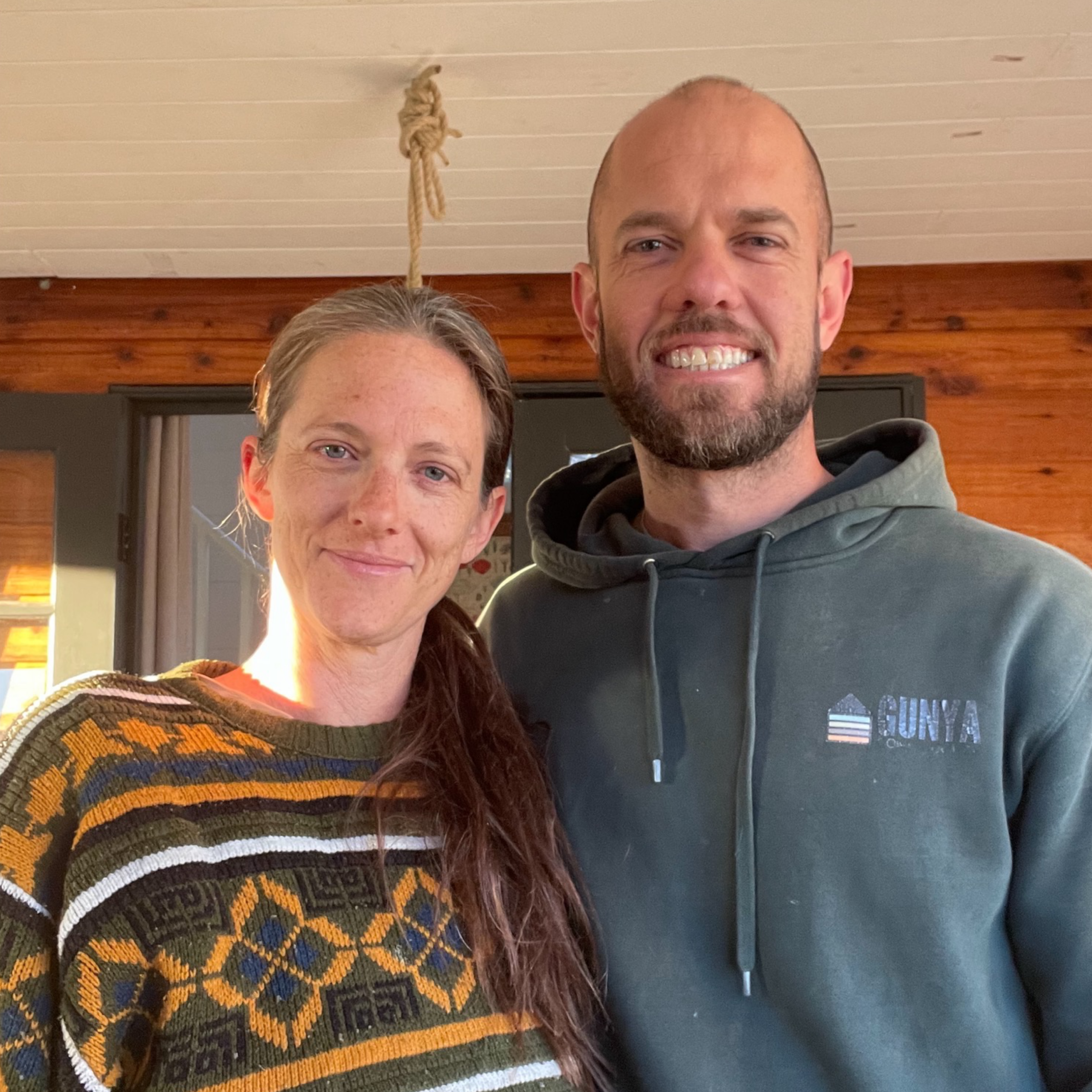
Aaron & Amanda: DIY Tiny House Expanding Candid Tiny House E2, S3

DIY Tiny House build stories
Candid Tiny House podcast

Aaron & Amanda

Candid Tiny House Podcast E2, S3

A DIY Tiny House that Expands and Evolves...

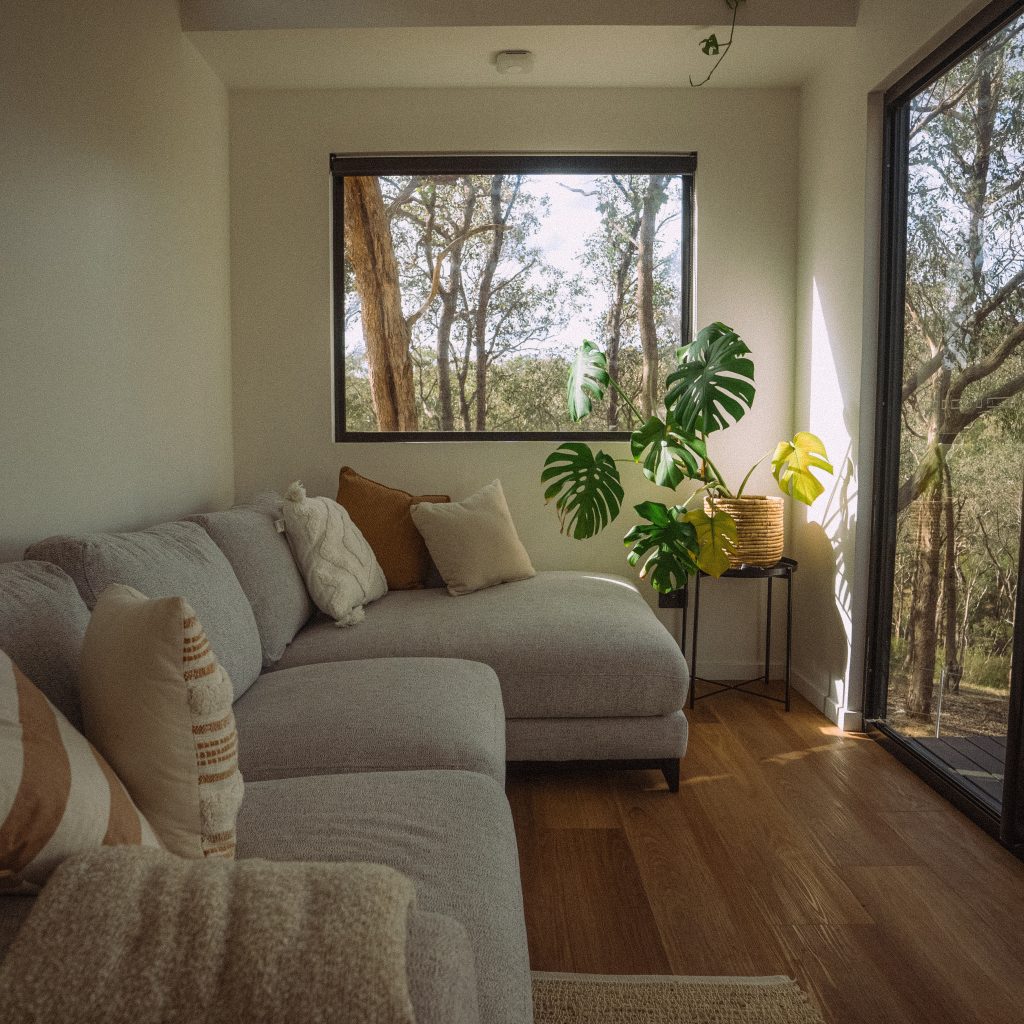
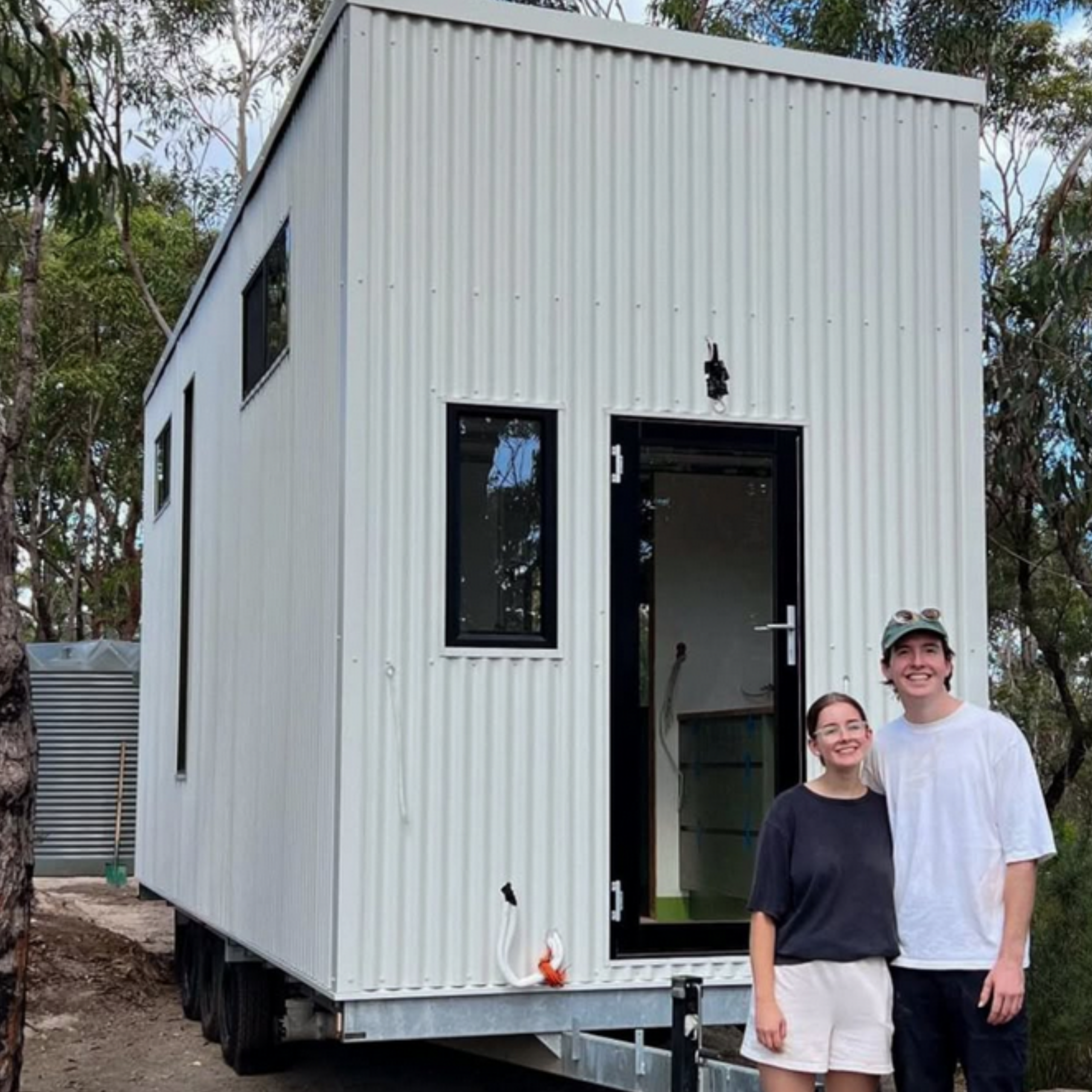
When Aaron and Amanda set out to build their tiny house on wheels, they weren’t chasing perfection.

They were chasing possibility.

With Aaron’s background as a carpenter and the steady support of his dad—a retired builder—they had the skills, the space, and the determination to make it happen. But what unfolded wasn’t a clean, linear build. It was something far more honest—and far more valuable for anyone considering a DIY tiny house in Australia.

Because this isn’t just a story about building a tiny house.

It’s about what happens after.


“You Might Have the Skills… But Not These Skills”

For many tradespeople, a tiny house on wheels can feel like familiar territory.

Timber framing. Cladding. Fixing out interiors.

But Aaron is quick to offer a reality check.

“And I think almost a little bit of having to swallow your own pride too. Like oh, I’m a builder, or I’m a carpenter, I know how to do this, but it’s almost like—well, yeah, you may have a skill set but you don’t necessarily have a skill set that’s within this category. You might have to learn a few new things too.”

A tiny house on wheels isn’t just a small house.

It’s a structure that behaves like a vehicle—where weight, movement, and constraints change everything. And that shift in mindset is often one of the biggest hurdles for experienced builders stepping into the tiny house space for the first time.


Social Media vs Reality: The Weight Problem No One Sees

Like many people drawn to tiny house living, Amanda began with inspiration.

Beautiful, polished images. Clean lines. Light-filled interiors.

But behind those images was something less visible—and far more critical.

Weight.

“And that’s what I was looking at—the polished versions. I’m like ‘oh, we could do this!’ and Aaron’s like ‘it just does not look the right weight’. So that was a learning as well, because what you see is social media versus reality… I would be showing him these beautiful glossy houses, but Aaron was learning—there’s no way that looks underweight.”

It’s a common disconnect in the tiny house world.

What looks good online doesn’t always translate to something that can legally and safely travel on Australian roads. And for Aaron and Amanda, that tension between inspiration and feasibility became a defining part of their build.


A Build Without a Blueprint

Unlike many builds that start with detailed plans and fixed budgets, this one unfolded in real time.

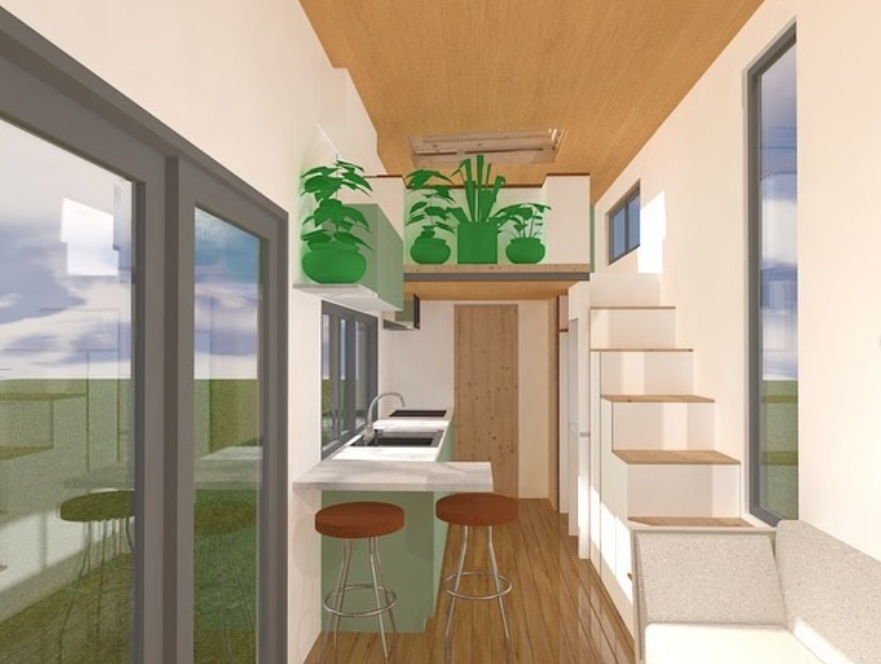
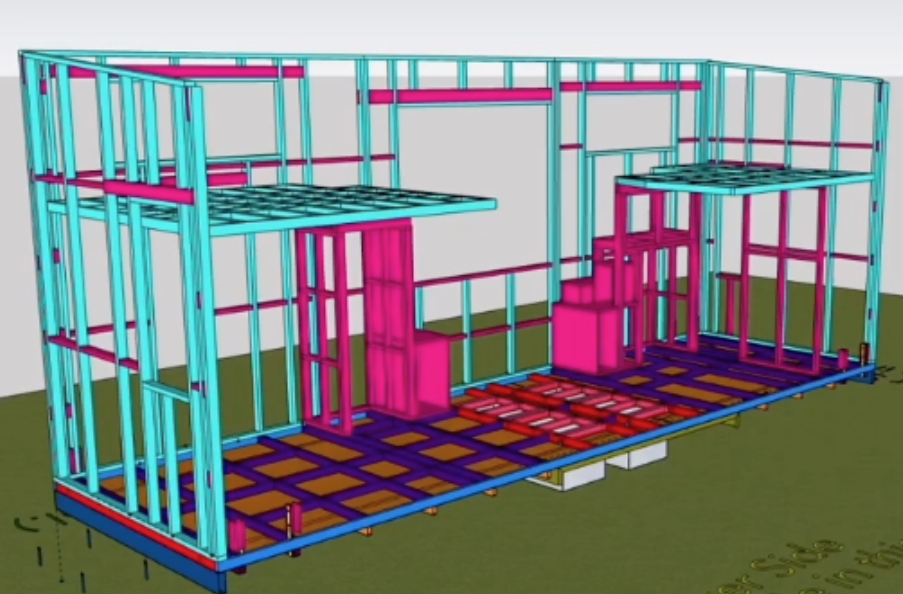
“We didn’t have a strict budget or a design. Like—we sat down and sketched it out, and we built a little 3D model with a hard cardboard you can get from Officeworks. We sort of glued that together. But we were very hap-hazard with this build.”

Amanda laughs as she reflects on how far they drifted from that original vision:

“Very ad-hoc, as we went. Because our house looks nothing like that little 3D thing! We changed it so many times along the way.”

This flexibility gave them freedom—but it also introduced trade-offs, some of which only became clear once they were living in the space.


The Hidden Cost of Reclaimed Materials

Like many tiny house builders, Aaron and Amanda were drawn to reclaimed materials.

It felt sustainable. Affordable. Full of character.

But the reality was more complicated.

Second-hand French doors seemed like a great find—until they spent countless hours stripping lead paint, repainting, installing… and then living with the consequences.

Drafts. Air leaks. Ongoing inefficiency.

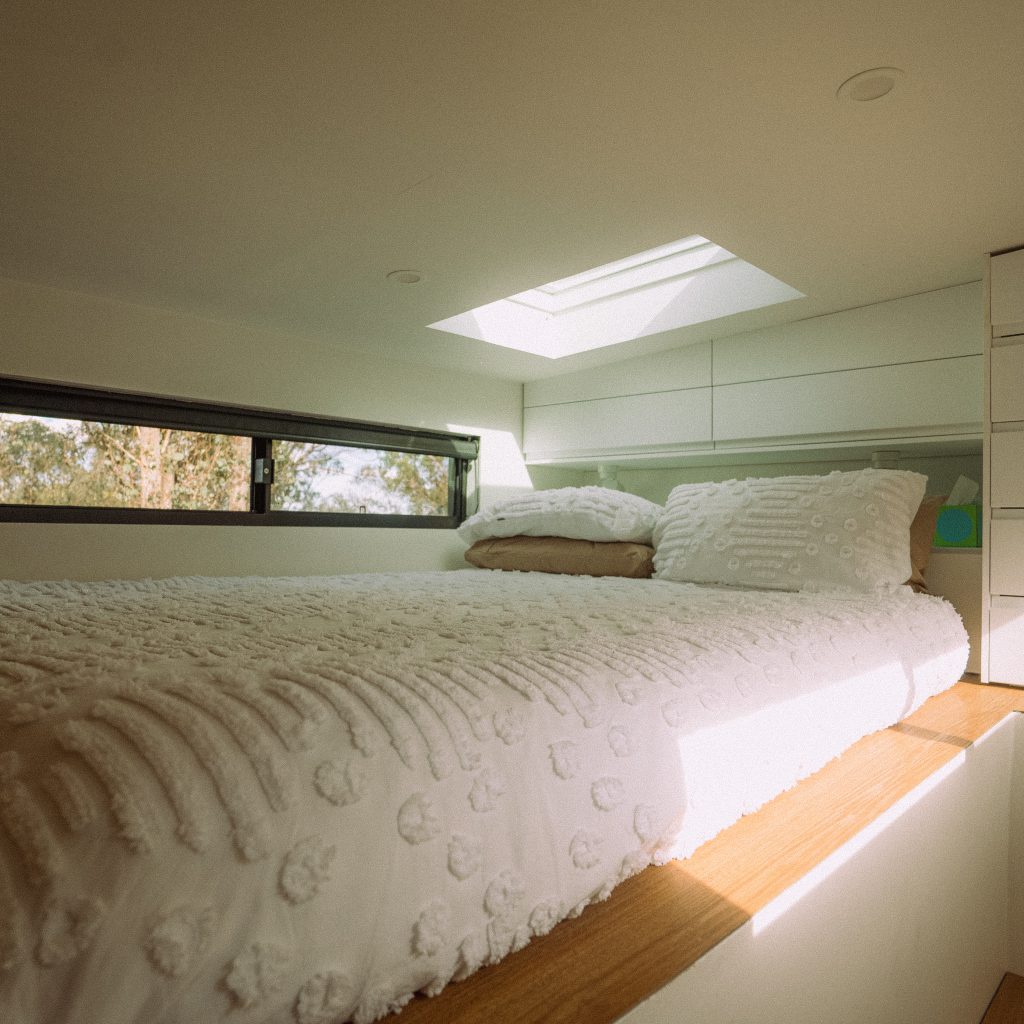
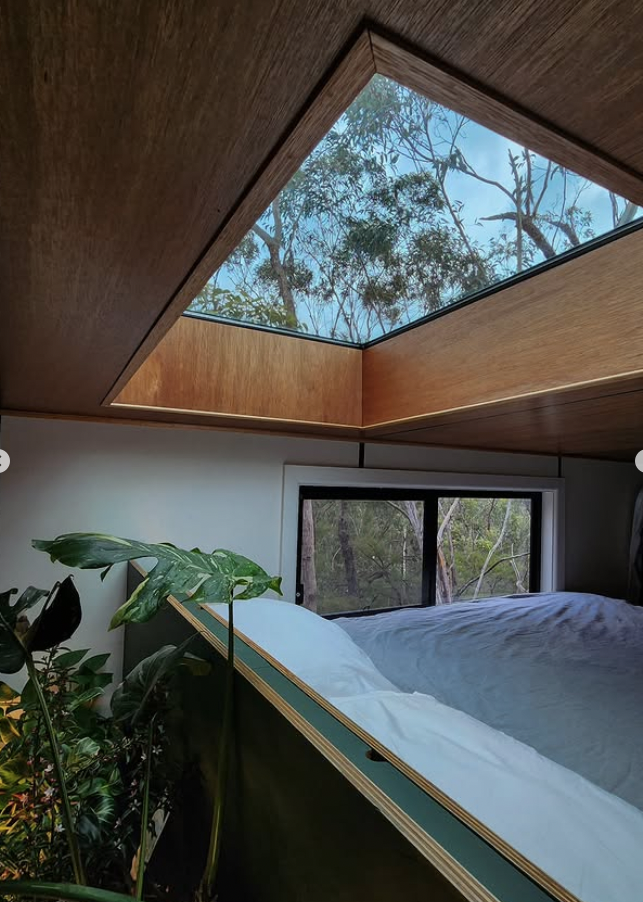
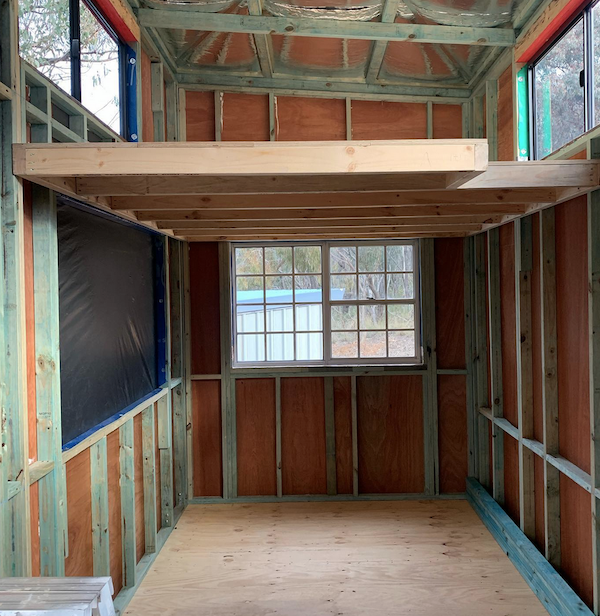
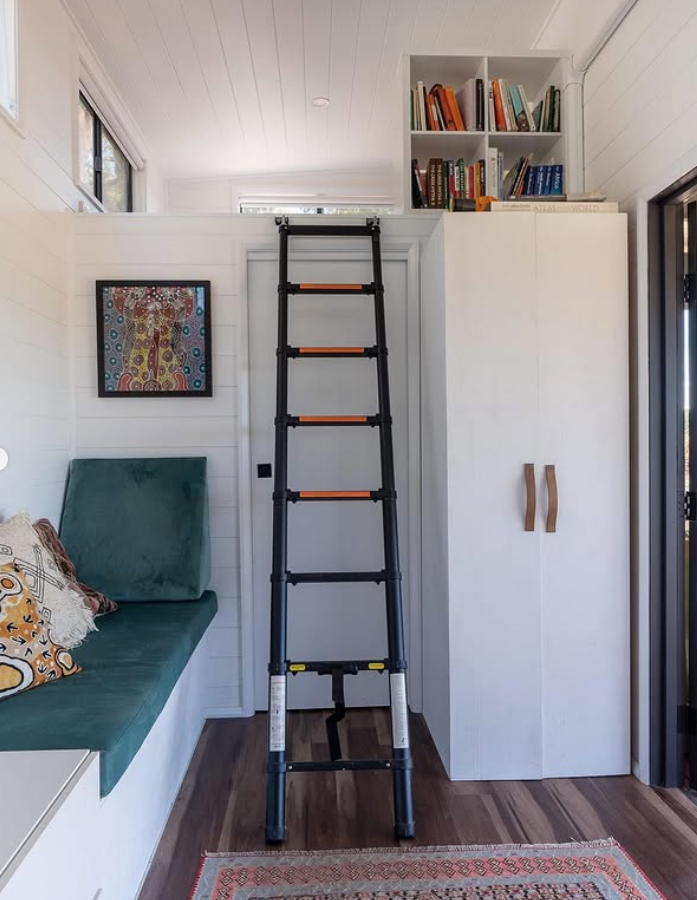
Similarly, reclaimed windows shaped more than just the look of the house—they dictated the structure itself. The height of those windows determined the loft height, ultimately leaving Aaron with less space than he would have liked.

In a conventional build, these compromises might be manageable.

In a tiny house, every millimetre matters.


“There’s No Escape in a Tiny House”

Tiny house living is often romanticised as simple, peaceful, and freeing.

And it can be.

But it also comes with a level of intensity that’s hard to understand until you experience it.

“There’s no escape in a tiny house. In every room you are in that same room.”

It’s a simple statement—but it captures one of the most overlooked aspects of tiny living.

Space isn’t just physical. It’s emotional. Psychological. Relational.

And over time, that reality shapes how people use—and adapt—their homes.


From Tiny House to Expanding Home

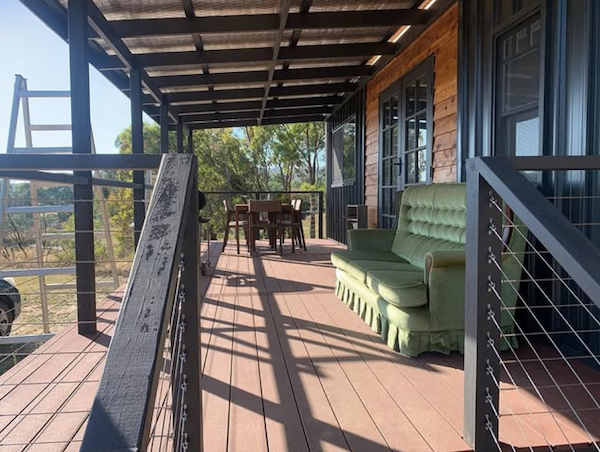
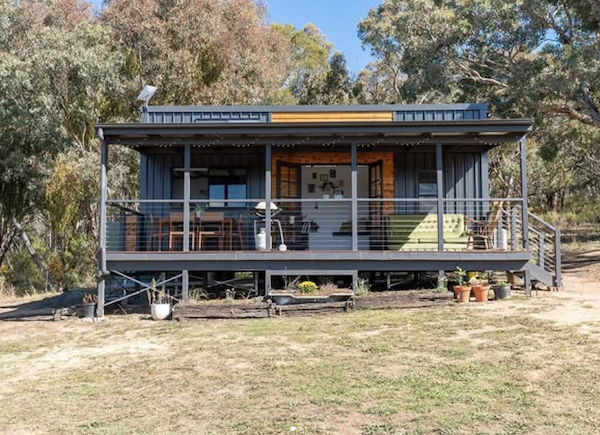
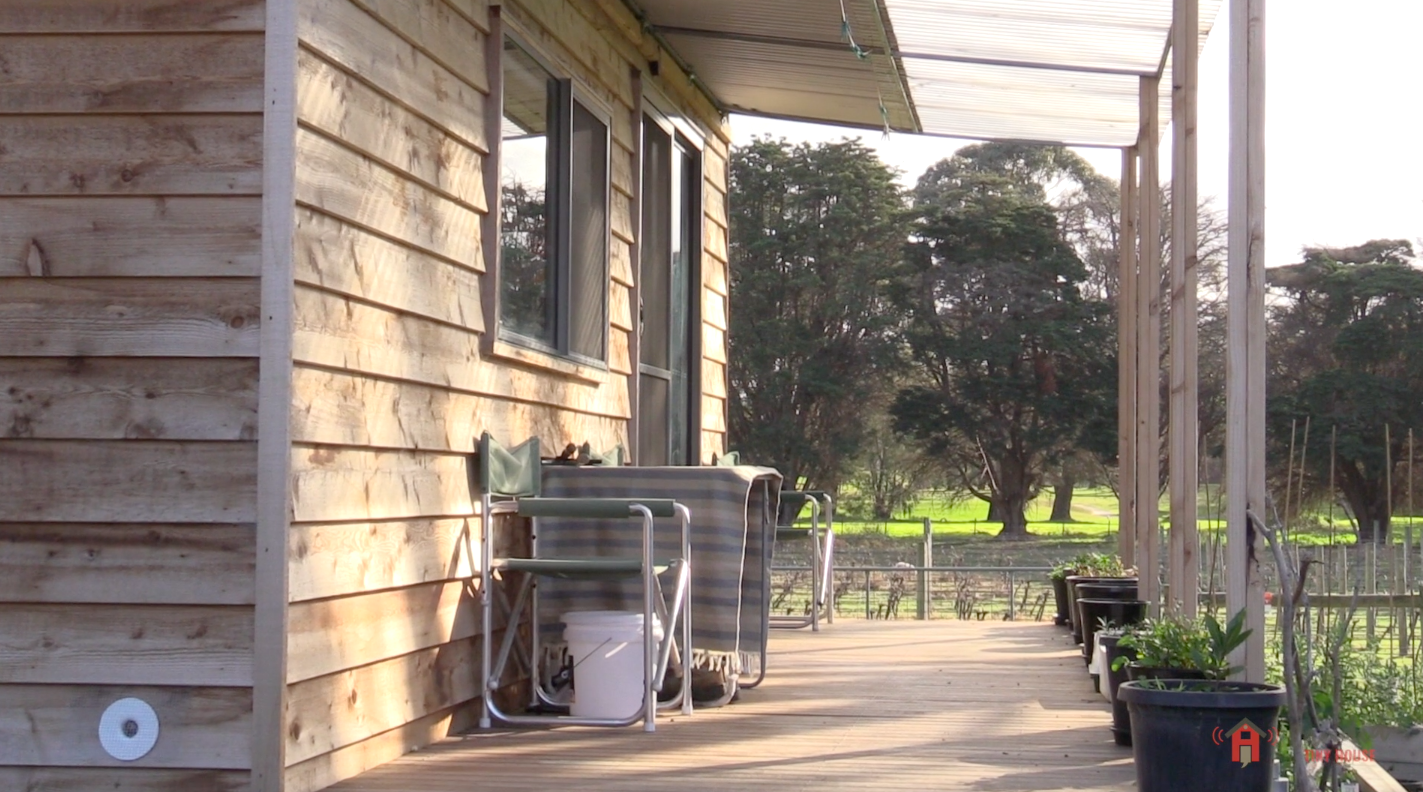
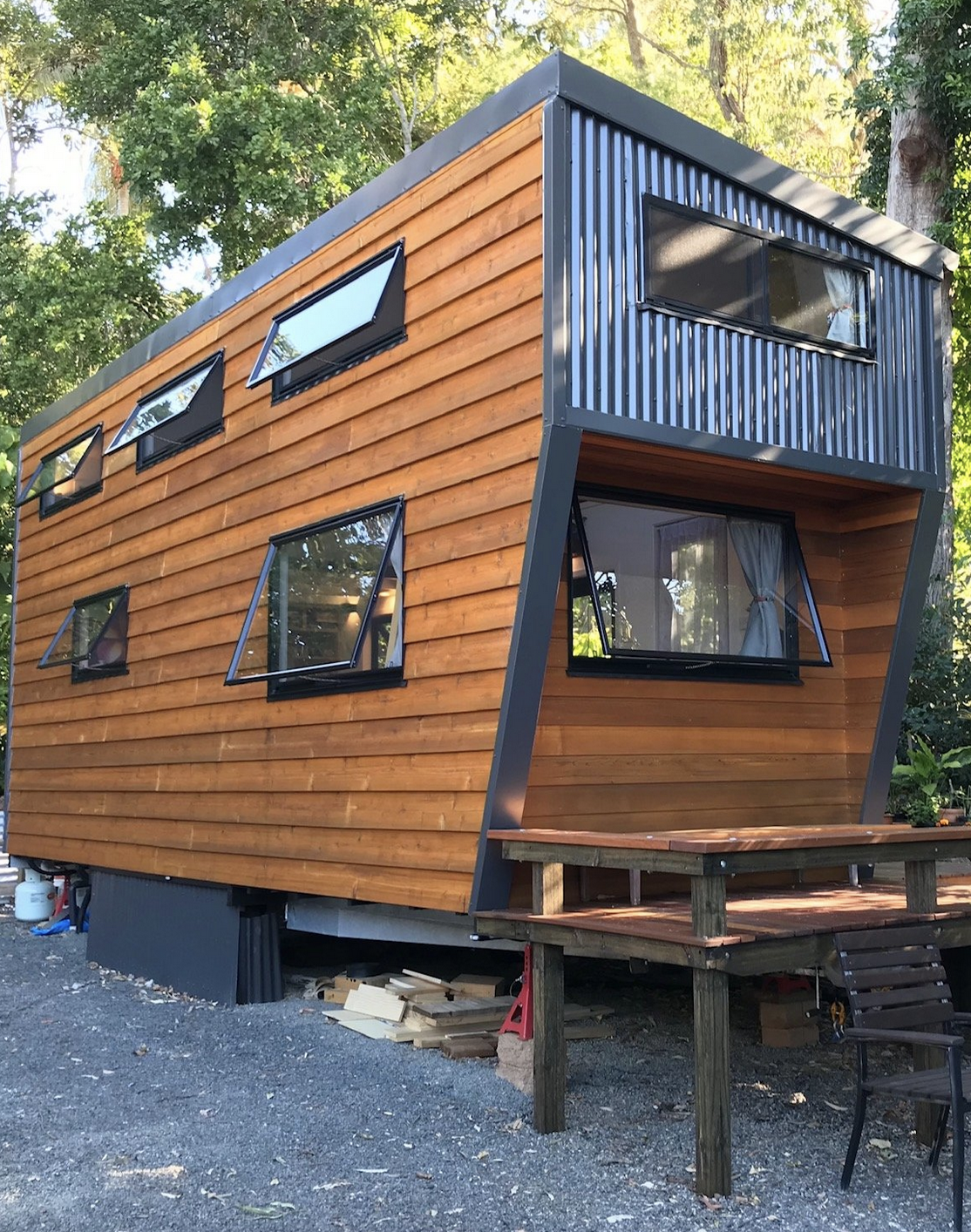
After completing their build and living in it for a while, Aaron and Amanda built a deck and then they roofed it.

And in doing so, they didn’t just add outdoor space—they fundamentally changed the performance of their tiny house.

“We noticed when we first moved down here—we have a deck on the house now with a roof, which is shading quite a lot of the house from the, because we’re north facing, from that northern sun, and that deck has cooled the house down tremendously. But before that we were just getting baked. And because our house is monument so it’s dark anyway and it’s drawing heat, we were really, really hot.”

In the Australian climate, this kind of adaptation isn’t just about comfort—it’s about livability.

Dark external cladding, like Monument, can absorb significant heat. Without adequate shading, tiny houses can quickly become uncomfortably hot, especially in summer.

The addition of the deck—and crucially, the roof—created shade, reduced heat gain, and introduced a new kind of living space that extended beyond the trailer itself.


Building Together

Behind every stage of the build was a quiet but powerful factor: support.

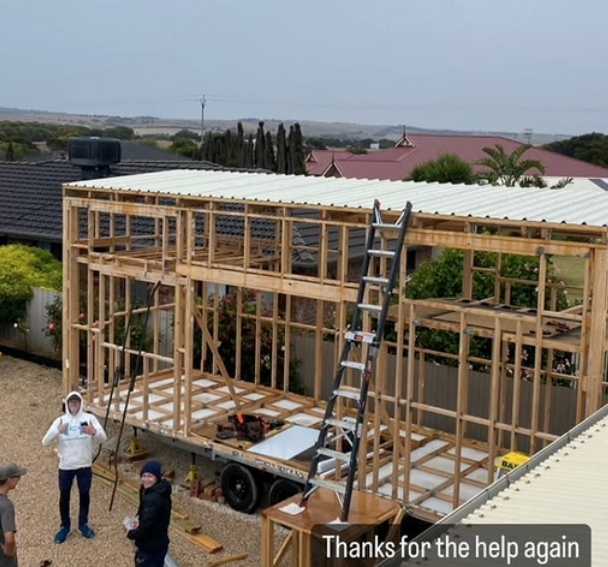
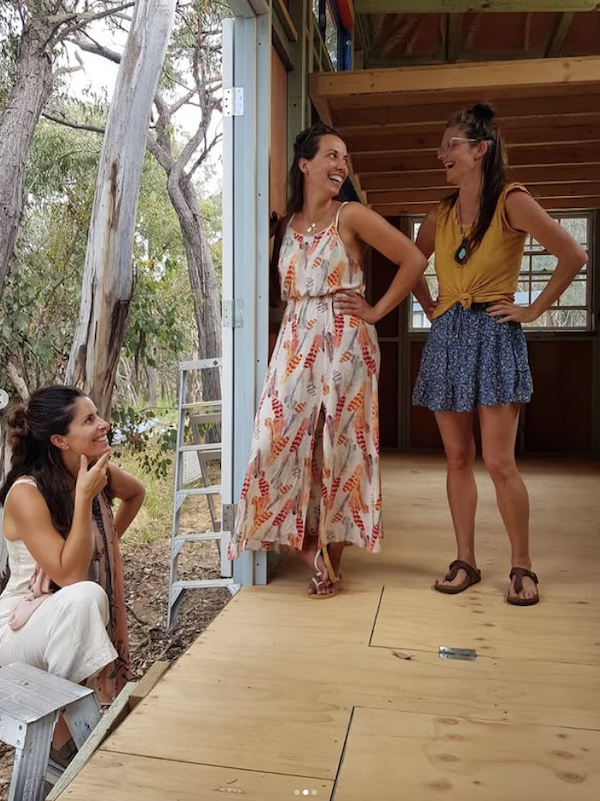
“My father is a licensed builder so that helps, straight off the bat, and the ability to be able to build it on family property, that was another huge help… And there are a lot of tasks that just require two people. You can’t do it by yourself. And when you’re at heights, it’s even more dangerous, so he was a massive help.”

Tiny house builds are often portrayed as solo projects.

But in reality, they’re rarely done alone.

Whether it’s lifting walls, installing roofing, or simply staying safe on site, having another set of hands—and someone you trust—can make all the difference.


A Tiny House That Keeps Changing

Three years on, Aaron and Amanda are still living in their tiny house—but the building hasn’t stopped. 

Like many tiny houses, it didn’t reach a final, finished state and stay there. It kept evolving. Adjusting to the climate. Responding to what worked—and what didn’t. Growing alongside the family living in it, and expanding to accommodate them!

Because this is the part of the tiny house journey that rarely makes it onto social media—the long-term reality. The iterations. The refinements that only come after years of living in a small space.

And to see where their tiny house has landed now…

You’ll need to watch the episode, above.


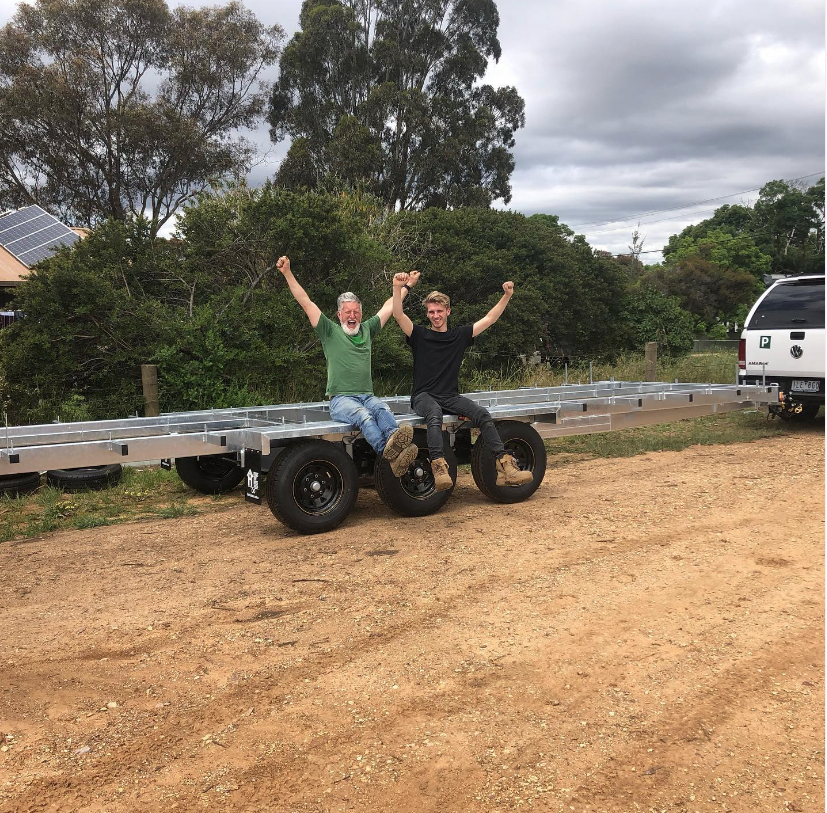
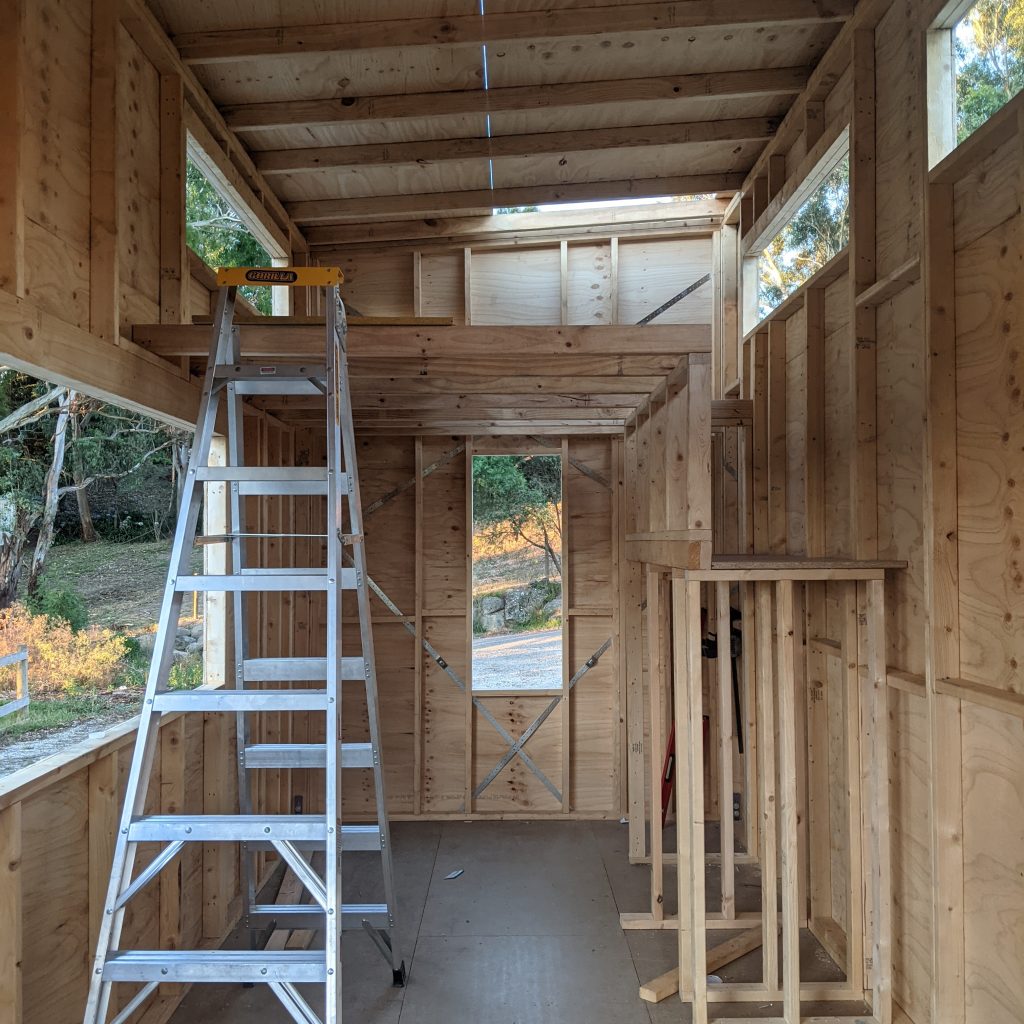
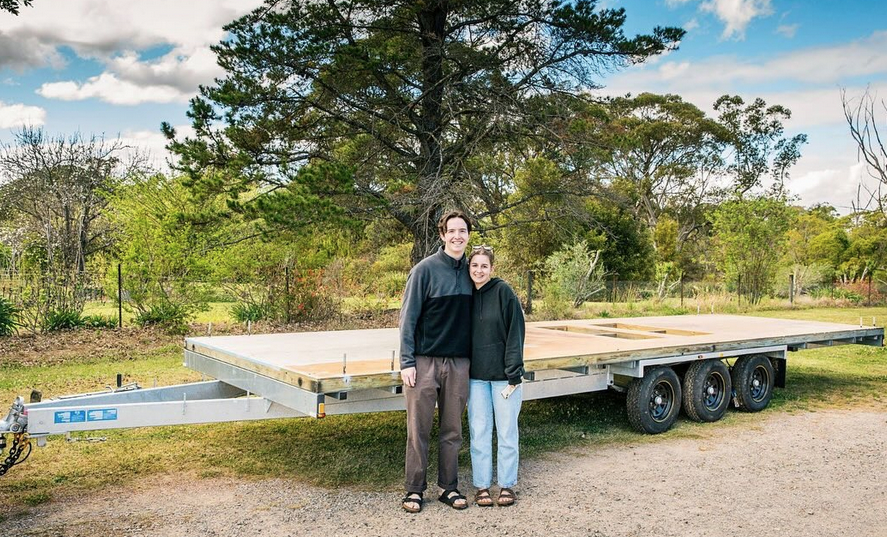
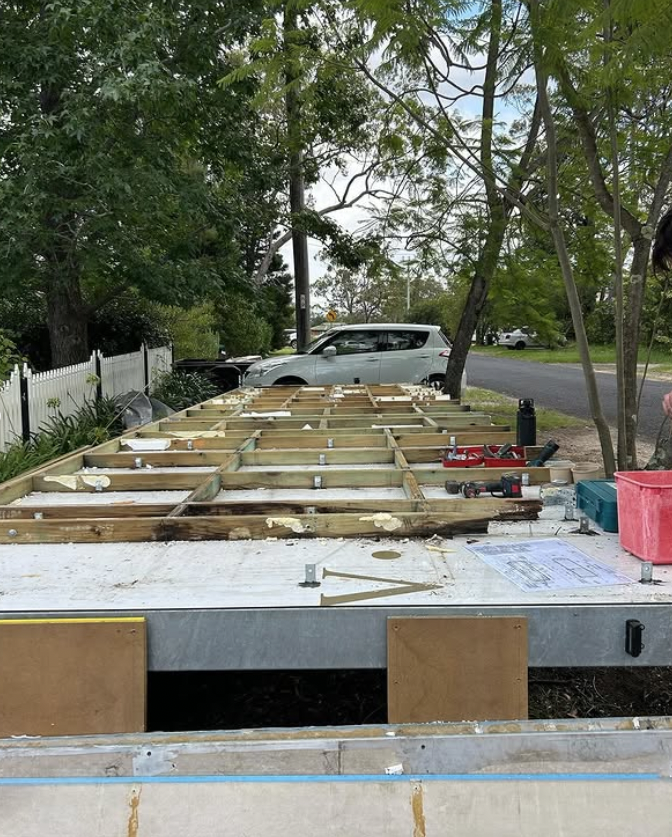
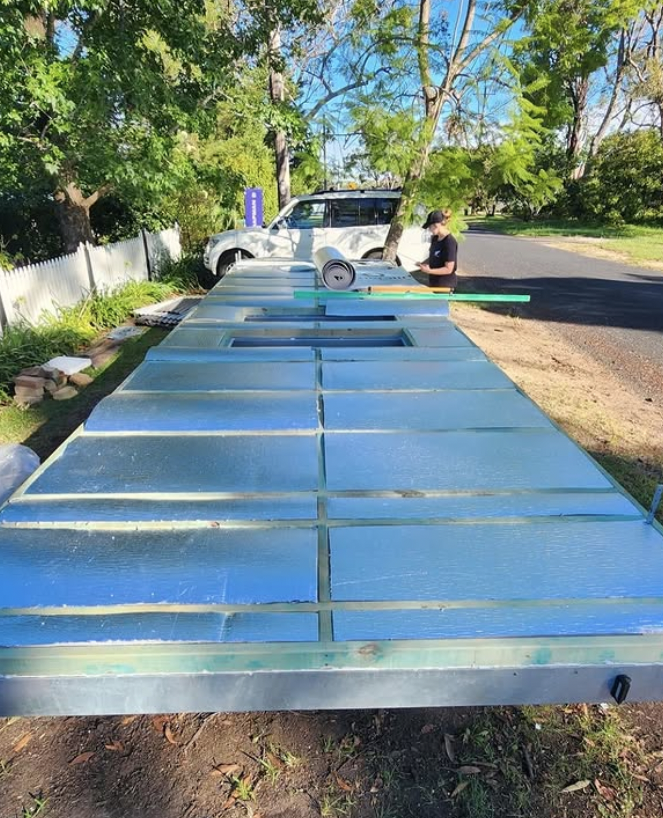
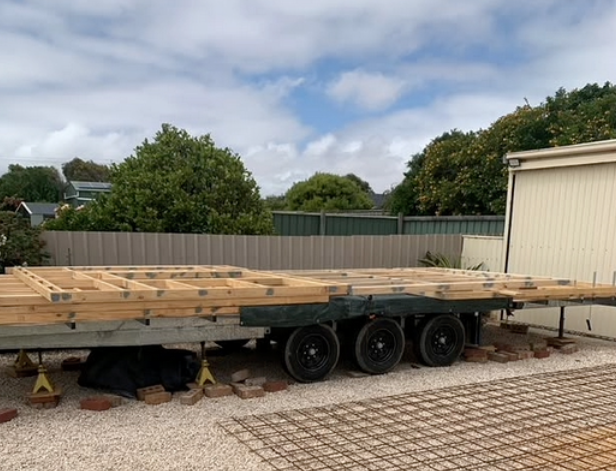
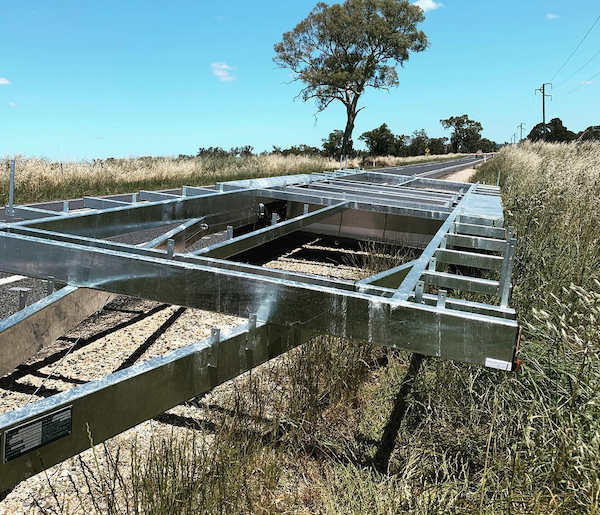
tiny_house_trailer_transport_hot_dip_galvanised_8_meters
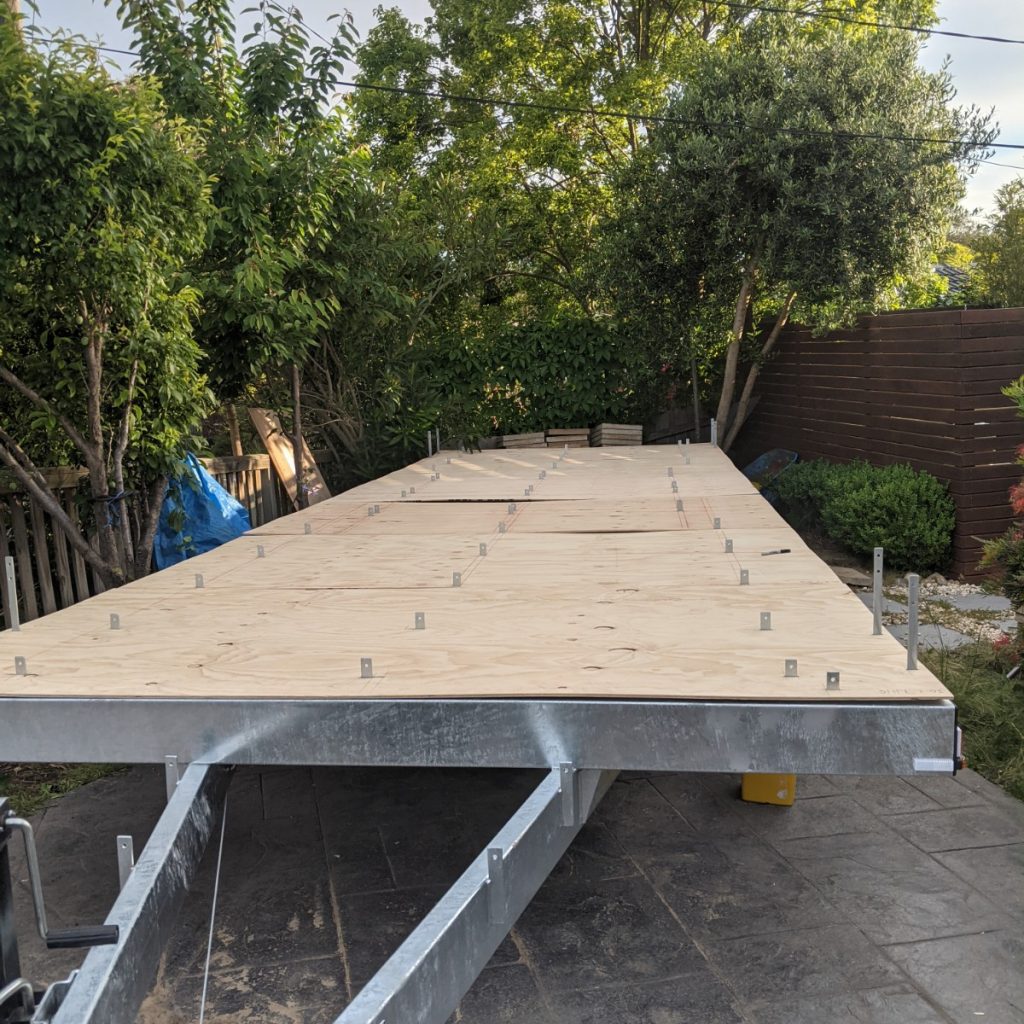
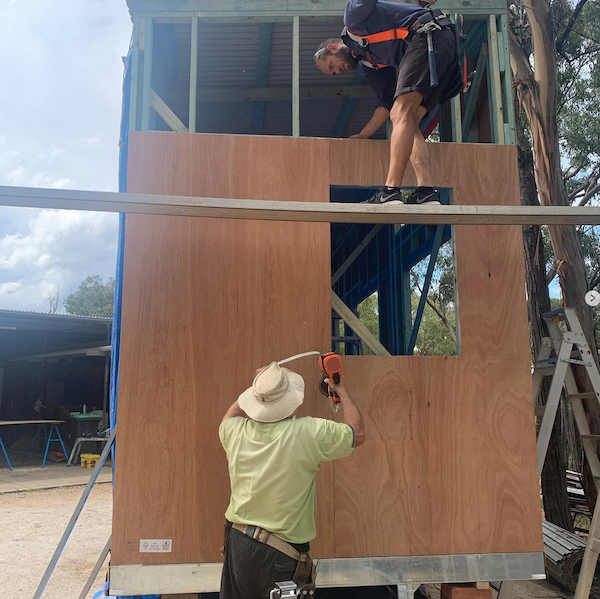
tiny_house_diy_plywood_bracing
tiny_house_diy_carpenter_8_meter_tiny_house
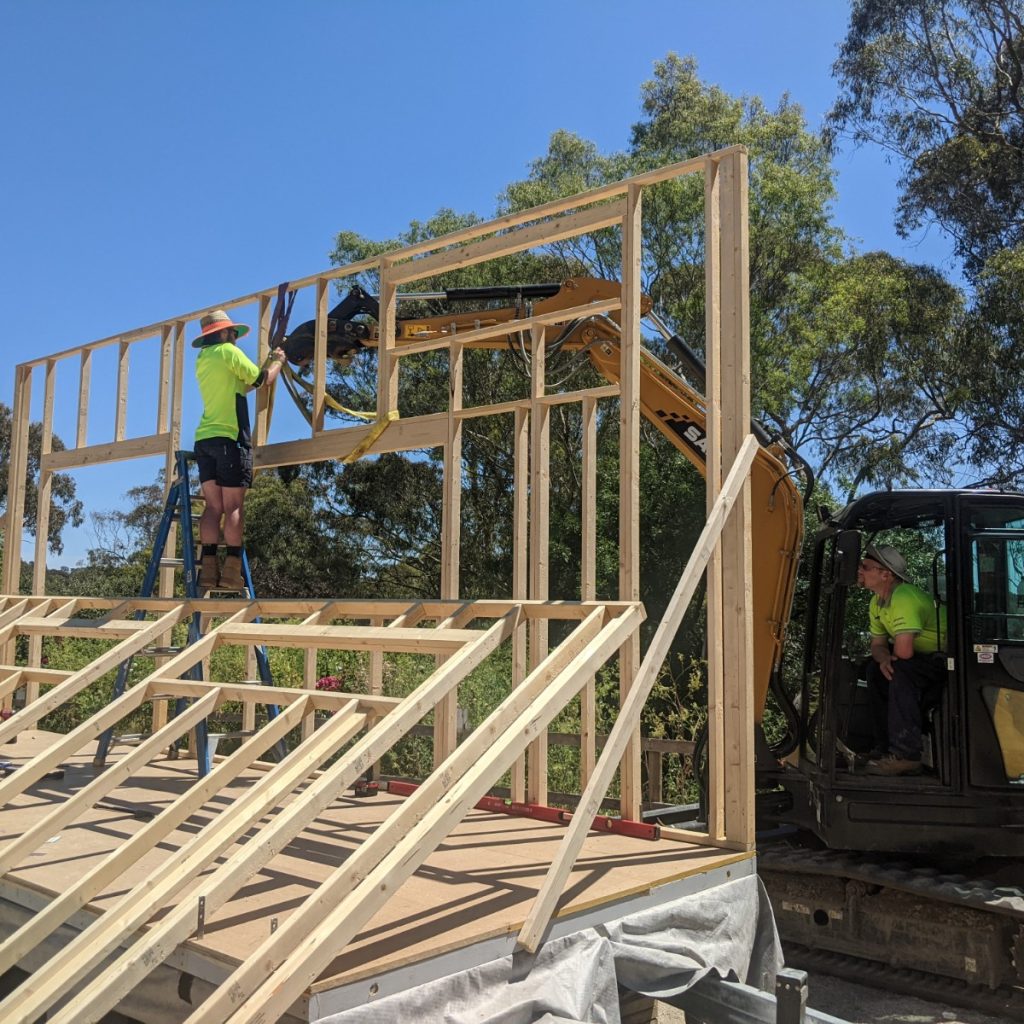
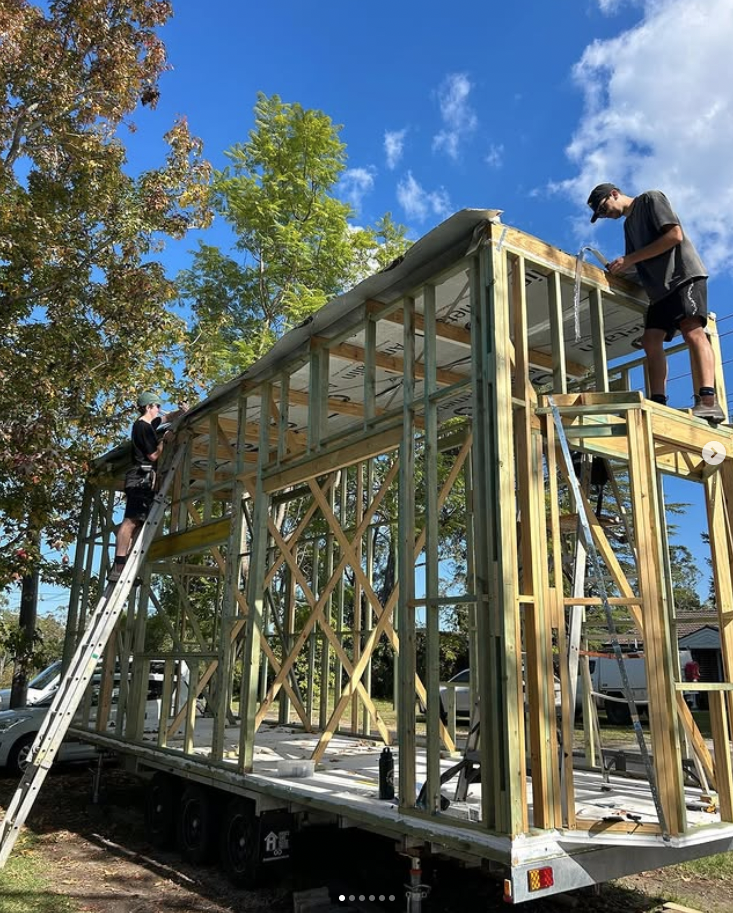
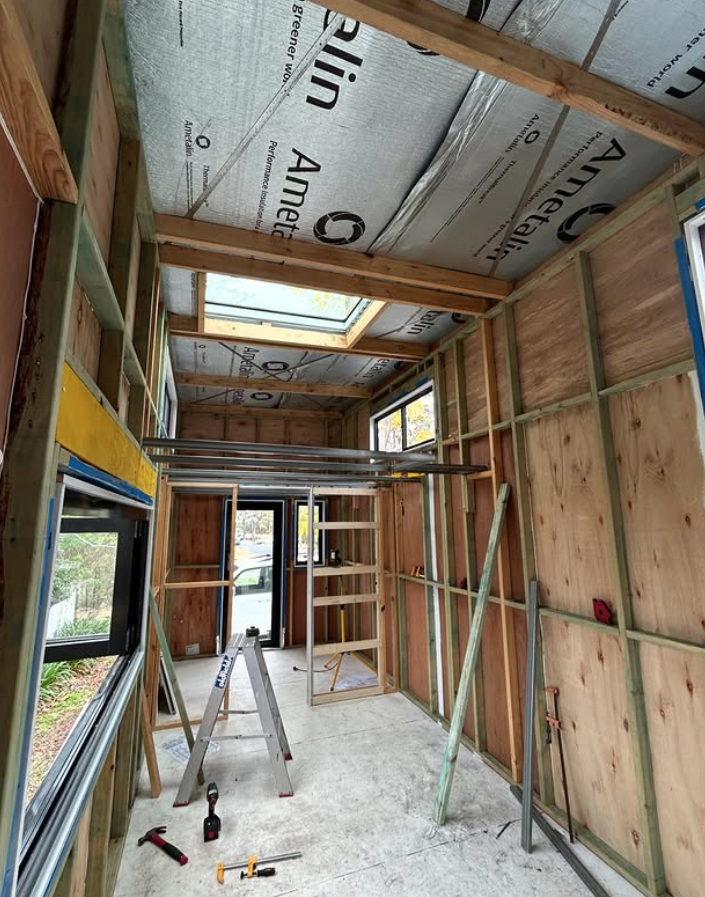
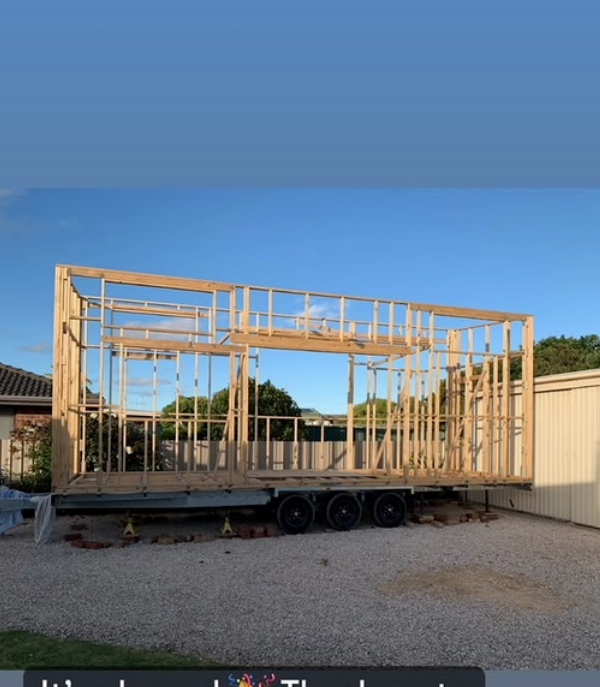
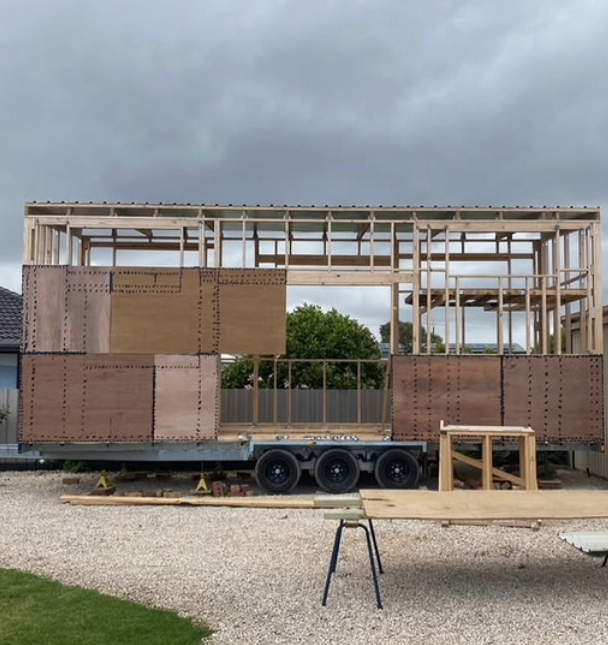
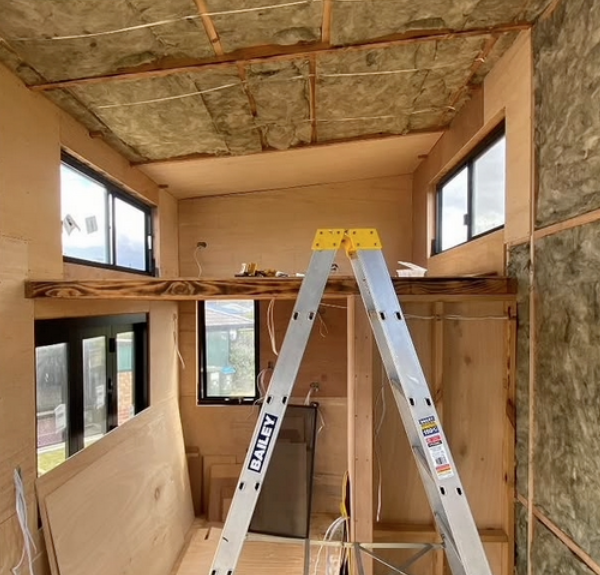
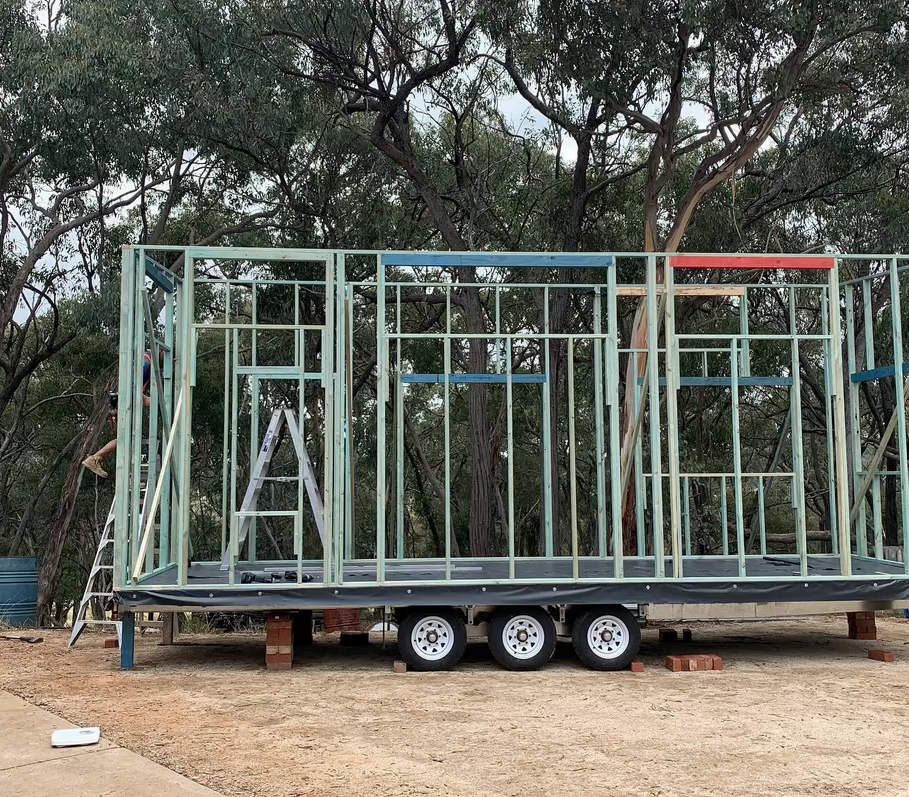
tiny_house_framing_stage_with_loft_bracing_ply
tiny_house_construction_UCM_attaching_trailer_to_frame
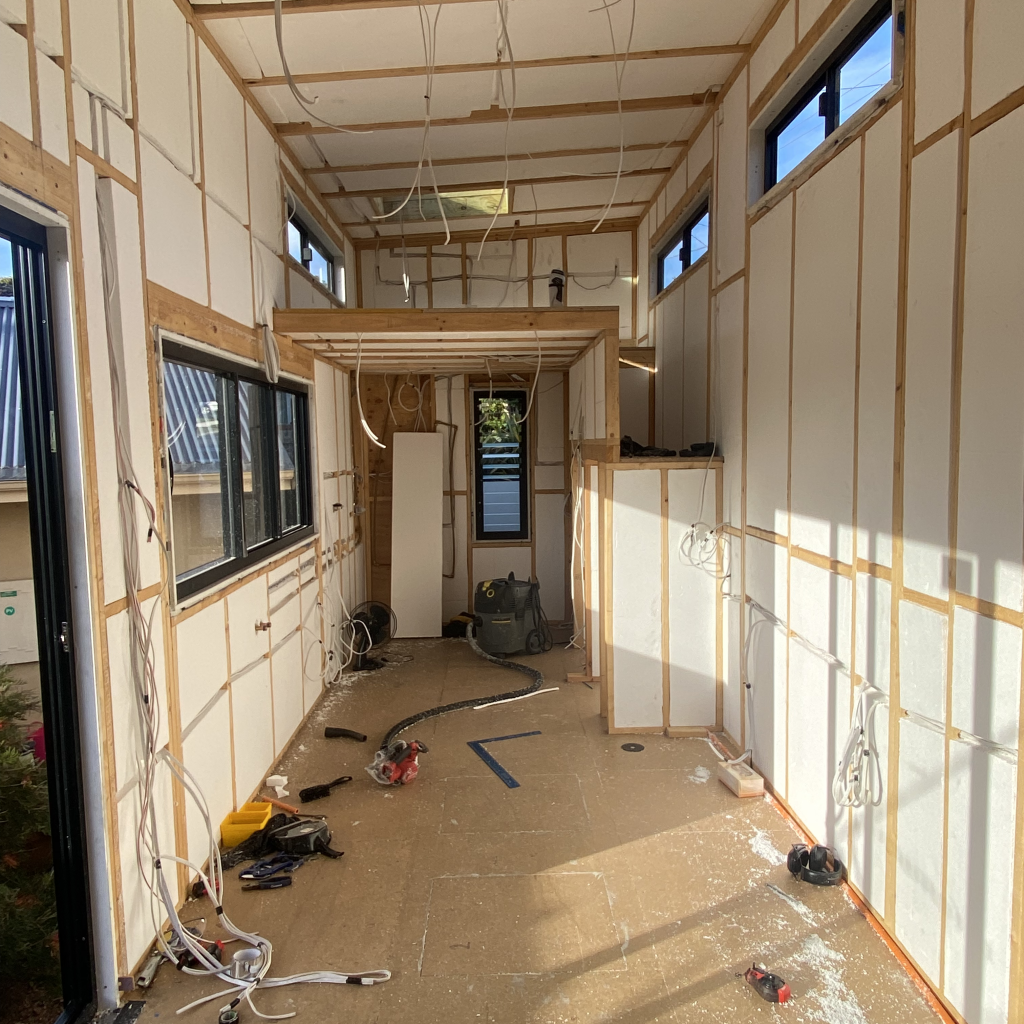
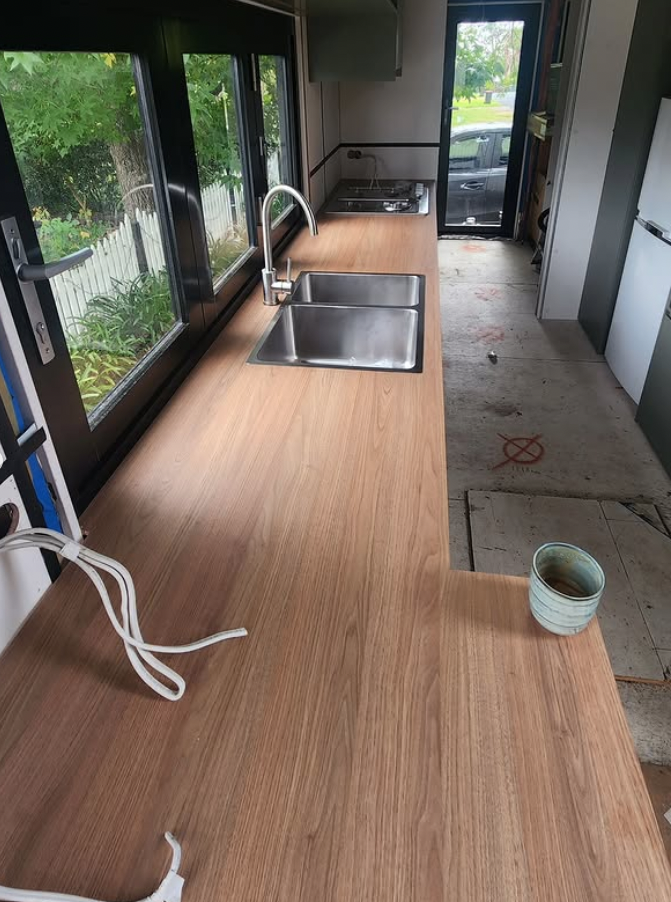
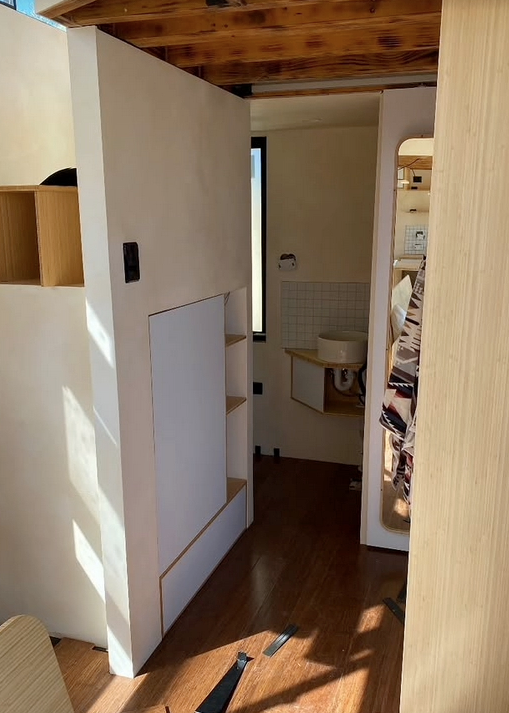
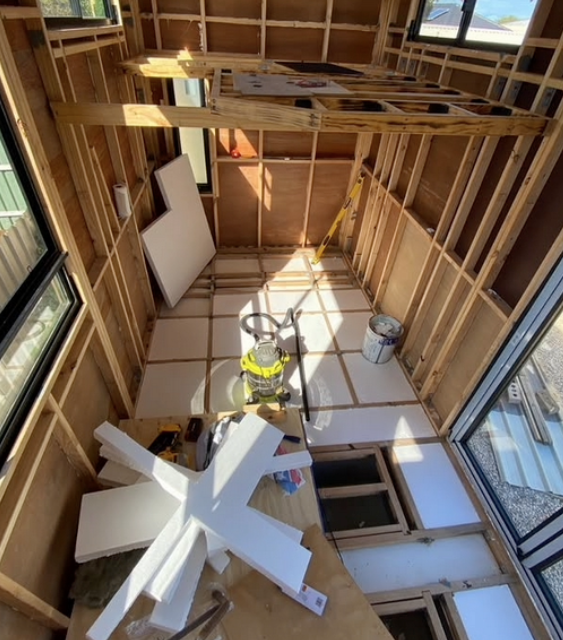
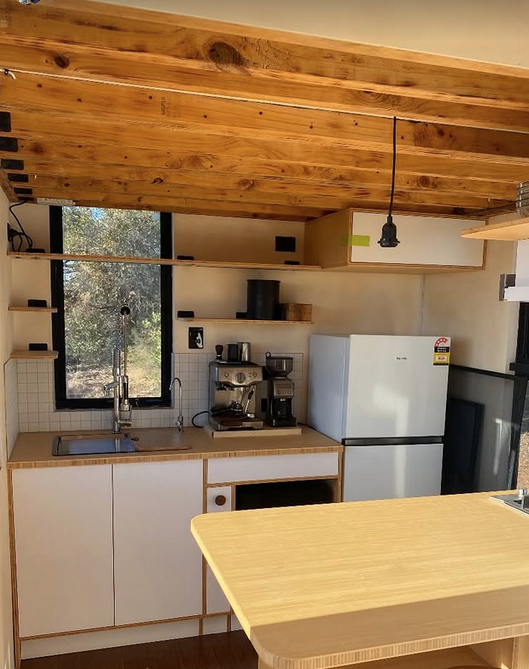
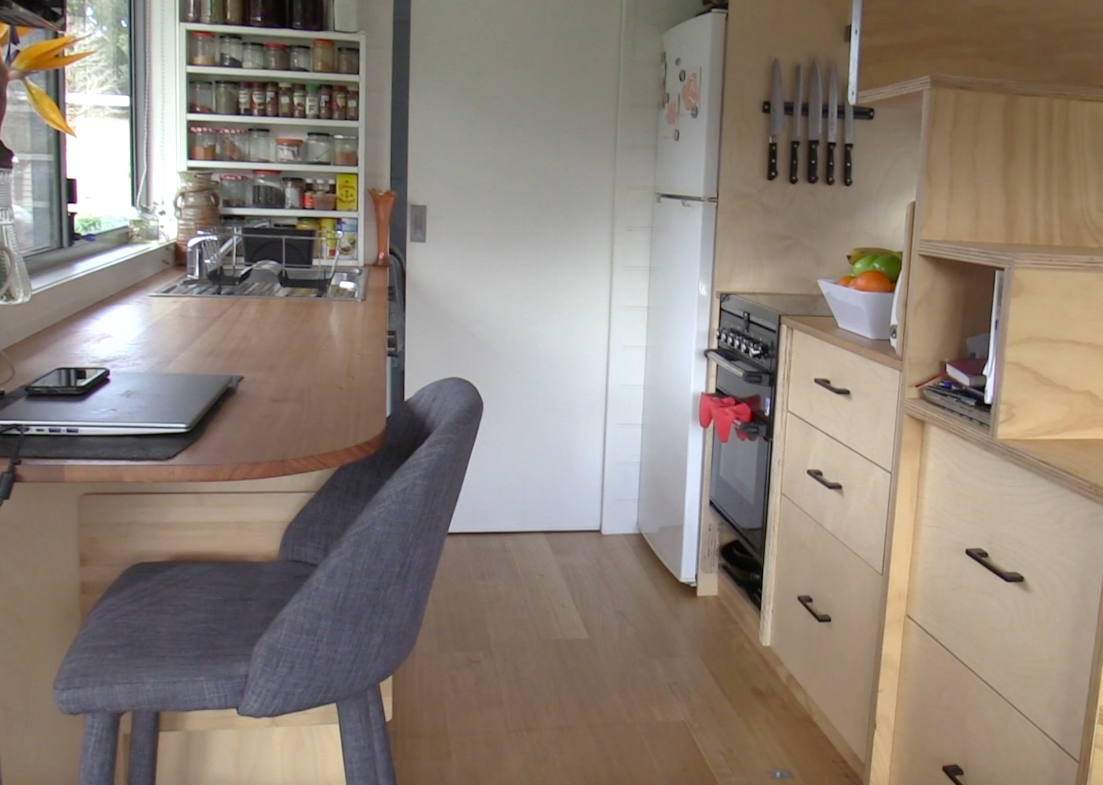
tiny_house_white_kitchen_under_construction
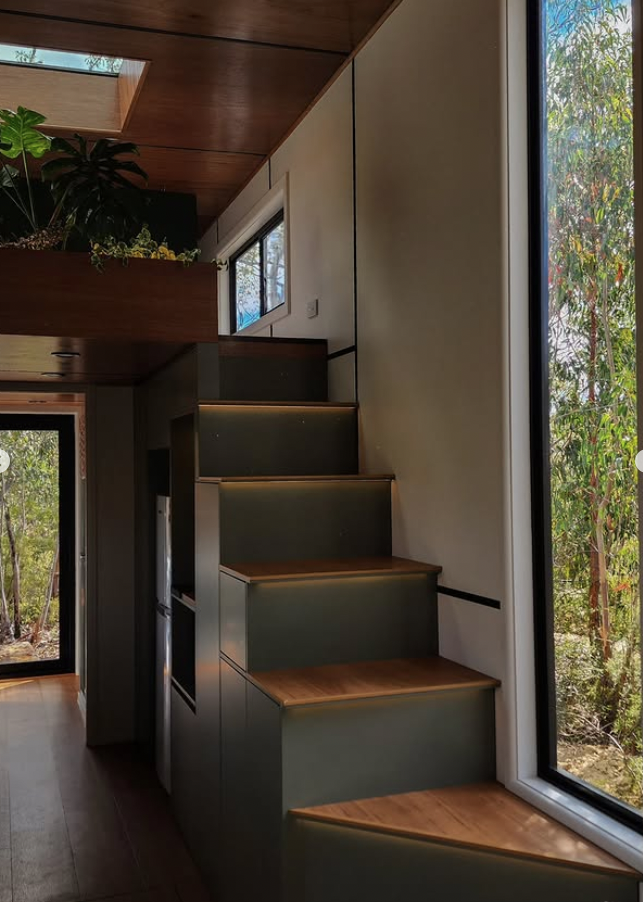
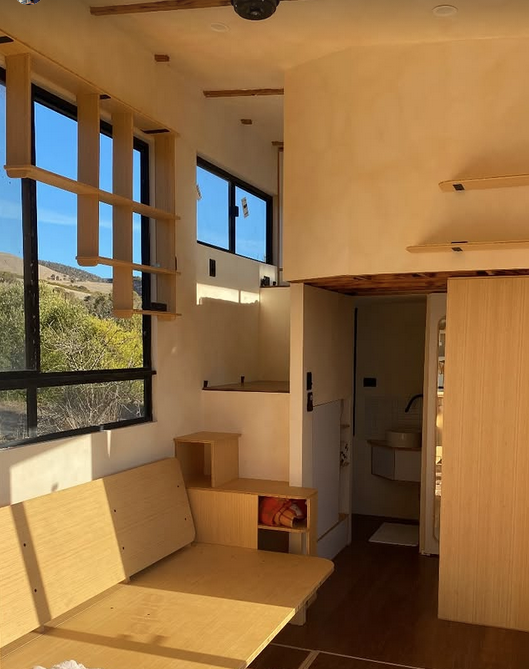
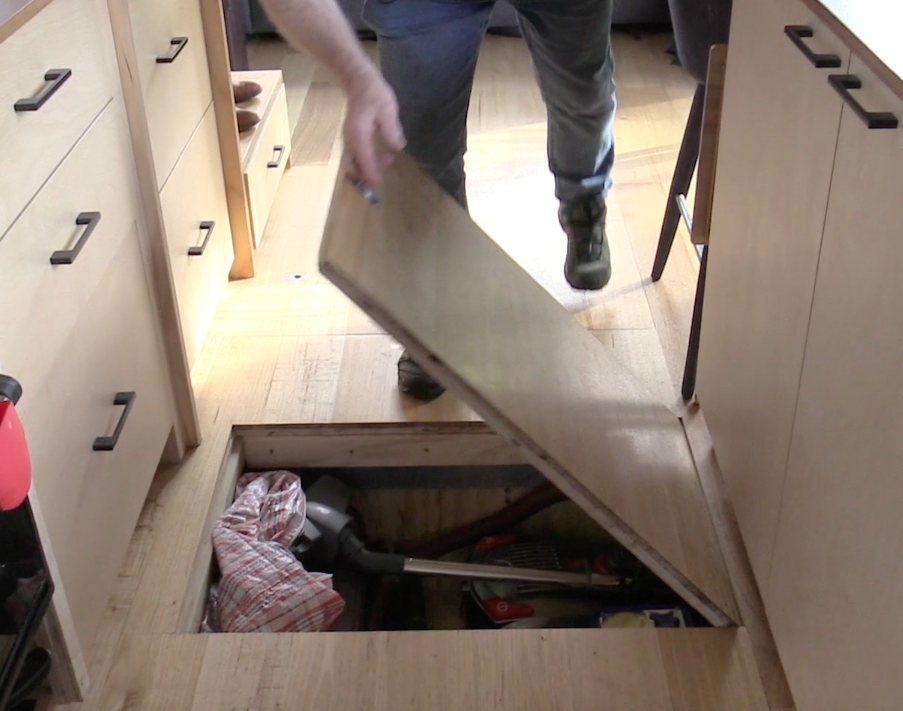
tiny_house_fridge_in_stairs_cabinets
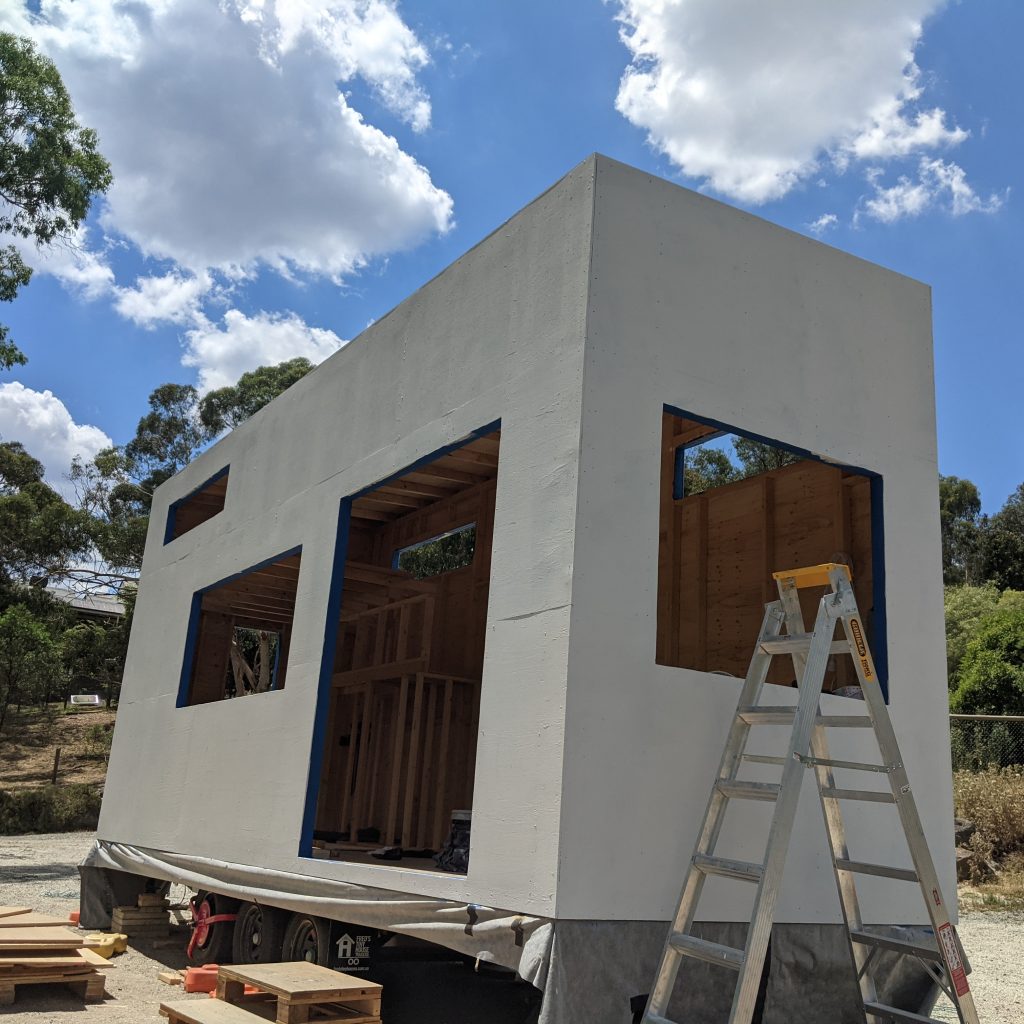
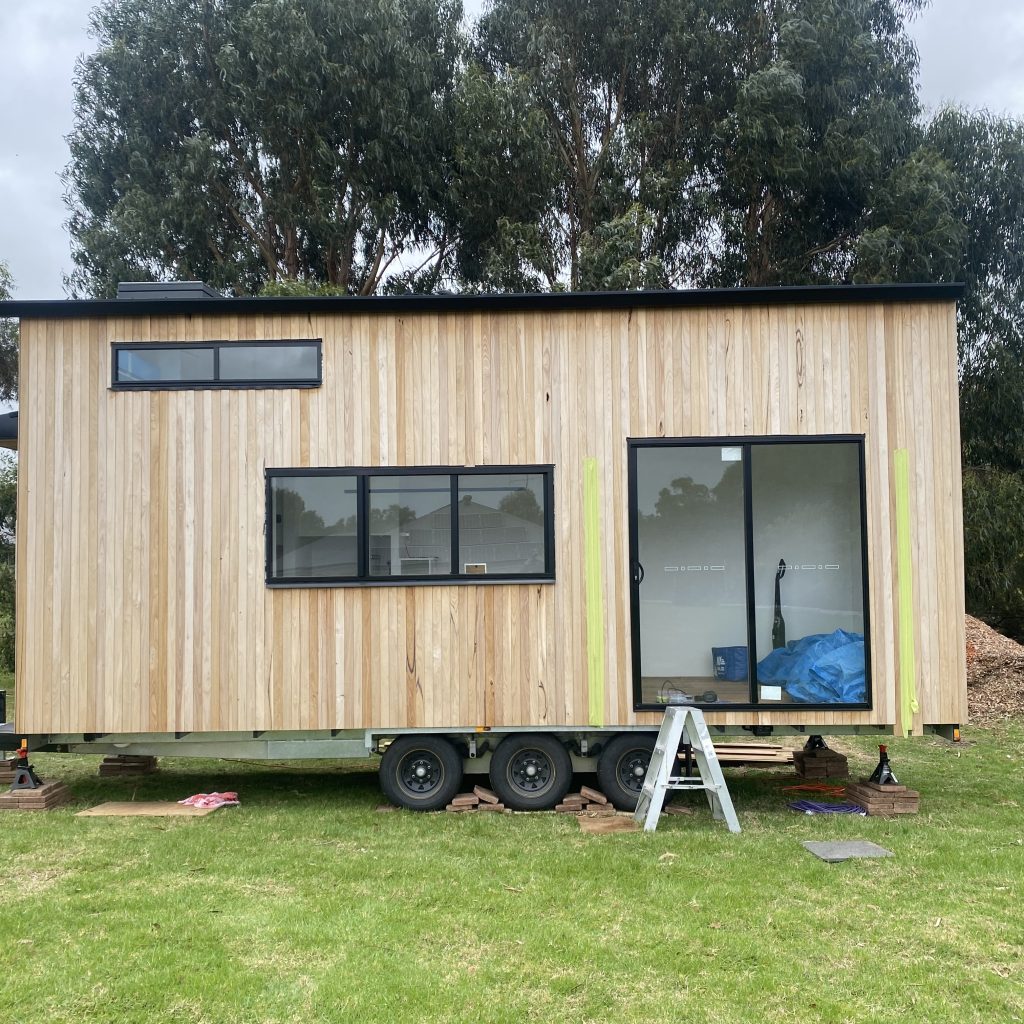
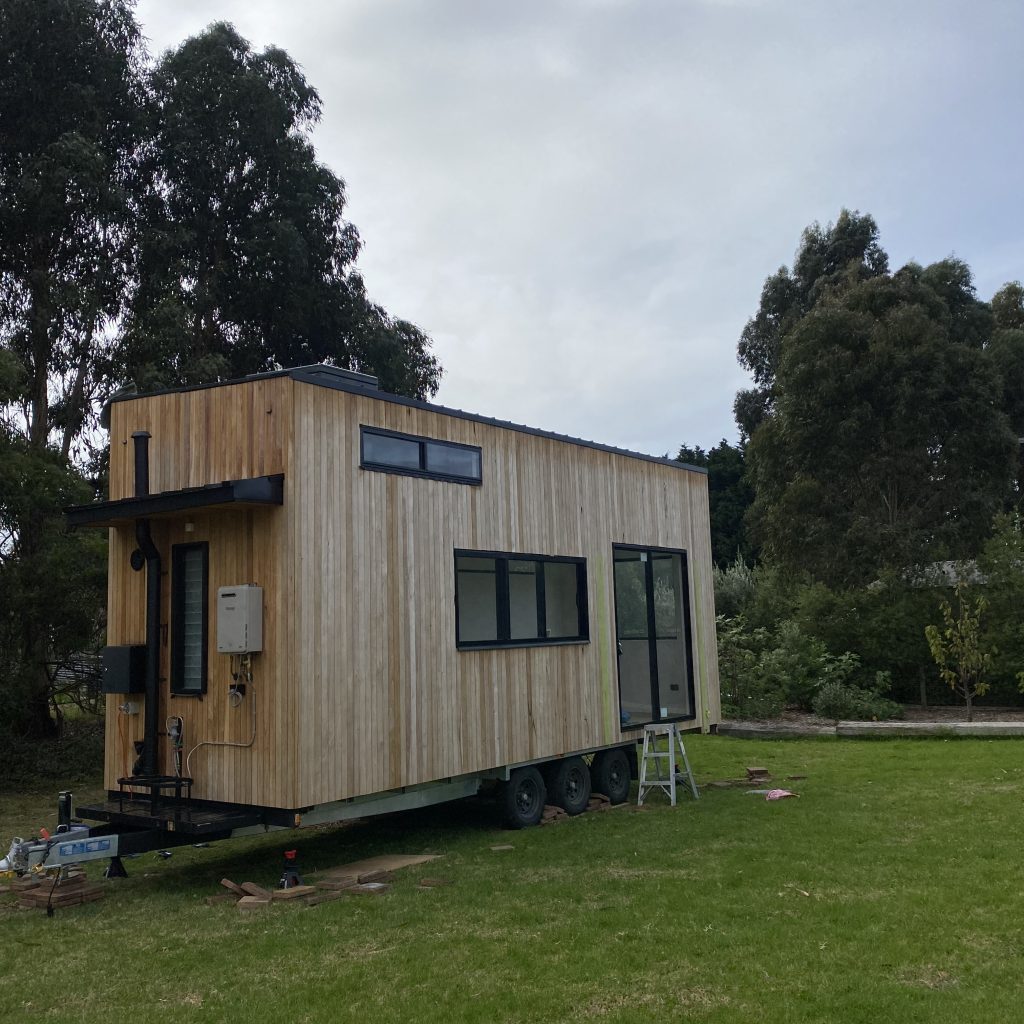
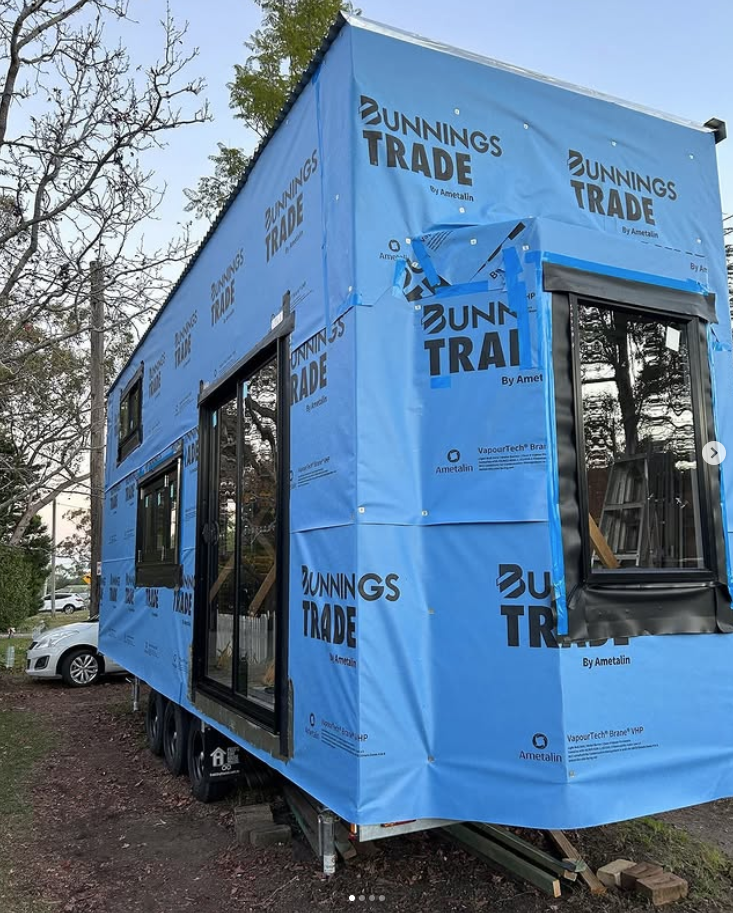
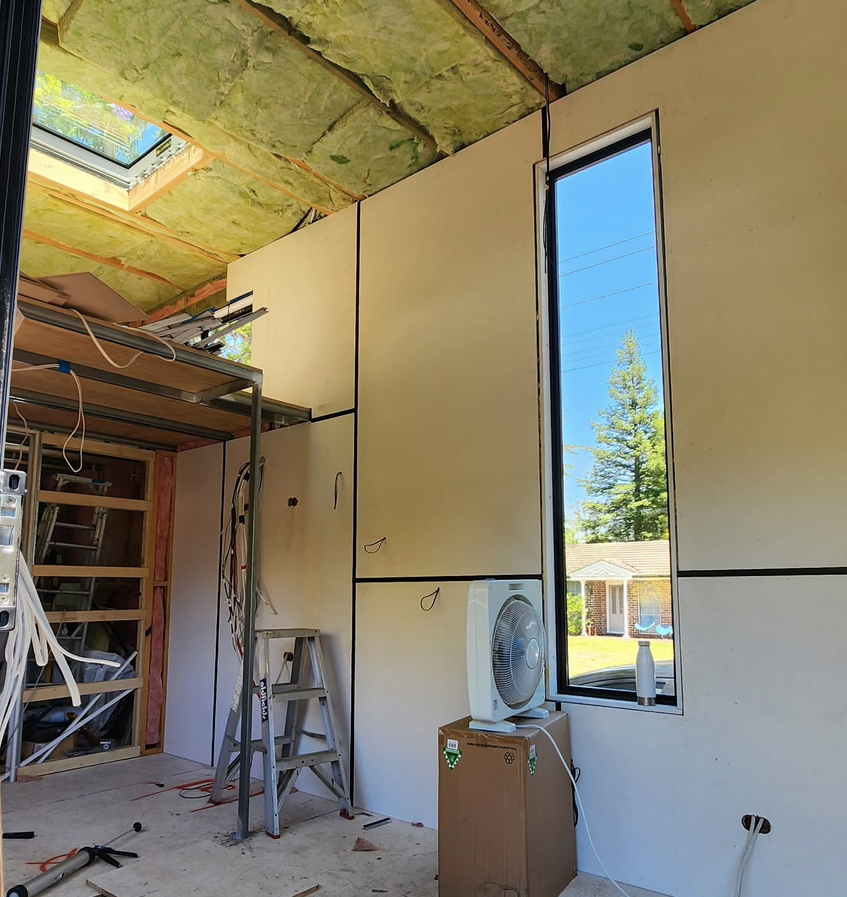
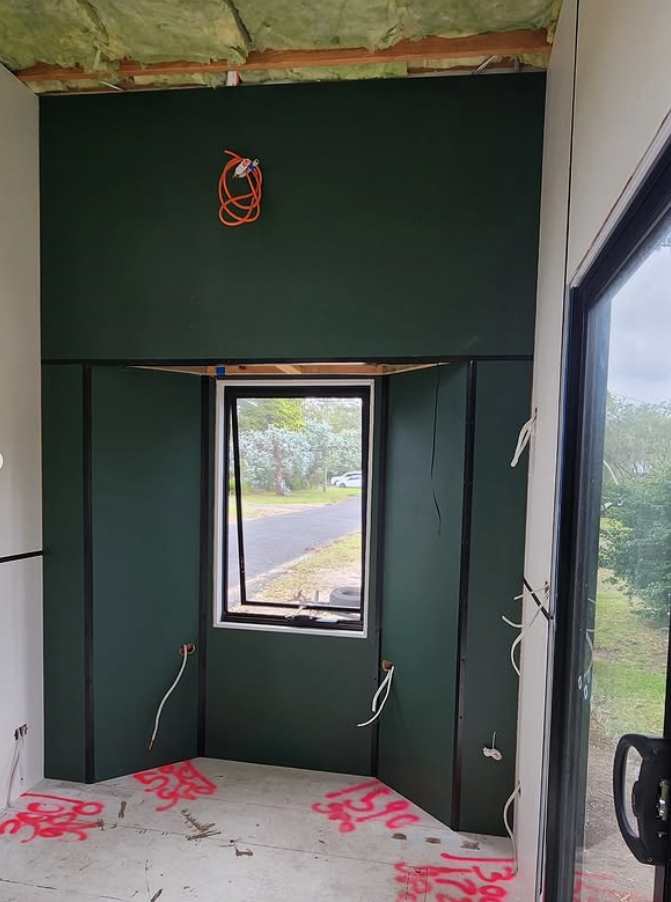
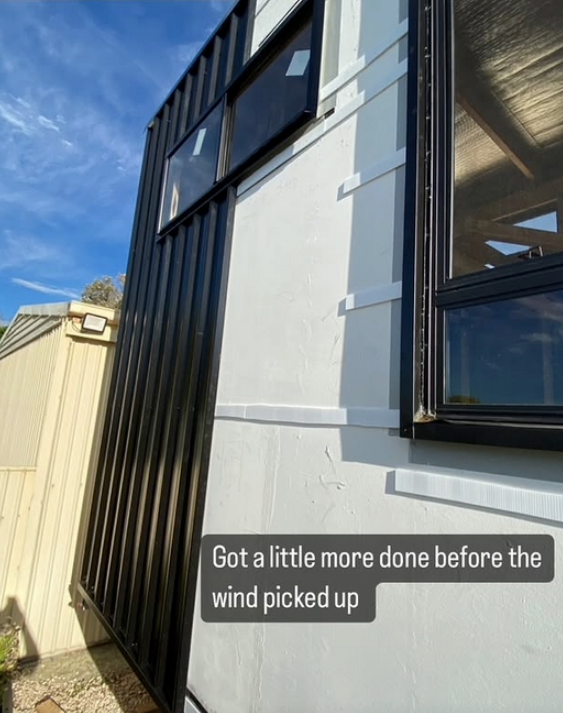
tiny_house_under_construction
Tiny House deck for shade and outdoor living space
tiny_house_big_deck_french_doors

Trailer Details

  • Length: 8 meters
  • Width: Standard 2.4 meters wide
  • Style: Flat Top
  • Finish: Hot Dip Galvanized 
  • Build Period: 2 Years
  • Build: DIY from Builder, Carpenter 

You can do this too!

Aaron & Amanda started their tiny house building journey by taking How To Build A Tiny House – The Australian Online Course with at Tiny House University.

They took all the knowledge that they gained in that course and bought a Fred’s Tiny House Trailer. They then DIY built their tiny house on wheels on Aaron’s father’s property, where they still live. 

Start here:
Jim E6, S1 Candid Tiny House Podcast

Candid Tiny House podcast

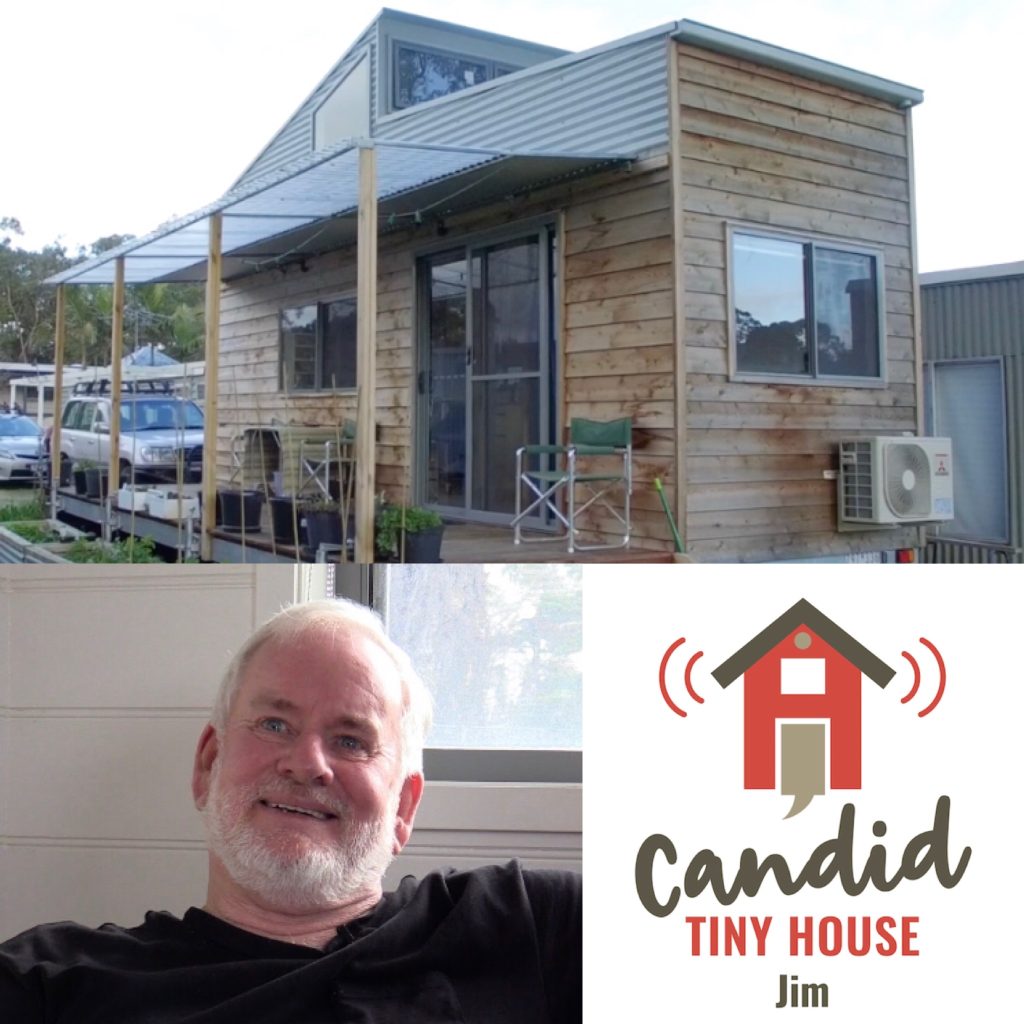
Jim Episode 6, Season 1 of Candid Tiny House Podcast

Pop Up Roof Tiny House Plans: Jim’s Clever Solution

When Jim started planning his tiny house, he had one clear priority:

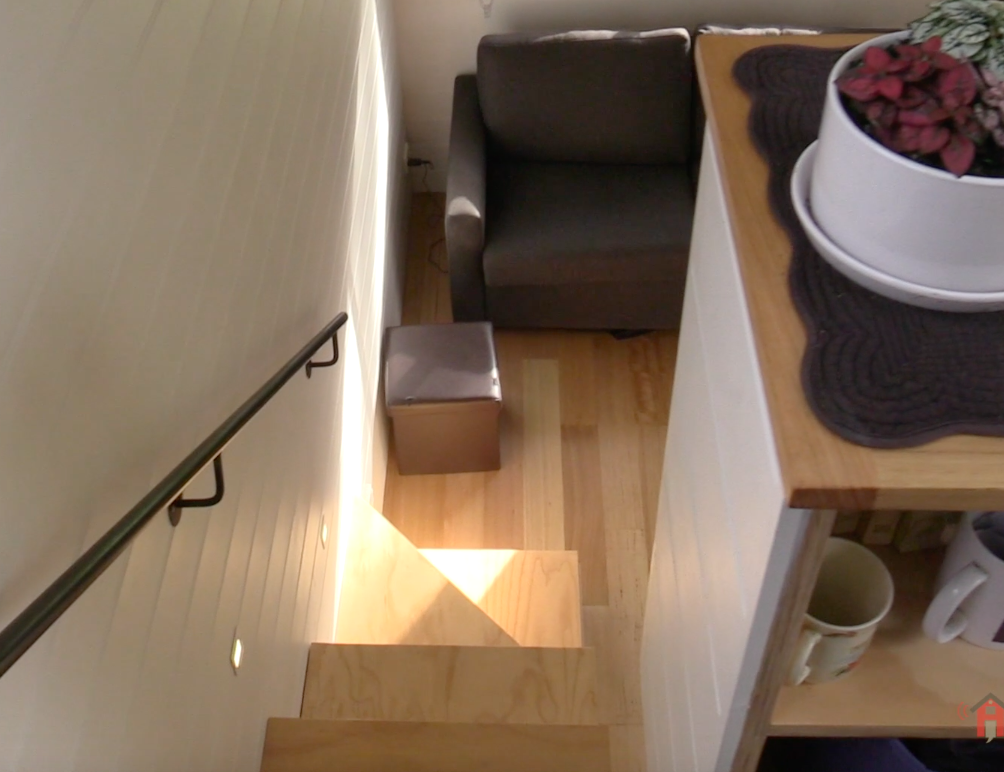
“What I wanted was space up there. I didn’t want to be crawling around at 70 years of age. Having stand-up space upstairs was really important.”

Like many tiny house builders, Jim also needed his design to meet Australia’s legal height limit for road vehicles: 4.3m. Staying within this limit usually means the loft space ends up being too low to stand in comfortably.

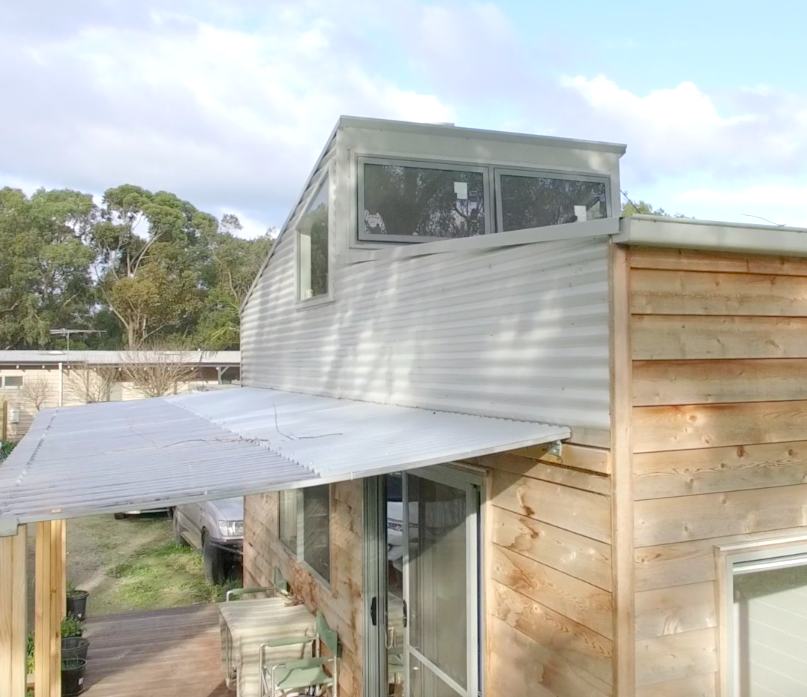
The solution? A hinged pop up roof design that folds down during travel (keeping the tiny house road-legal and registerable as a caravan) and folds up when parked, giving Jim full standing height in his loft bedroom.

Jim first saw a pop up roof tiny house in Byron Bay and knew it was exactly the solution he needed: compliance with road rules and ease of living.


Designing a Pop Up Roof Tiny House Plan

After 12 months of researching tiny houses, Jim engaged Fred’s Tiny Houses to draw up a custom tiny house pop up roof plan.

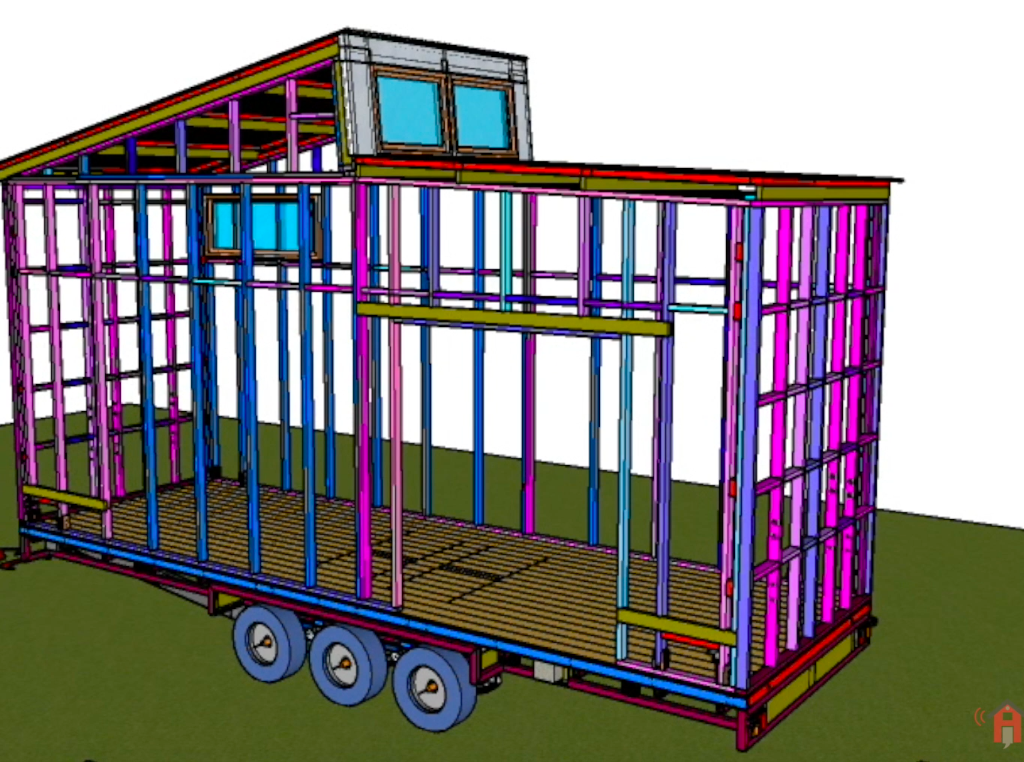
“It took a fair bit of head scratching, but with persistence Fred and his team figured out how to build a hinged roof that sheds water in both directions, is strong, elegant, and works beautifully inside and out.”

The final design incorporated Fred’s Unified Construction Method®, which keeps builds lightweight, vibration-resistant, and energy-efficient. This approach is different from standard residential building codes, which don’t always suit a vehicle-class home like a tiny house on wheels.


Building with the Right Tiny House Builder

Jim then teamed up with a local builder who was open to following Fred’s tiny house construction plans rather than defaulting to conventional house-building methods. This was critical.

“If you have a builder build it, have a very good relationship with your builder. Make it very clear the principles in which you want the house to be built.”

Jim explains that many professional builders are used to working on large, foundation-based houses and may not fully understand the weight limits and road rules that govern tiny houses. If a builder uses heavy materials without accounting for trailer ratings, the house might end up too heavy to tow or register.

Thankfully, Jim’s builder kept a meticulous weight log throughout the build:

“The builder kept an ongoing log of all the building materials as they went into place. He was calculating as he went along, and basically the whole thing came in under 4.5 tonnes.”


Living in a Pop Up Roof Tiny House

The end result? A comfortable, road-legal, and lightweight tiny house that Jim loves coming home to.

“I feel very lucky. For me, it’s worked out really well. I love coming home. Of course Covid really tested you about living in a confined space, but because it’s so open to nature, I don’t feel confined.”


Key Takeaways for Pop Up Roof Tiny House Plans

  • Height compliance: Pop up roofs are an excellent solution for meeting the 4.3m road rule while still enjoying a stand-up loft.

  • Good planning: Custom plans are often needed to make the roof design practical, waterproof, and strong.

  • The right builder: Choose someone who understands tiny house weight management and is willing to follow a specialised plan. See our Partner Builders here. 

  • Weight awareness: Keep an ongoing log of materials and weights to ensure compliance with trailer ratings.

If you’re researching tiny house pop up roof plans in Australia, Jim’s story is proof that the design can work beautifully when it’s carefully planned and executed.

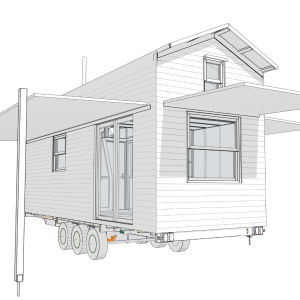
Fred's Tiny Houses pop up roof design for a tiny house on wheels hinged roof

Trailer Details

  • Length: 7.2m

  • Width: 2340mm Asymmetrical for fixed side awning

  • Style: Flat Top Hot Dip Galvanized

  • Build period: June 2020 – December 2020

  • Professional Builder

You can do this, too!

Jim started his tiny house building journey by attending a Weekend Workshop with Fred’s Tiny Houses.

He took all the knowledge that they gained in that course and bought a Fred’s Tiny House Trailer. He then got his tiny house designed through Fred’s Tiny Houses design services (no longer offered) and engaged a local builder to build his successful pop-up roof tiny house – which he continues to live in! 

Jim gave a testimonial in this video after attending the Castlemaine Weekend Workshops (we accidentally called him ‘Martin’! Sorry Jim!!)

Ho w To Recognise a well built tiny house trailer

How To Recognise a Well-Built Tiny House Trailer Series – A Frame Draw Bar

Part 1: A-Frame Draw Bar

Ho w To Recognise a well built tiny house trailer

How To Recognise a Well-Built Tiny House Trailer When You See One:

When shopping for a tiny house trailer, it’s vital to know the difference between a well-designed, durable trailer and one that may fail under pressure. Many trailer manufacturers compete on price, and while their lower costs might seem attractive, they often come at the expense of quality and safety. Here’s what to look for to ensure your trailer is built to last.

Beware of Short A-Frame Drawbars

One common way manufacturers cut costs is by designing short A-frame drawbars. By using less steel, they reduce expenses, but this compromises the trailer’s structural integrity.

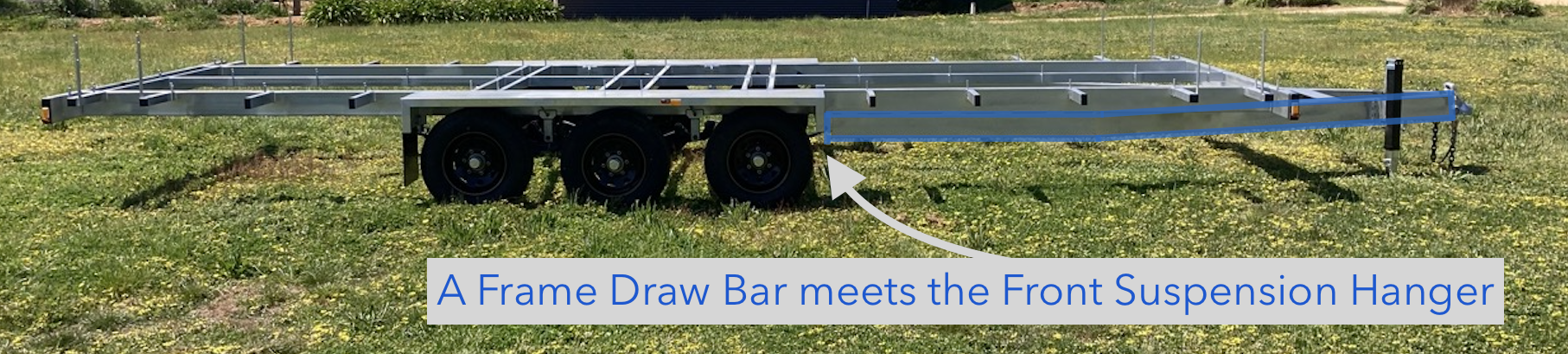
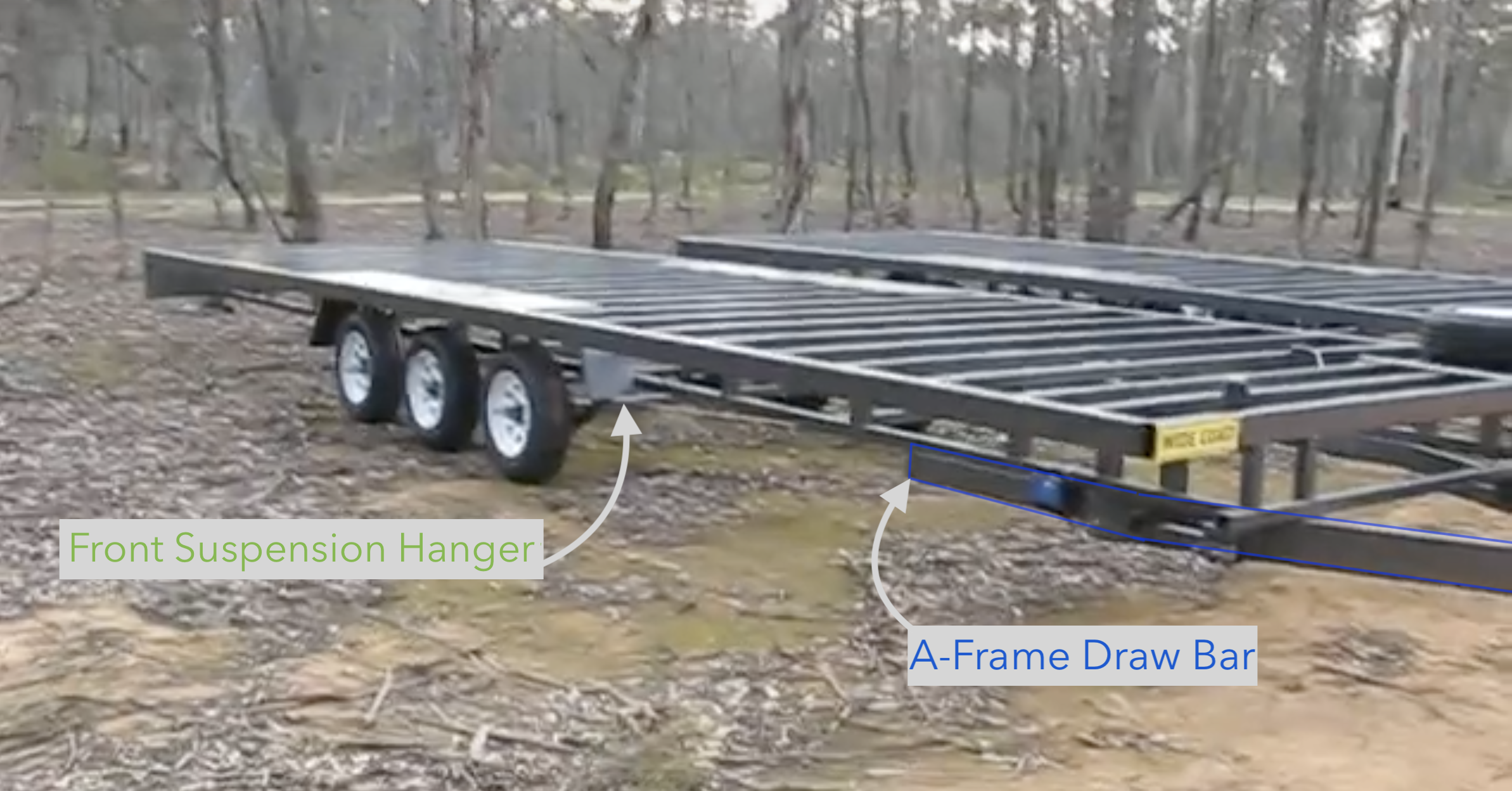
The Vehicle Assessment Signatory Scheme (VASS) engineers, who specialise in making vehicles safe for Victorian roads, recommend that drawbars extend all the way to the front suspension hanger. This design choice isn’t just a suggestion—it’s essential for strength and durability.

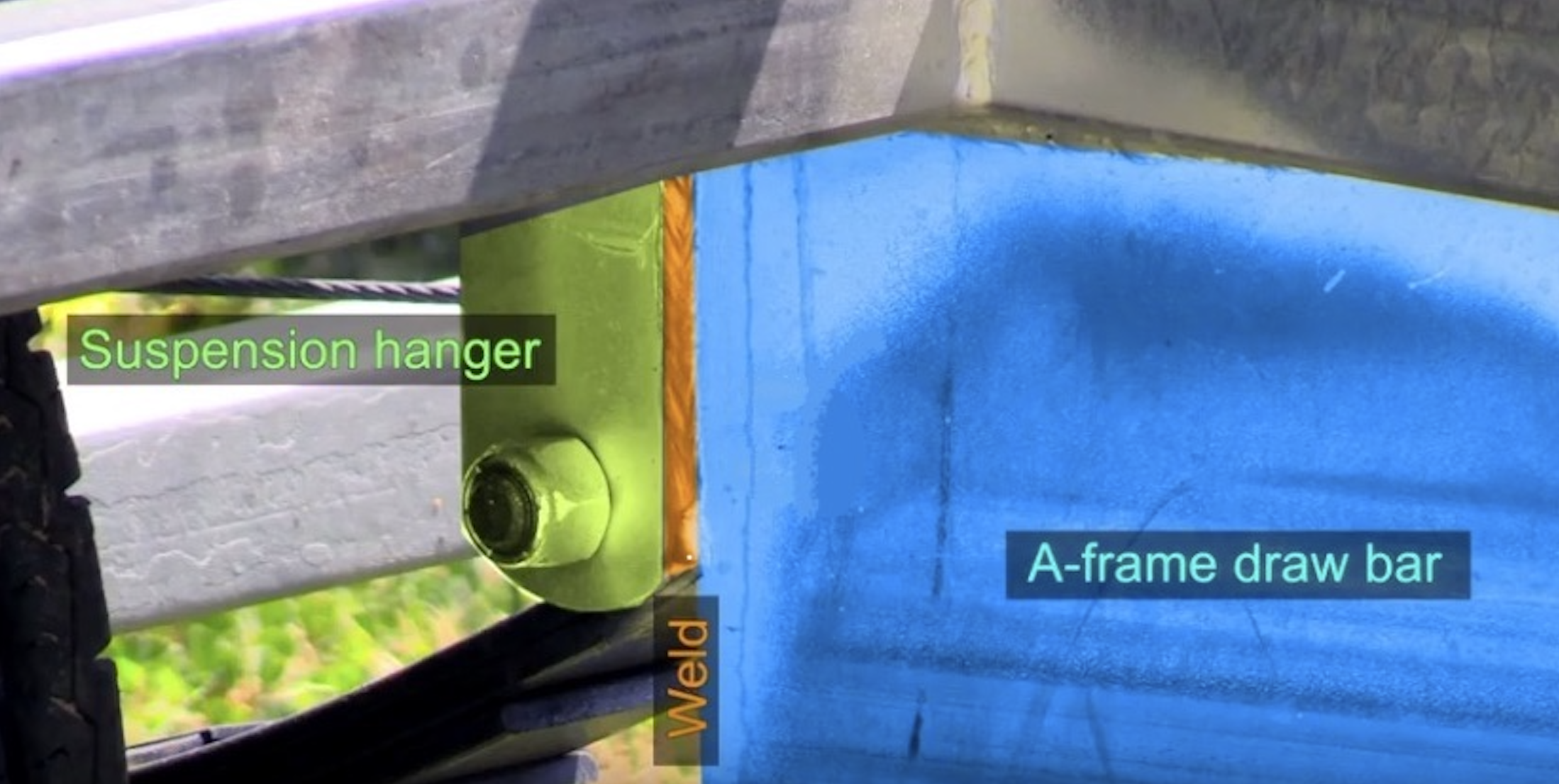
When the A-frame drawbar connects to the front suspension hanger, it allows for a critical vertical weld to secure the components together. Without this weld, the drawbar’s connection to the chassis rail alone is far weaker. This shortcut results in an inferior trailer that may also pose serious safety risks.

Why Strength Matters

A short, poorly designed A-frame drawbar increases the likelihood of the drawbar breaking free from the trailer’s main body during transport. Imagine this happening with a 3,500kg tiny house on top—the consequences could be catastrophic.

Saving a few thousand dollars on a trailer might seem like a good idea, but the real cost of a poorly built trailer can far exceed your initial savings. From financial losses to potential accidents, the risks simply aren’t worth it.

Quality Over Cost

At Fred’s Tiny Houses, we never cut corners when it comes to your safety. We prioritise quality over cost-saving shortcuts to provide you with a trailer that’s as strong and reliable as your dream home deserves. We believe true freedom isn’t just about living in a tiny house; it’s also about the peace of mind that comes with knowing your home’s foundation is secure.

Conclusion When choosing a tiny house trailer, always prioritize strength and safety over price. Check that the A-frame drawbar extends to the front suspension hanger and is reinforced with vertical welds. Your safety, and the safety of others, is invaluable. Don’t settle for anything less than a tiny house trailer that is built to last.

What to look for:

How to recognise a well-built tiny house trailer
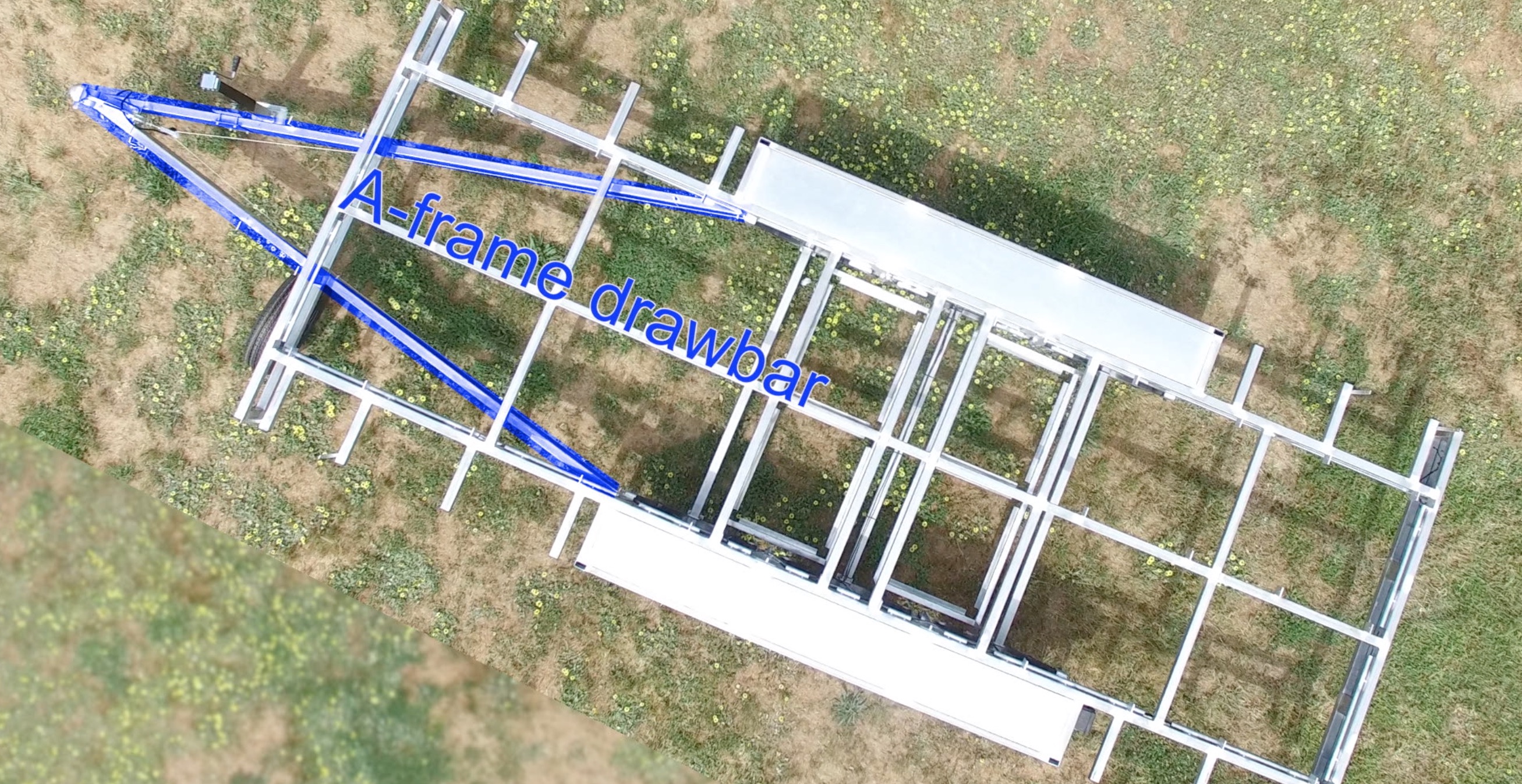
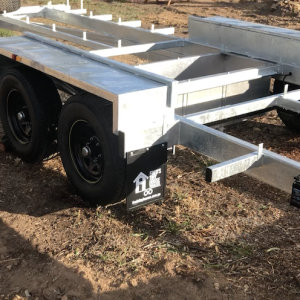
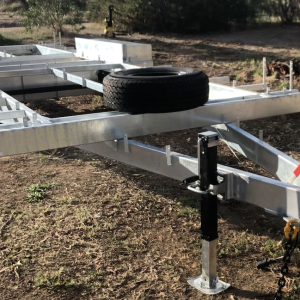
All Fred's Tiny House Trailers meet Vehicle Engineer recommendations by extending the A-Frame Draw Bar to meet the front suspension hanger.
How to recognise a well built tiny house trailer
The A-Frame Draw Bar (in blue) is attached to the front suspension hanger (green) with a veritcle weld (orange) as recommended by Vehicle Engineers.

What to avoid:

What to avoid in a tiny house trailer
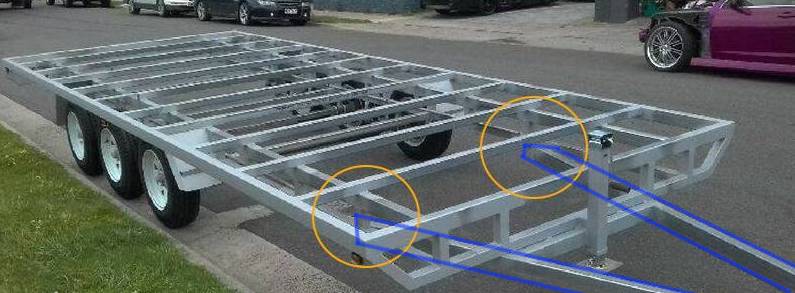
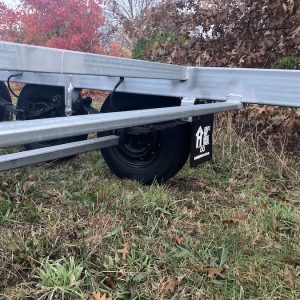
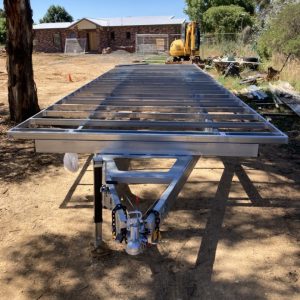
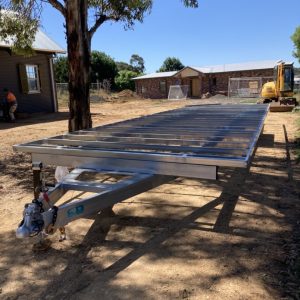
Example of another company's tiny house trailer where the A-Frame Drawbar attaches to the chassis rail only and does not extend to the front suspension hanger.
What to avoid in a tiny house trailer
There is a long gap between the A Frame Draw Bar and the front suspension hanger. This is a weak trailer design.

Tiny House Trailer Purchase Guide:

We have written a Tiny House Trailer Guide for the Australian Tiny House Association (ATHA) to help you make informed decisions about your tiny house trailer purchase.

Fred's Tiny Houses ATHA Memebers

Shop Trailers and Tiny House Plans

Choosing the Right Windows for Your Tiny House on Wheels

When designing your tiny house on wheels, selecting the right windows is essential for light, ventilation, and weather protection. How your windows open greatly impacts their functionality—not just their placement or size.

In this blog, we’ll explore seven types of windows, outlining their benefits and challenges to help you design a tiny house that is well-ventilated, light-filled, and beautiful. We’ll also cover the pros and cons of window frame materials like wood, aluminum, and vinyl, and offer tips on selecting the right glass to safely transport your tiny home.

Comparing Window Types for Tiny House Design

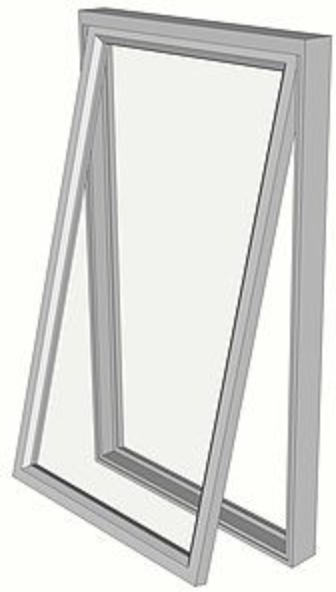
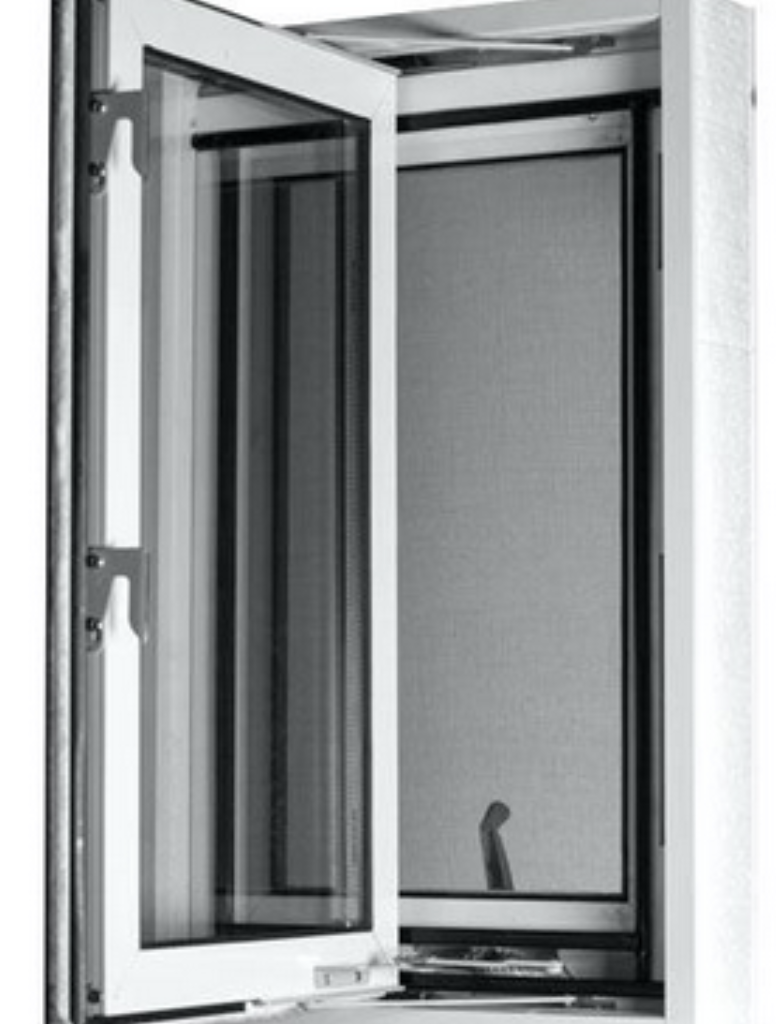
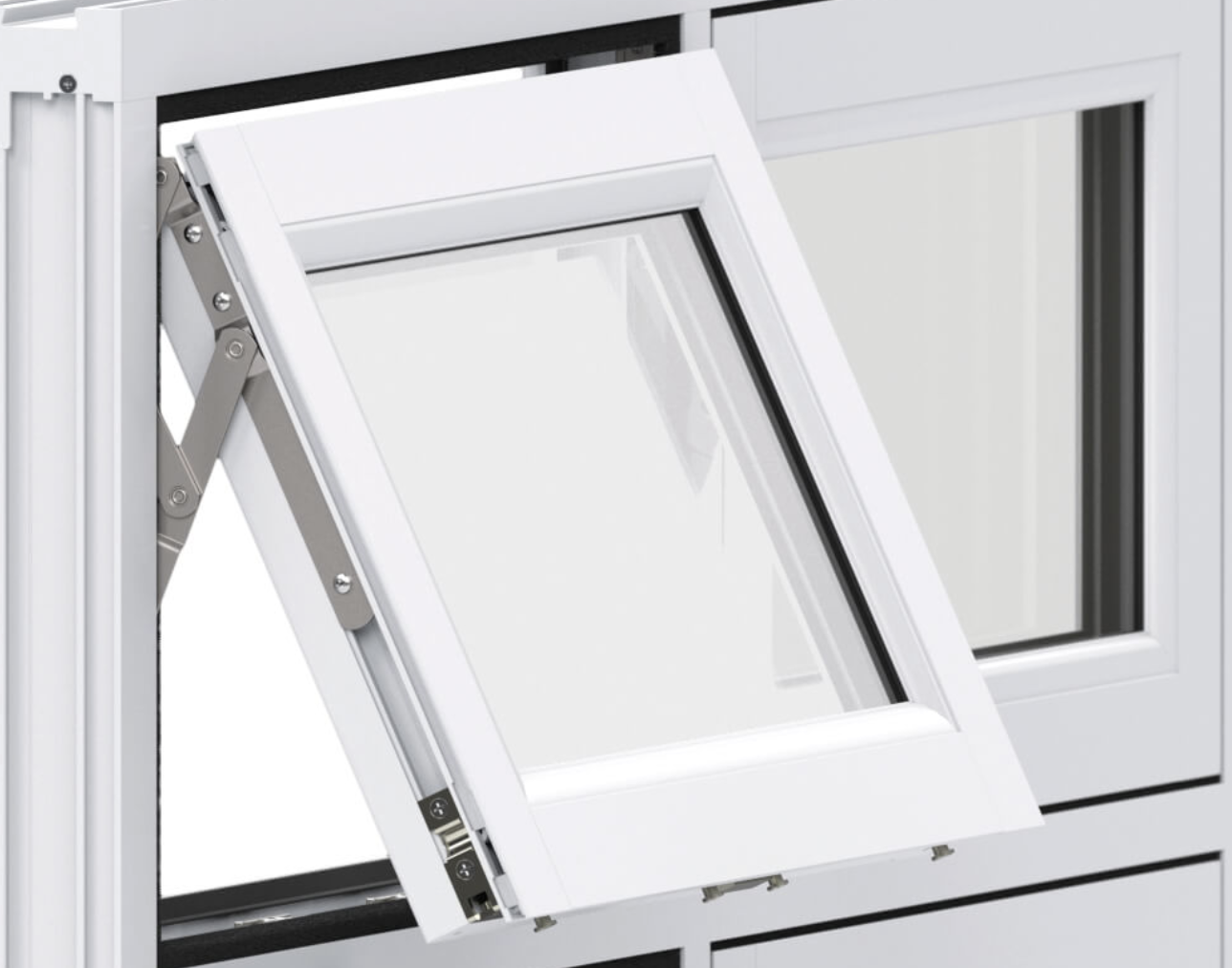
1. Awning Windows

Awning windows are hinged at the top and open outward from the bottom.

Benefits:

  • Awning windows allow plenty of light, making small spaces feel larger and more open.
  • They’re cost-effective.
  • Great in the rain since water can’t enter from the top, and rain doesn’t sit on the frame, preventing wood rot.

Challenges:

  • Limited airflow unless installed high up, like in a loft.
  • When open, they protrude outside, which could be an obstacle at head height.
Awning Window

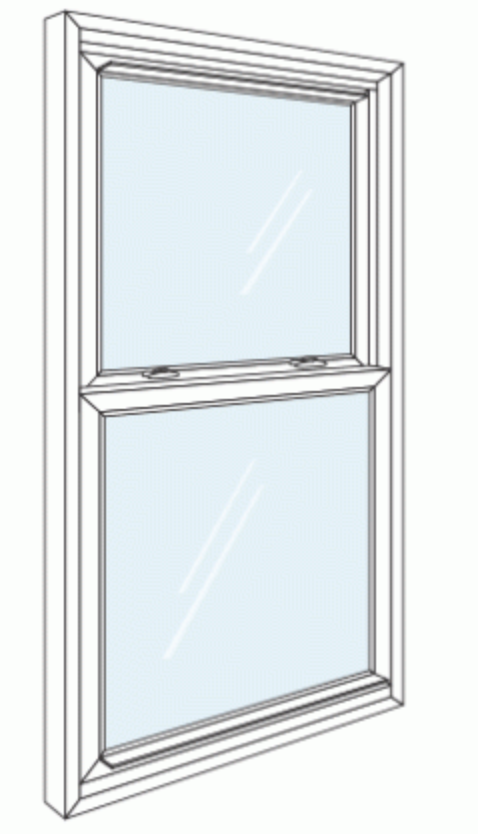
2. Double Hung (Double Sash) Windows

Double-hung windows have two moveable sections (sashes) that slide past each other vertically.

Benefits:

  • Excellent for airflow, especially at the top of the frame, making them ideal for bathrooms or high-up spaces.
  • Great for ventilating hot air out of small spaces.

Challenges:

  • They’re more expensive due to the moving parts.
  • External fly screens can be tricky to clean and might need to be removed for safe transport.
Double Hung Sash Window

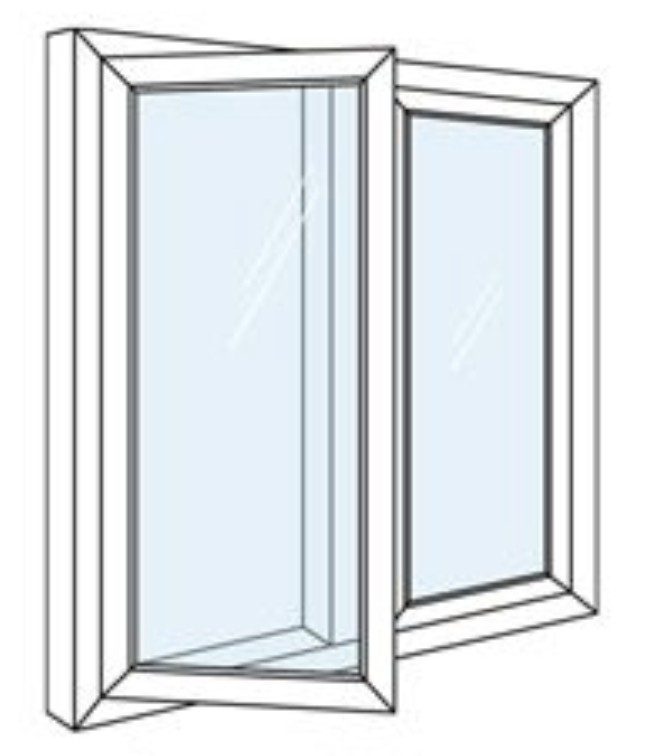
3. Casement Windows

Casement windows are hinged on one side and open like a door.

Benefits:

  • Inexpensive and easy to make.
  • Great for directing airflow when the wind is blowing the right way.

Challenges:

  • Limited airflow if the wind isn’t coming from the right angle.
  • Wooden frames need protection from rain, and the open window can create an obstacle outside.
Casement Wondow

4. Center Pivot Windows

These windows pivot in the center, creating an opening on both sides of the glass.

Benefits:

  • Fantastic for airflow from multiple directions, even with small windows.

Challenges:

  • Like casement windows, they need to be protected from rain with an awning.
Center Pivot Windows

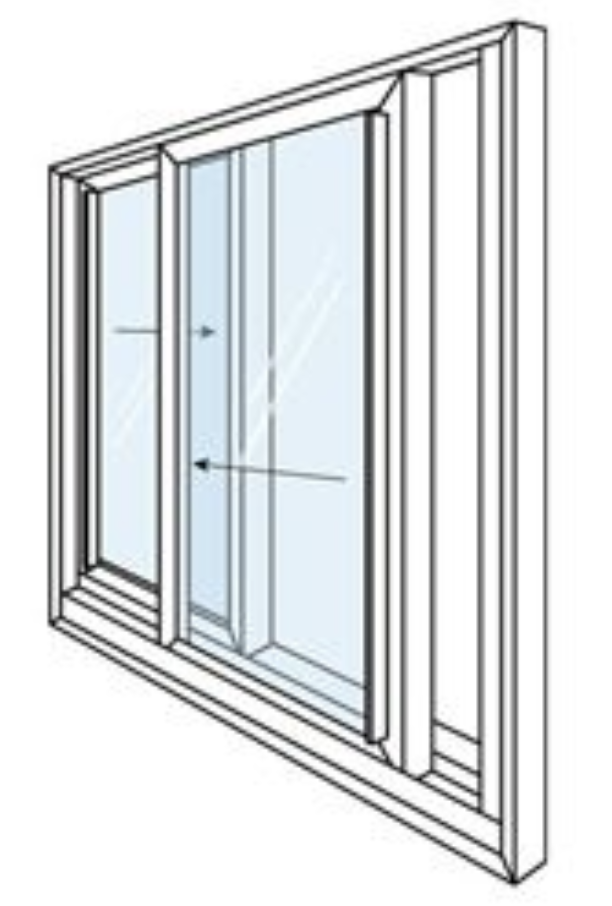
5. Slider Windows

Slider windows have one fixed pane and one that slides horizontally.

Benefits:

  • Can be made small, making them great for tight spaces.
  • Ideal for bathrooms as they passively ventilate moisture.

Challenges:

  • Only half of the window opens, limiting airflow.
  • Tracks can collect grime and require cleaning.
Slider Window

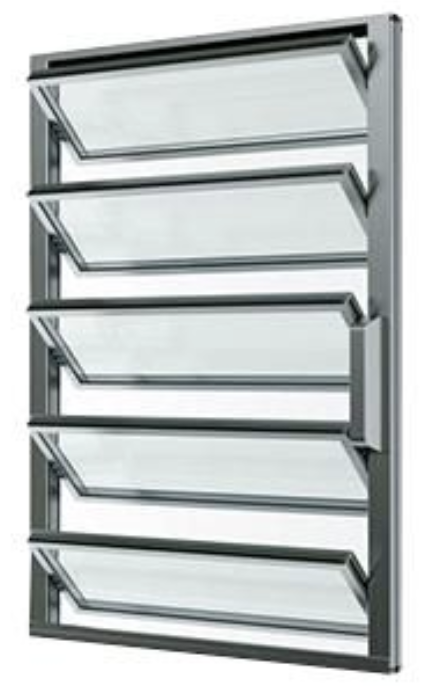
6. Louvre Windows

Louvre windows consist of slats that open and shut together with a lever.

Benefits:

  • Excellent for passive ventilation.
  • Well-suited for long, narrow windows.

Challenges:

  • Slats and levers can protrude, potentially limiting how you use the space.
  • They have many moving parts that could break, and fly screens are on the exterior.
Louver Window

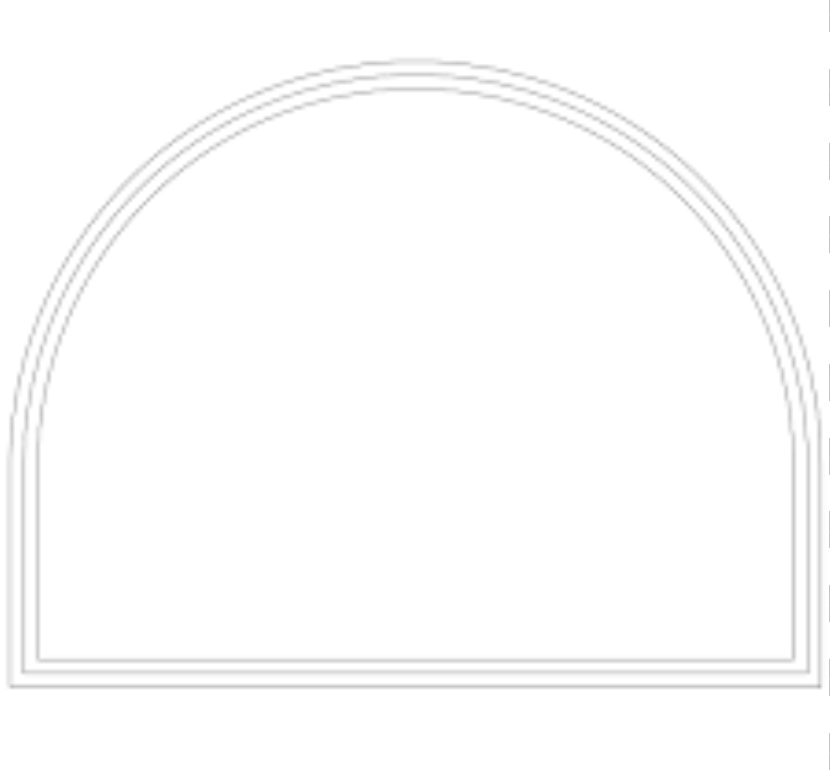
7. Fixed Windows

These windows don’t open at all.

Benefits:

  • The most affordable option.
  • Ideal for decorative feature windows or unconventional shapes.

Challenges:

  • Provide no ventilation.
Fixed Window

Comparing Window Frame Materials

Vinyl Frames

Benefits:

  • Affordable and vibration-resistant, making them great for tiny houses on wheels.

Challenges:

  • Less UV resistant, so they can become brittle in the sun.
  • Prone to scratching, and cannot be repaired.

Wood Frames

Benefits:

  • Natural, sustainable, and smell great.
  • Lightweight options are available, and they’re repairable.

Challenges:

  • Can be bulky, reducing window pane space.
  • Require maintenance with oil or paint, and expand/contract with temperature changes.

Aluminum Frames

Benefits:

  • Lightweight and affordable.
  • Slim-line design allows maximum glass space in the frame.

Challenges:

  • Aluminum conducts heat, which can transfer outside temperatures inside.
  • Scratches easily and can be difficult to install with architraves.
UPVC (Vinyl) Windows
Timber windows in tiny house on wheels
Timber Windows in tiny house on wheels
DIY Tiny House Inspo
Aluminum Windows in a tiny house on wheels

Choosing the Right Glass for a Tiny House on Wheels

Double-Glazed Glass: Not Always Necessary

While double-glazed windows are excellent for insulating conventional homes, tiny houses generally don’t need them for winter warmth in most Australian climates. Tiny homes are easy to heat, and our focus is more on keeping them cool in summer. Instead of double glazing, consider adding a fold-away awning for large windows to block radiant heat.

However, if your tiny house will be in a cold climate (like Tasmania), or you’re planning a large feature window, double-glazed windows may be worth considering.

Safety Glass: A Must for Transport

Tiny homes are vehicles, so it’s important to use shatter-proof glass for safe towing. Two good options are:
  • Tempered Glass: This breaks into safe cubes instead of sharp shards.
  • Laminated Glass: Made with two panes and a plastic layer, it stays intact when broken but adds more weight.

Need More Design Info?

For more expert guidance on tiny house design, construction, and regulations, enroll in our Online course or attend one of Fred’s Tiny Houses workshops in Melbourne or Sydney. You’ll walk away with knowledge that can save you months of research!