DIY Tiny House build stories

Aaron & Amanda: DIY Tiny House Expanding Candid Tiny House E2, S3

DIY Tiny House build stories
Candid Tiny House podcast

Aaron & Amanda

Candid Tiny House Podcast E2, S3

A DIY Tiny House that Expands and Evolves...

When Aaron and Amanda set out to build their tiny house on wheels, they weren’t chasing perfection.

They were chasing possibility.

With Aaron’s background as a carpenter and the steady support of his dad—a retired builder—they had the skills, the space, and the determination to make it happen. But what unfolded wasn’t a clean, linear build. It was something far more honest—and far more valuable for anyone considering a DIY tiny house in Australia.

Because this isn’t just a story about building a tiny house.

It’s about what happens after.


“You Might Have the Skills… But Not These Skills”

For many tradespeople, a tiny house on wheels can feel like familiar territory.

Timber framing. Cladding. Fixing out interiors.

But Aaron is quick to offer a reality check.

“And I think almost a little bit of having to swallow your own pride too. Like oh, I’m a builder, or I’m a carpenter, I know how to do this, but it’s almost like—well, yeah, you may have a skill set but you don’t necessarily have a skill set that’s within this category. You might have to learn a few new things too.”

A tiny house on wheels isn’t just a small house.

It’s a structure that behaves like a vehicle—where weight, movement, and constraints change everything. And that shift in mindset is often one of the biggest hurdles for experienced builders stepping into the tiny house space for the first time.


Social Media vs Reality: The Weight Problem No One Sees

Like many people drawn to tiny house living, Amanda began with inspiration.

Beautiful, polished images. Clean lines. Light-filled interiors.

But behind those images was something less visible—and far more critical.

Weight.

“And that’s what I was looking at—the polished versions. I’m like ‘oh, we could do this!’ and Aaron’s like ‘it just does not look the right weight’. So that was a learning as well, because what you see is social media versus reality… I would be showing him these beautiful glossy houses, but Aaron was learning—there’s no way that looks underweight.”

It’s a common disconnect in the tiny house world.

What looks good online doesn’t always translate to something that can legally and safely travel on Australian roads. And for Aaron and Amanda, that tension between inspiration and feasibility became a defining part of their build.


A Build Without a Blueprint

Unlike many builds that start with detailed plans and fixed budgets, this one unfolded in real time.

“We didn’t have a strict budget or a design. Like—we sat down and sketched it out, and we built a little 3D model with a hard cardboard you can get from Officeworks. We sort of glued that together. But we were very hap-hazard with this build.”

Amanda laughs as she reflects on how far they drifted from that original vision:

“Very ad-hoc, as we went. Because our house looks nothing like that little 3D thing! We changed it so many times along the way.”

This flexibility gave them freedom—but it also introduced trade-offs, some of which only became clear once they were living in the space.


The Hidden Cost of Reclaimed Materials

Like many tiny house builders, Aaron and Amanda were drawn to reclaimed materials.

It felt sustainable. Affordable. Full of character.

But the reality was more complicated.

Second-hand French doors seemed like a great find—until they spent countless hours stripping lead paint, repainting, installing… and then living with the consequences.

Drafts. Air leaks. Ongoing inefficiency.

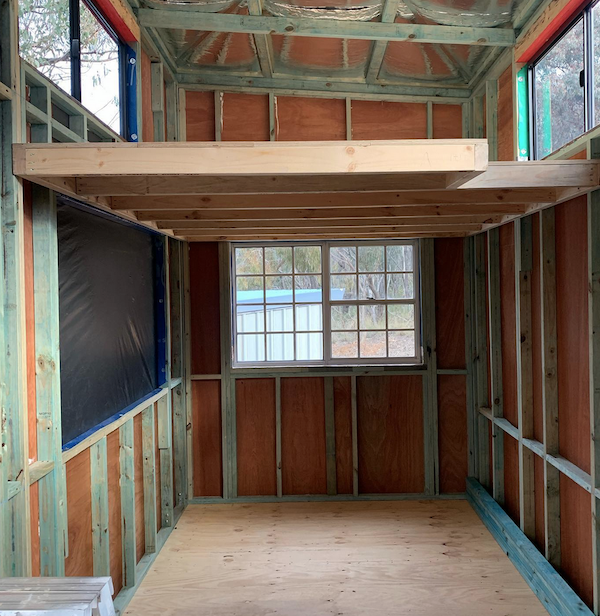
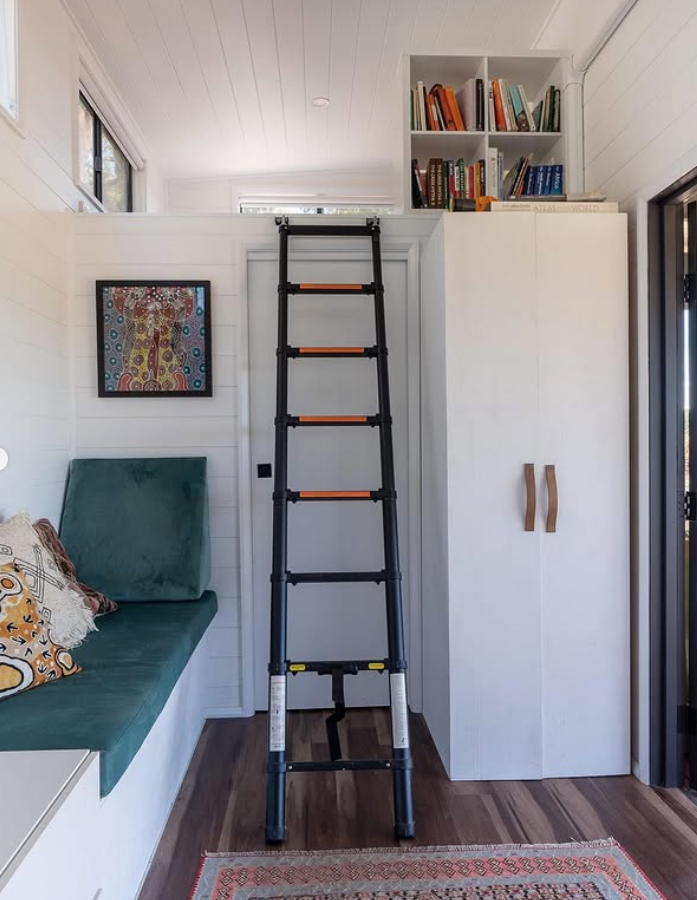
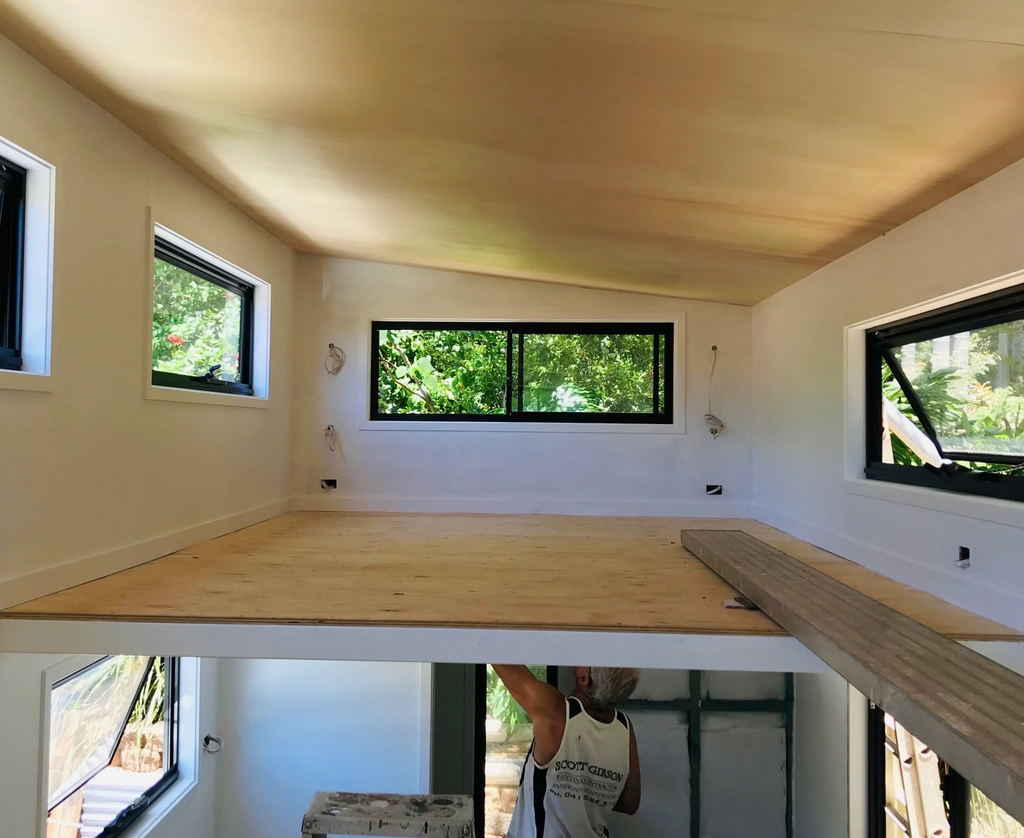
Similarly, reclaimed windows shaped more than just the look of the house—they dictated the structure itself. The height of those windows determined the loft height, ultimately leaving Aaron with less space than he would have liked.

In a conventional build, these compromises might be manageable.

In a tiny house, every millimetre matters.


“There’s No Escape in a Tiny House”

Tiny house living is often romanticised as simple, peaceful, and freeing.

And it can be.

But it also comes with a level of intensity that’s hard to understand until you experience it.

“There’s no escape in a tiny house. In every room you are in that same room.”

It’s a simple statement—but it captures one of the most overlooked aspects of tiny living.

Space isn’t just physical. It’s emotional. Psychological. Relational.

And over time, that reality shapes how people use—and adapt—their homes.


From Tiny House to Expanding Home

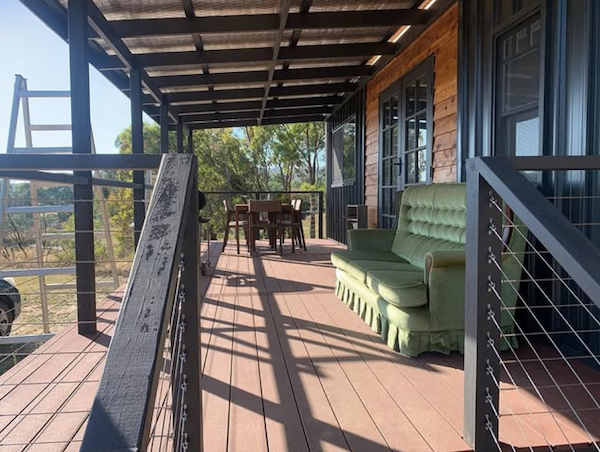
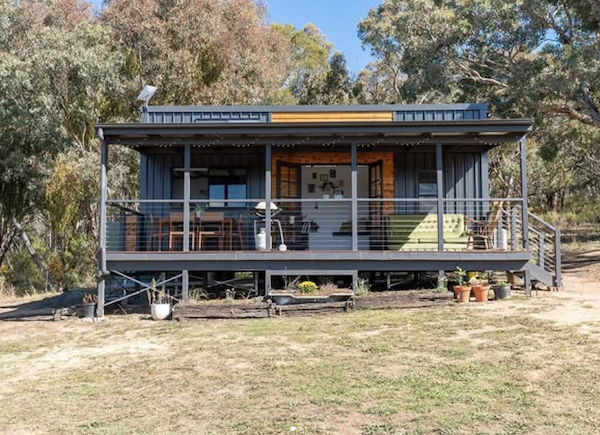
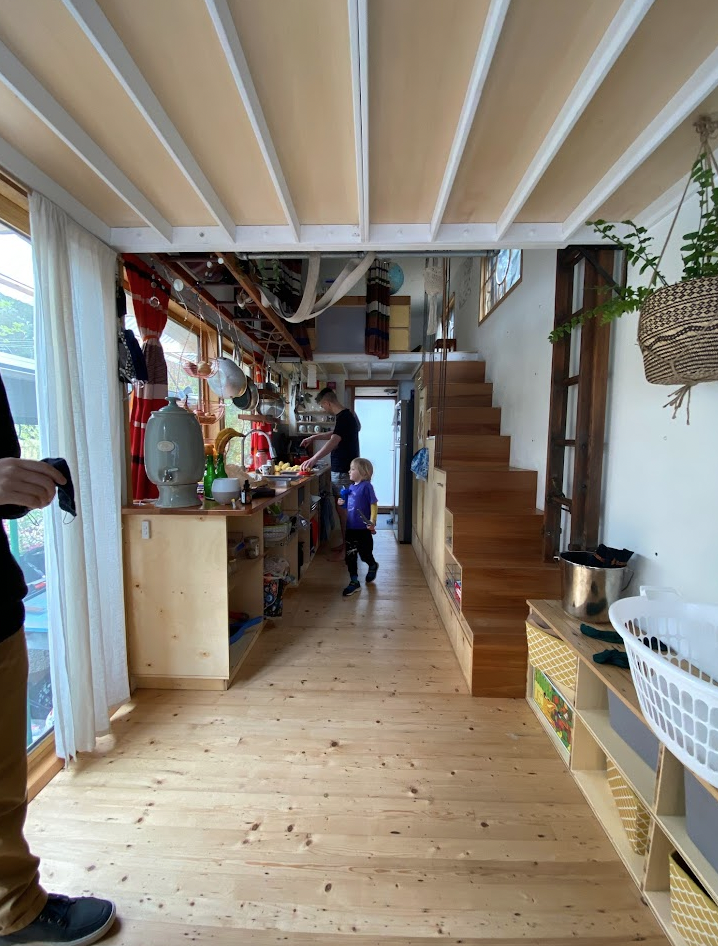
After completing their build and living in it for a while, Aaron and Amanda built a deck and then they roofed it.

And in doing so, they didn’t just add outdoor space—they fundamentally changed the performance of their tiny house.

“We noticed when we first moved down here—we have a deck on the house now with a roof, which is shading quite a lot of the house from the, because we’re north facing, from that northern sun, and that deck has cooled the house down tremendously. But before that we were just getting baked. And because our house is monument so it’s dark anyway and it’s drawing heat, we were really, really hot.”

In the Australian climate, this kind of adaptation isn’t just about comfort—it’s about livability.

Dark external cladding, like Monument, can absorb significant heat. Without adequate shading, tiny houses can quickly become uncomfortably hot, especially in summer.

The addition of the deck—and crucially, the roof—created shade, reduced heat gain, and introduced a new kind of living space that extended beyond the trailer itself.


Building Together

Behind every stage of the build was a quiet but powerful factor: support.

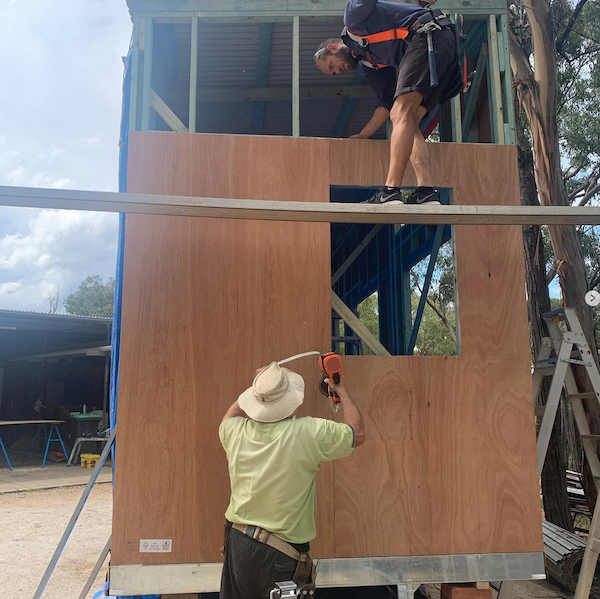
“My father is a licensed builder so that helps, straight off the bat, and the ability to be able to build it on family property, that was another huge help… And there are a lot of tasks that just require two people. You can’t do it by yourself. And when you’re at heights, it’s even more dangerous, so he was a massive help.”

Tiny house builds are often portrayed as solo projects.

But in reality, they’re rarely done alone.

Whether it’s lifting walls, installing roofing, or simply staying safe on site, having another set of hands—and someone you trust—can make all the difference.


A Tiny House That Keeps Changing

Three years on, Aaron and Amanda are still living in their tiny house—but the building hasn’t stopped. 

Like many tiny houses, it didn’t reach a final, finished state and stay there. It kept evolving. Adjusting to the climate. Responding to what worked—and what didn’t. Growing alongside the family living in it, and expanding to accommodate them!

Because this is the part of the tiny house journey that rarely makes it onto social media—the long-term reality. The iterations. The refinements that only come after years of living in a small space.

And to see where their tiny house has landed now…

You’ll need to watch the episode, above.
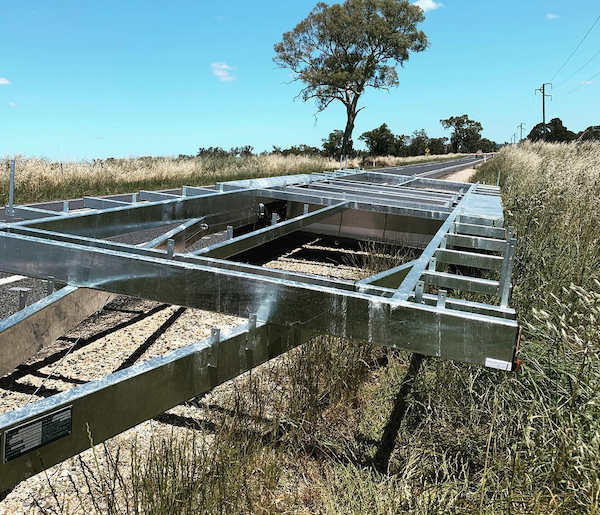

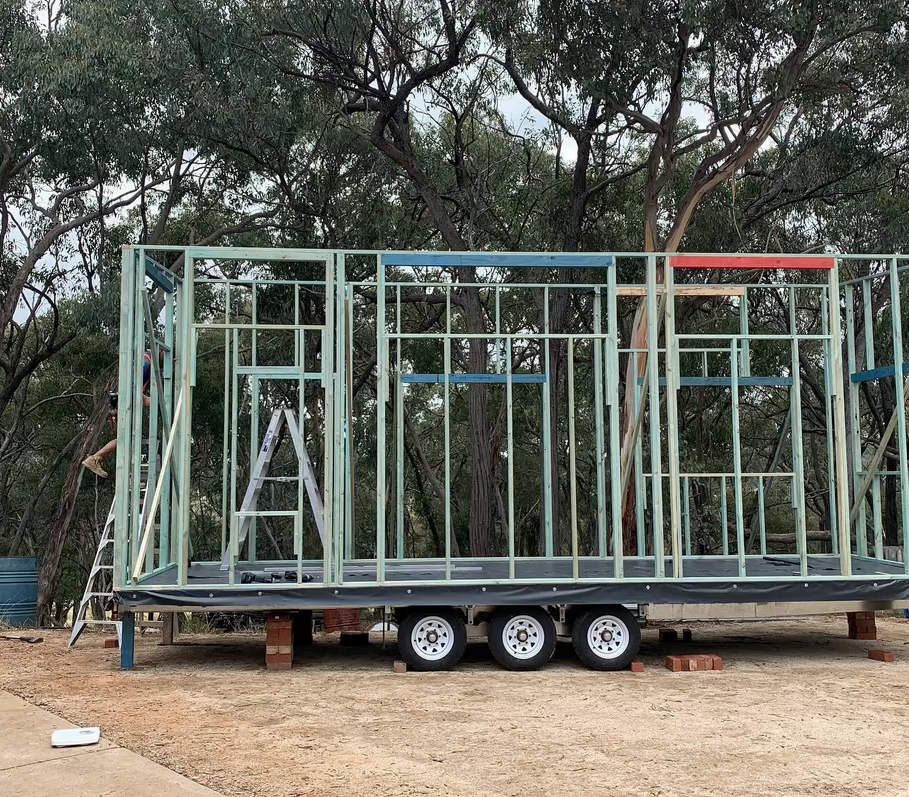
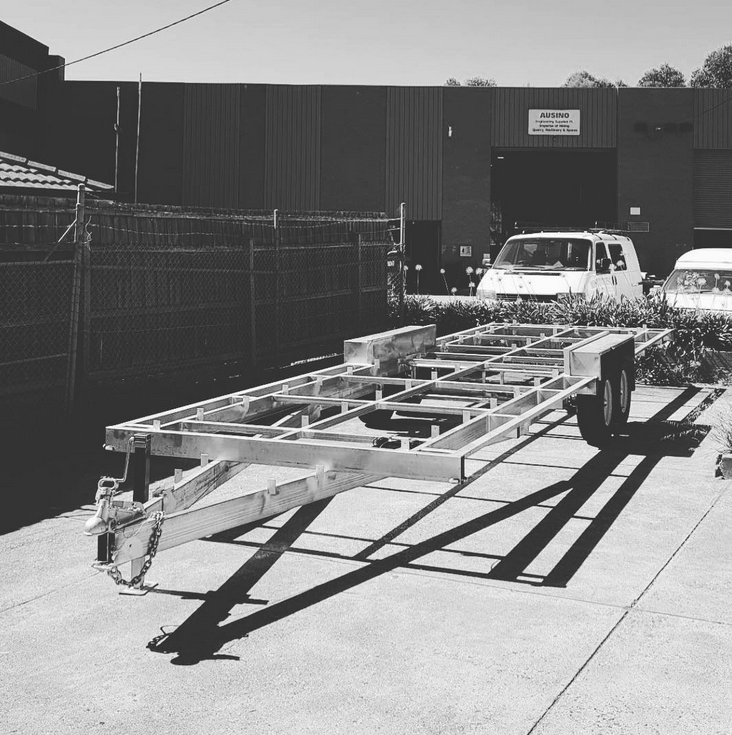
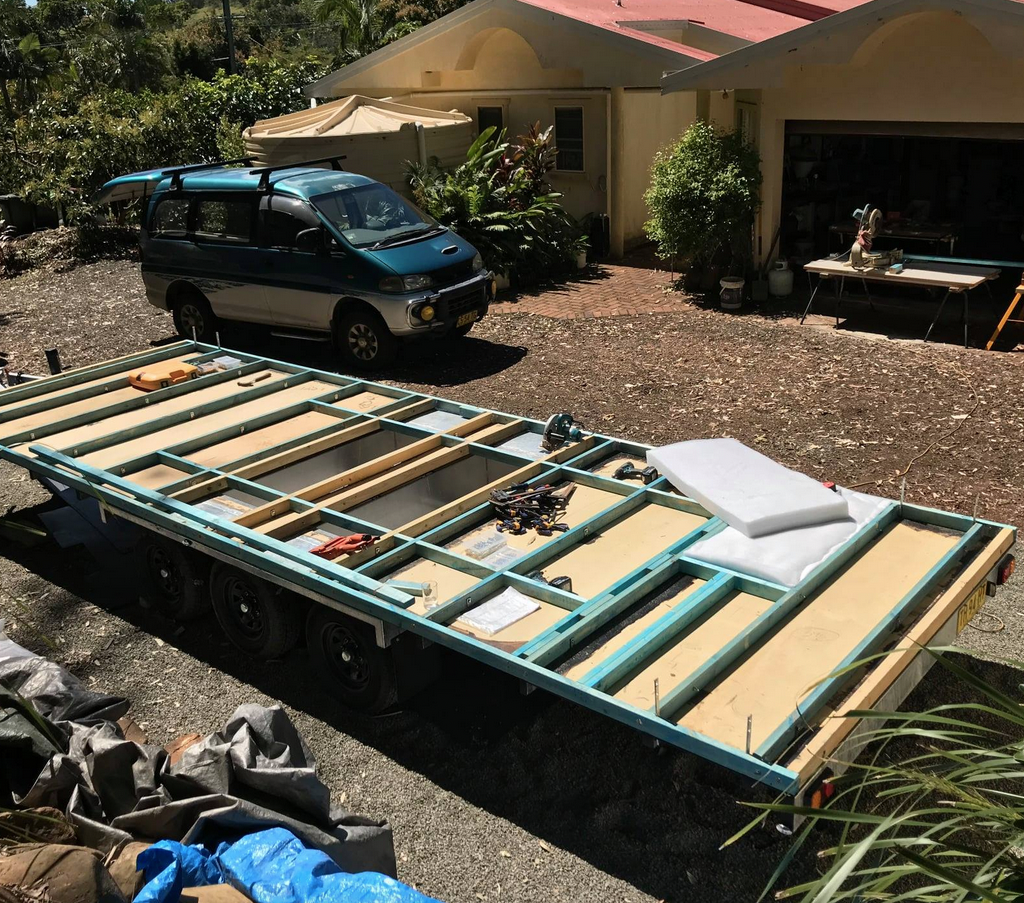
tiny_house_trailer_transport_hot_dip_galvanised_8_meters
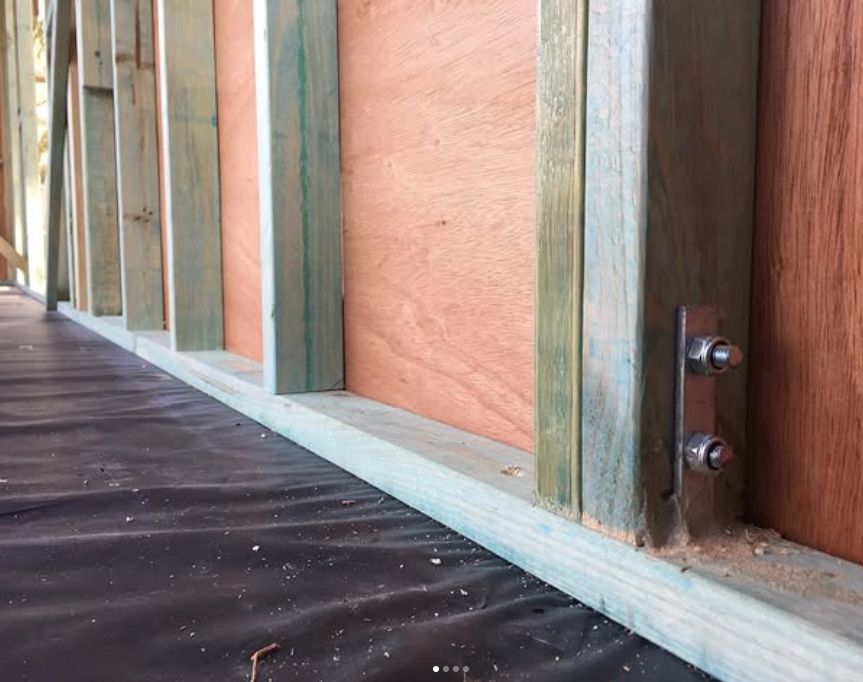
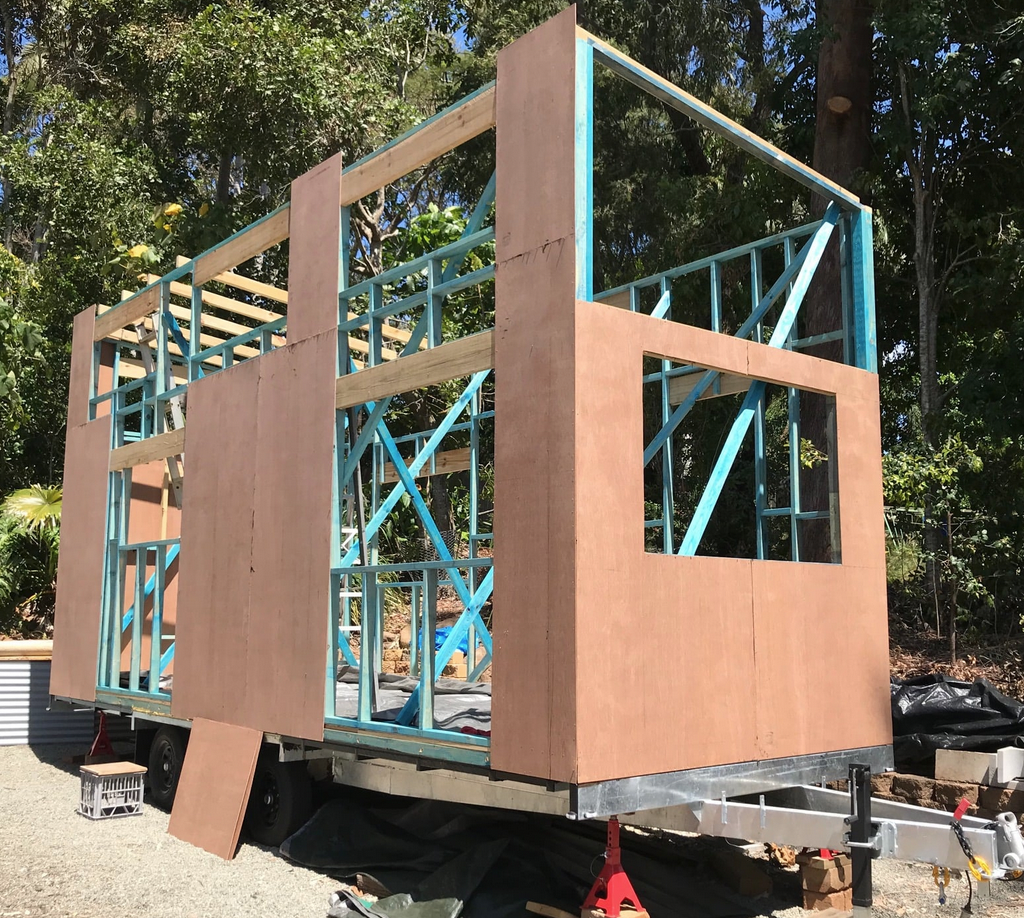
tiny_house_diy_plywood_bracing
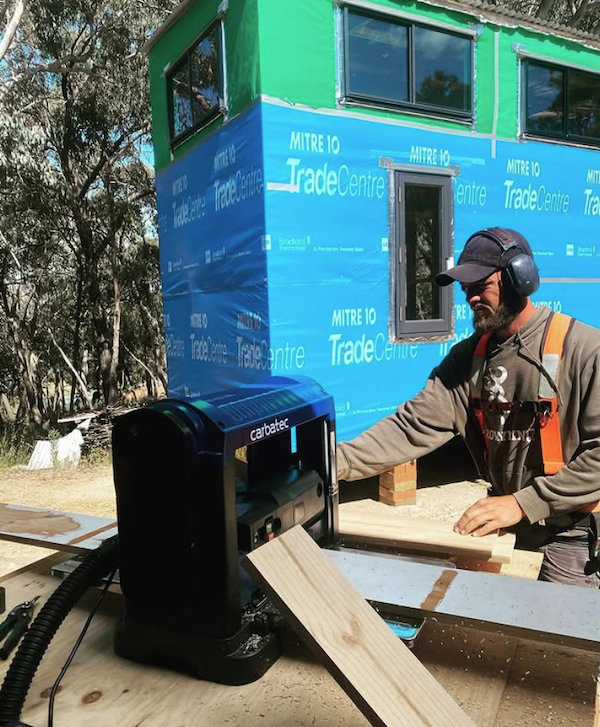
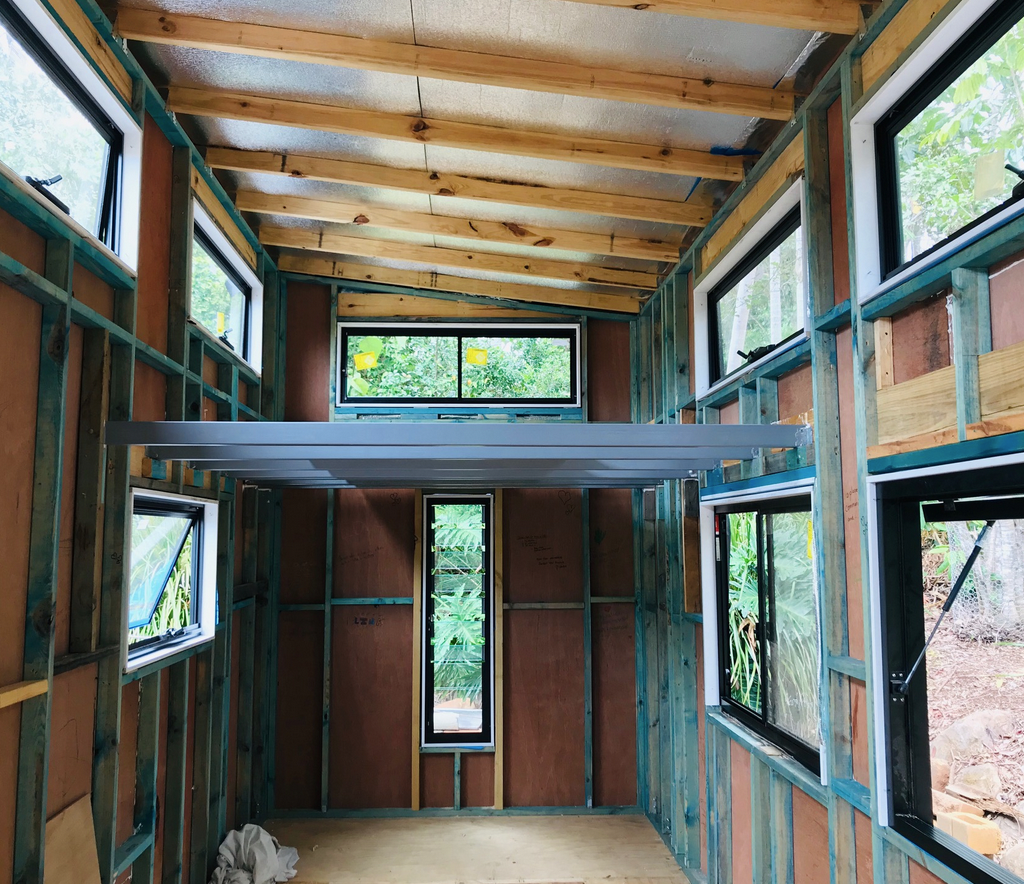
tiny_house_diy_carpenter_8_meter_tiny_house
tiny_house_framing_stage_with_loft_bracing_ply
tiny_house_construction_UCM_attaching_trailer_to_frame
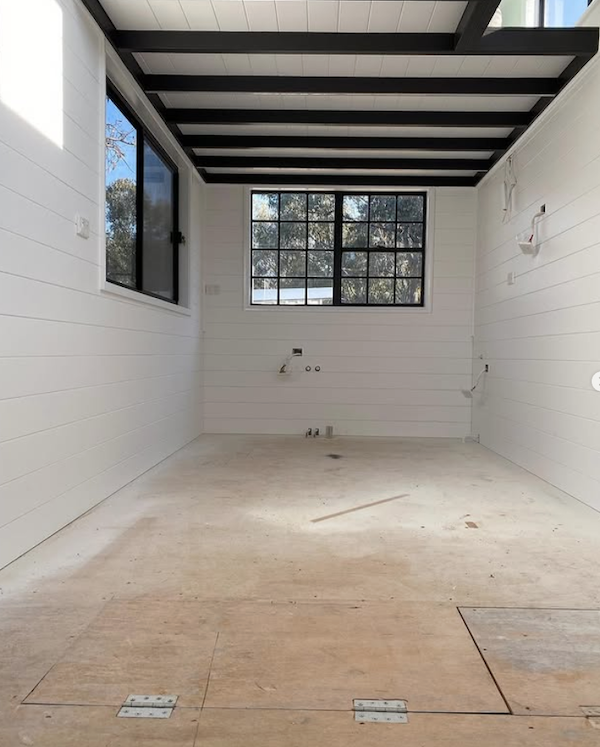
tiny_house_white_kitchen_under_construction
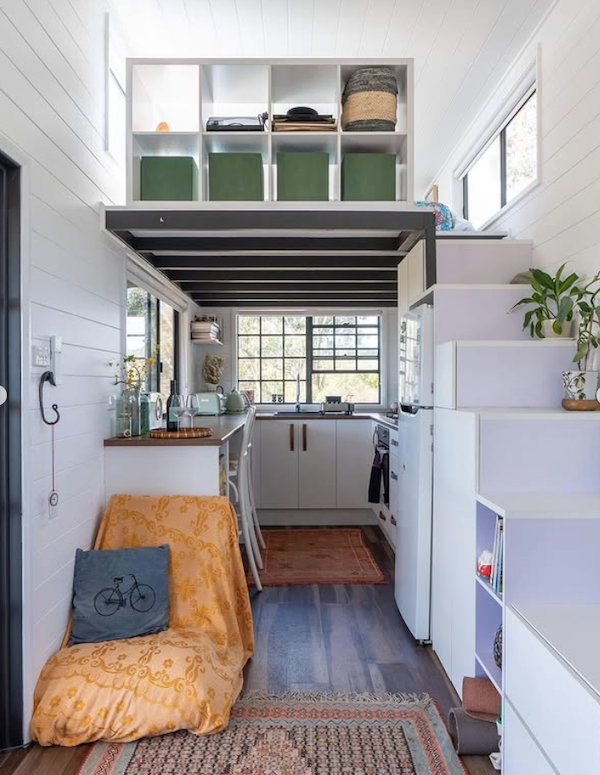
tiny_house_fridge_in_stairs_cabinets
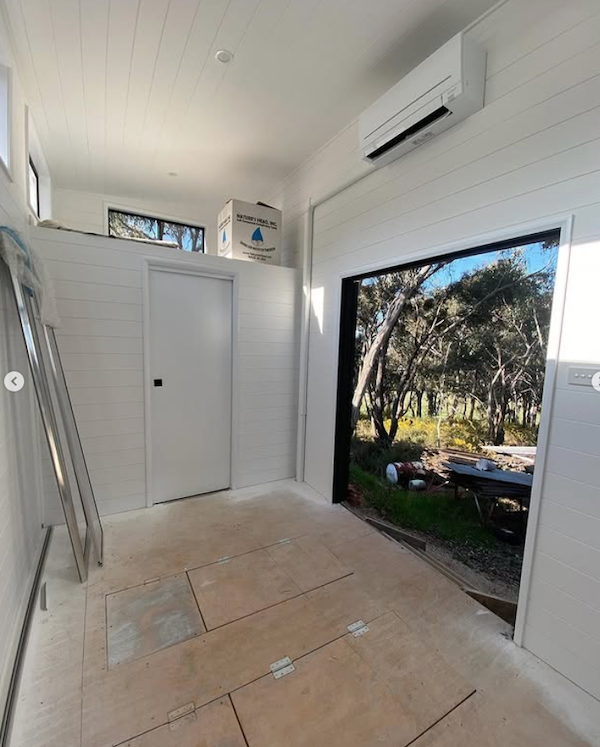
tiny_house_under_construction
Tiny House deck for shade and outdoor living space
tiny_house_big_deck_french_doors

Trailer Details

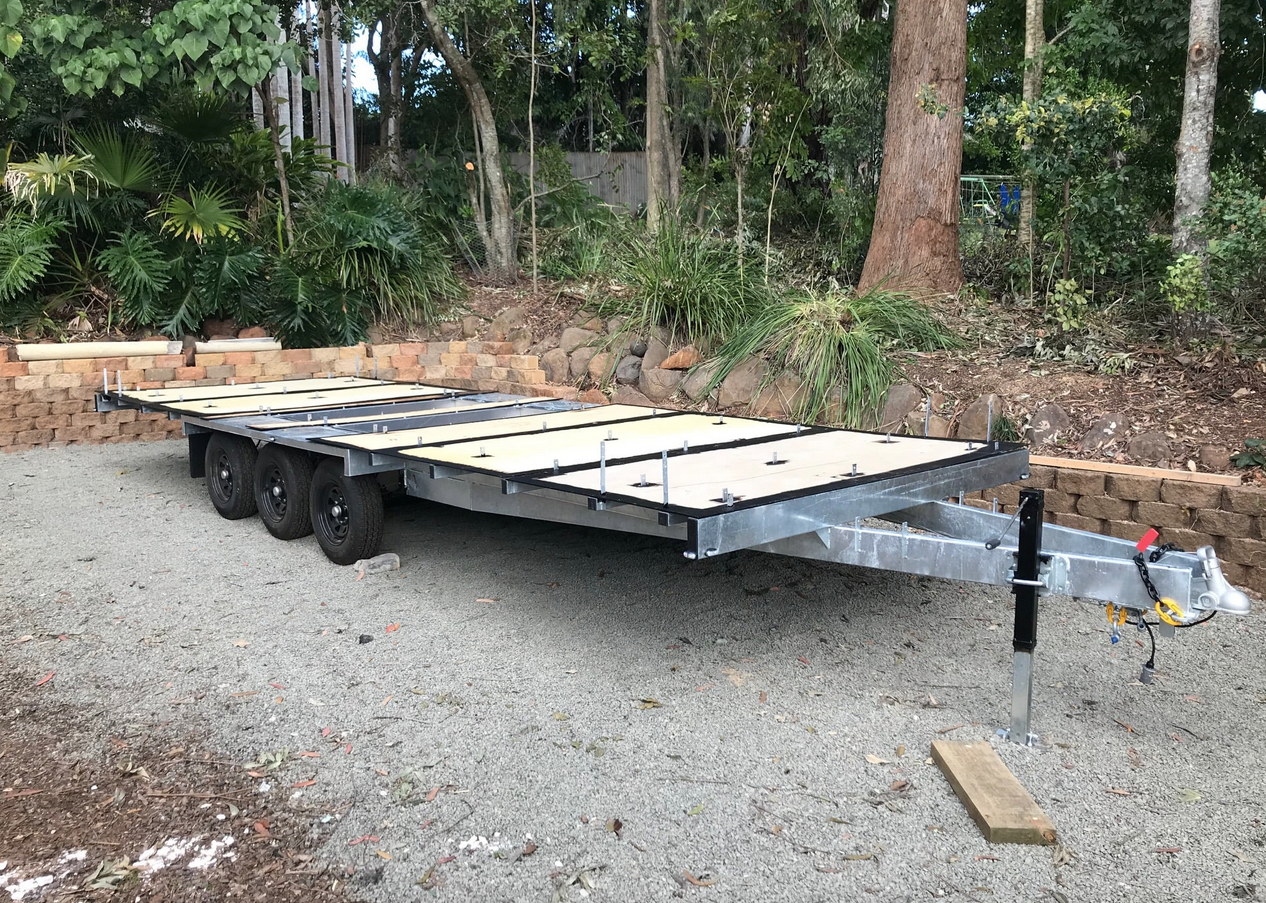
  • Length: 8 meters
  • Width: Standard 2.4 meters wide
  • Style: Flat Top
  • Finish: Hot Dip Galvanized 
  • Build Period: 2 Years
  • Build: DIY from Builder, Carpenter 

You can do this too!

Aaron & Amanda started their tiny house building journey by taking How To Build A Tiny House – The Australian Online Course with at Tiny House University.

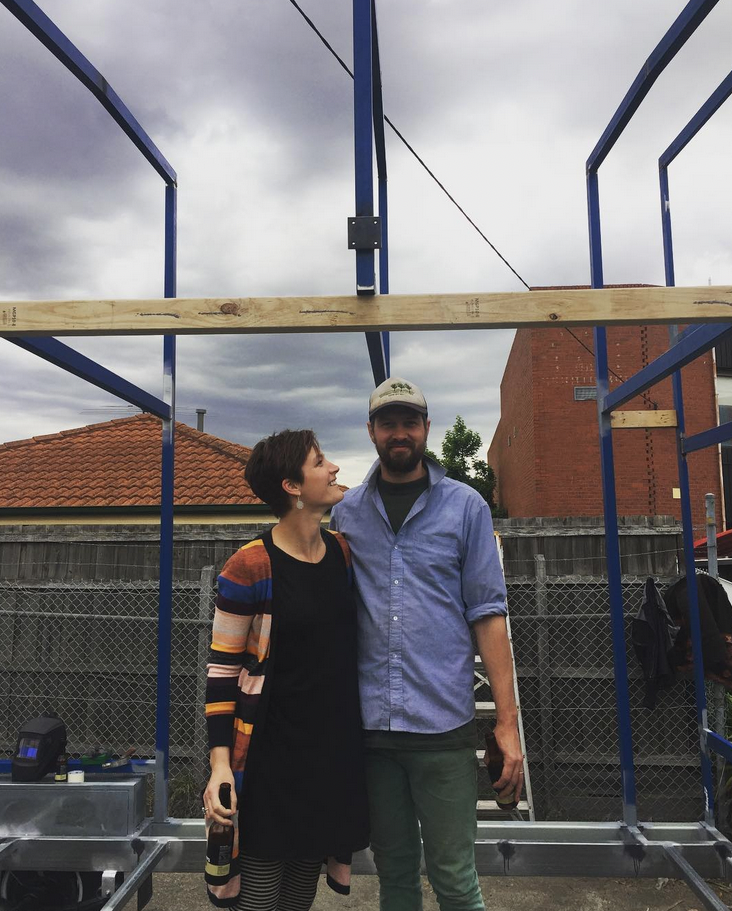
They took all the knowledge that they gained in that course and bought a Fred’s Tiny House Trailer. They then DIY built their tiny house on wheels on Aaron’s father’s property, where they still live. 

Start here:
Two Kids in a tiny house? Real stories of family life in a tiny house on wheels

Jesse & Esther: Two Kids In A Tiny House? Candid Tiny House Podcast E1, S3

Two Kids in a tiny house? Real stories of family life in a tiny house on wheels
Candid Tiny House podcast

Jesse & Esther

Candid Tiny House Podcast E1, S3

Two Kids in a Tiny House?

What is it really like living in a tiny house with kids?

For Jesse and Esther, their tiny house journey began with a dream shared by many people exploring the tiny house movement in Australia: more freedom, lower housing costs, and a simpler way of living.

But the journey didn’t unfold exactly as planned.

Instead, it became something deeper — a story of building, family life, the world changing around them, and the realities of raising children in a tiny house on wheels.

“We moved in in December 2019,” Esther recalls. “But it wasn’t finished yet. We were still using my parents’ bathroom inside the house.”

Their tiny house was parked in the driveway of Esther’s parents’ property on Victoria’s Mornington Peninsula. The plan was to finish the remaining work while living nearby.

Then the pandemic arrived.

“When the pandemic hit early 2020,” Esther says, “we realised we needed to finish the bathroom so we could be completely self-contained if we needed to isolate.”

Within weeks, the tiny house became their fully functioning home.

And soon, their small home would welcome another family member.

Building a Tiny House: Budget Expectations vs Reality

Like many people building a tiny house for the first time, Jesse and Esther underestimated the cost.

Their original budget?

“About sixty thousand,” Jesse says. “That was pretty ambitious.”

The reality was closer to double.

“I think roughly it would have been about $120,000 in the end,” he says. “And that’s not including my labour!”

Financial pressure quickly became part of the journey. Rent was consuming the money they needed to finish their tiny house.

“We moved in with Mum and Dad because we were struggling to pay rent and finish the tiny house,” Esther explains. “All our work money was going to rent, so the project just kept stalling.”

Living with family allowed them to redirect money into completing the build, but when the tiny house finally arrived, the reality was overwhelming.

“I remember when it got towed down here,” Esther laughs. “I was so excited. And then I looked inside and thought, ‘Oh my God… there’s still so much to do!’”

For months, Jesse spent nearly every spare moment working on it.

“It was very much a shell,” he says. “There was no bathroom, no kitchen bench, no stairs… lots of things still missing.”

Can You Live in a Tiny House While Finishing the Build?

Many people assume they can move into a tiny house before it’s finished.

Jesse and Esther quickly learned how difficult that can be — especially with a young child.
“You have to get everybody out because there’s dust and preparation, all that kind of thing.”
Esther adds, “there’s just no space for anyone to be.”

Eventually they had to move out temporarily so Jesse could safely finish parts of the build.

A Baby Born in a Tiny House During Lockdown

Just as they were settling into tiny house life, another life change arrived.

“We moved into the tiny house and then found out we were pregnant,” Esther says.

Their second child, Forrest, was born in August 2020 during the COVID lockdowns.

Instead of heading to hospital, they chose a home birth inside the tiny house.

“We put extra supports under the floor and set up a birthing pool right where we’re sitting now,” Jesse says. “So Forrest was actually born in the tiny house.”

The experience became one of the most meaningful moments in their journey.

“My auntie, who’s a home birth midwife, was here,” she says. “My brother was here bringing buckets of water for the pool. And as soon as Forrest was born, everyone could come out and meet him.”

During a time when many families were isolated, their support network made a huge difference.

“In some ways it was the hardest time to move into a tiny house,” Esther reflects. “But in other ways we felt really blessed to be where we were.”

Living in a Tiny House with Kids

When their first child Obi was three, tiny house life felt magical.

“He loved his loft,” Esther says. “Whenever people came to visit he’d say, ‘Come up to my loft!’ He was so proud of it.”

But living in a tiny house with two kids created new challenges.

“Sound privacy has been one of the hardest things,” Jesse explains. “If one child wakes up, everyone wakes up.”

Esther remembers how sensitive Obi was at bedtime.

“He wanted complete darkness and silence,” she says. “So once he was going to bed we couldn’t make a sound.”

Space also became a safety concern once baby Forrest began crawling.

“With the loft ladders it was hard to install proper safety gates,” Esther says. “Eventually it got really stressful because I couldn’t even step outside to hang washing without worrying he’d wake up and crawl off the edge.”

They temporarily moved out for a summer while Jesse redesigned parts of the layout.

The Emotional Reality of Family Life in a Tiny House

Living in a tiny house as a family also brings emotional challenges.

“With four people in such a small space,” Esther says, “if one person has big feelings, everybody feels it.”

Young children can fill a tiny house with energy and emotion. Sometimes the only quiet space was the bathroom.

“If I needed to take ten deep breaths so I didn’t explode,” she laughs, “that was the only place you could hide.”

But the closeness also created moments of deep connection.

“One of my favourite things,” Esther says softly, “was sitting on the couch at night and being able to hear both my kids breathing.”

“It was just so nice to know they were both safe.”

The Mental Load of Building Your Own Tiny House

For Jesse, the tiny house was more than a home — it was an ongoing project.

“He disappears into tiny house brain,” Esther says. “He’s always thinking about materials, what could be improved, what needs fixing.”

Jesse recognises the feeling. “I’m doing it right now!” He laughs. “I’m looking at one of the boards right now thinking, ‘Oh yeah, that one got a bit mouldy when I left it in the weather too long.’”

Living inside your own experimental build can make it difficult to switch off, its like living inside your own apprenticeship.

Why They Decided to Sell Their Tiny House

Over time, Jesse and Esther realised their tiny house dream had changed. Originally they imagined moving their tiny house around and living more flexibly. Instead, they found themselves parked in the same driveway for years.

“We kind of got stuck,” Esther explains. “We had this house but nowhere to move it to.”

Buying land had become financially impossible.

“Even if we stayed here another couple of years saving,” she says, “it still felt like we might never get there.”

Living in close proximity with family also had limits.

“My parents have been incredibly generous,” Esther says. “But we’ve been here for three years. It’s just very close living.”

Selling the tiny house became the next step.

“If we sell it,” she says, “we’ll have the money to move on to the next stage of life.”

Is Living in a Tiny House Worth It?

Despite the challenges, Jesse and Esther don’t see their tiny house journey as a failure. Living tiny helped them save money and live according to their ethics.

Jesse still believes strongly in the idea of tiny houses on wheels. “Since starting building work, I’ve seen houses sinking into the ground and foundation issues,” he says. “With a tiny house on a trailer, if it’s not level you just re-level it.”

Esther also believes the movement has an important future. “It feels like the way of the future,” she says. “Living smaller, using less space, spending more time outside.”

But she also acknowledges the difficulty of choosing a lifestyle that challenges the status quo.


“Tiny living looks beautiful and exciting,” she says. “But what people don’t realise is how hard it is to go against the way society is set up.”

For Jesse and Esther, the tiny house was not the final destination. It was a chapter. And three years on, in 2025 they have another chapter coming – but you have to tune in to the interview to hear about it!

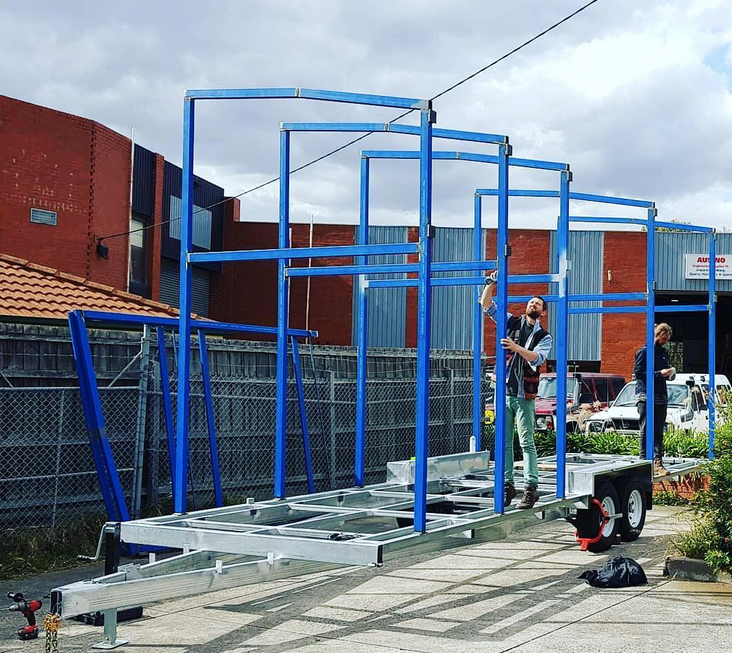
steel-frame-on-tiny-house-trailer-build-australia
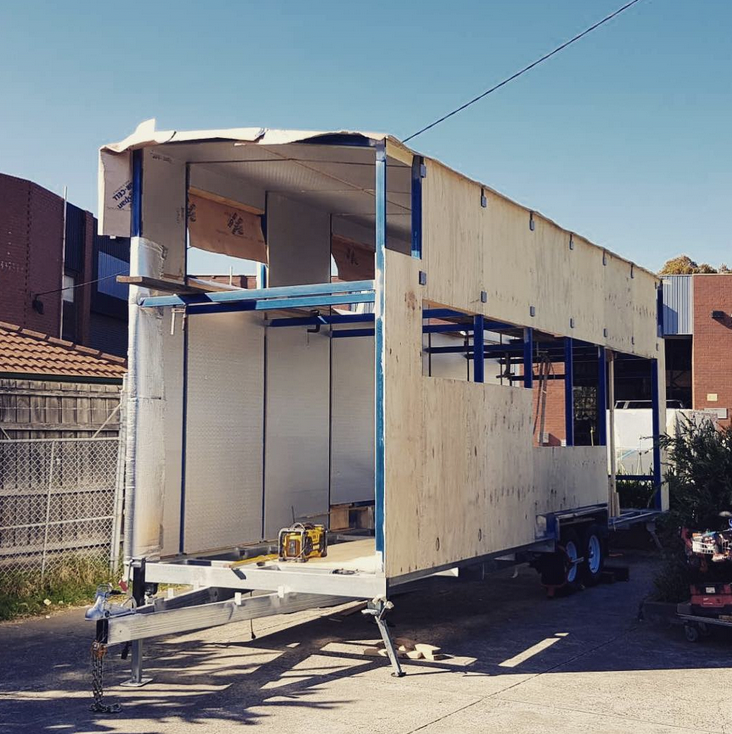
tiny-house-SIPS-insulation-build-on-wheels
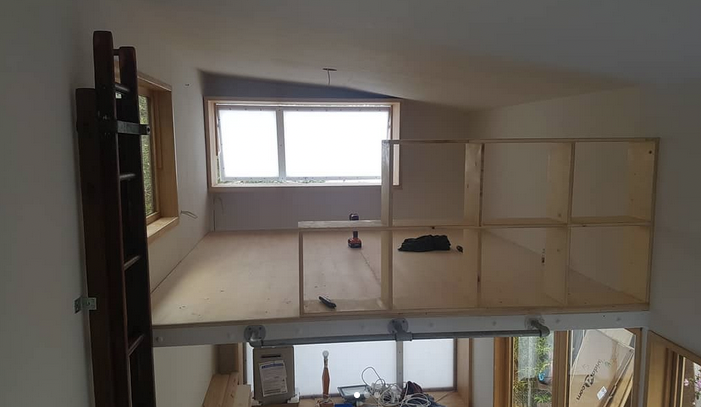
tiny-house-loft-before-furnished-diy-build-australia
tiny-house-shelf-installation-storage-build
tiny_house_japandi_timber_interior
tiny-house-large-loft-ladders
tiny_house_living_with_kids

Trailer Details

  • Length: 8.4 meters (No longer available. Closest is 8 meters or 9 meters long.)
  • Width: Standard 2.4 meters wide
  • Style: Protruding Wheel Guard
  • Finish: Hot Dip Galvanized 
  • Build Period: 18 months
  • Hybrid Build: Some Professional Build, mostly DIY. 

You can do this too!

Jesse and Esther started their tiny house building journey by having a consultation with Fred and attending a Weekend Workshop with Fred’s Tiny Houses.

They took all the knowledge that they gained in that course and bought a Fred’s Tiny House Trailer. They then co-built with a professional architect and took over the build as DIY builders. 

Start here:

esther-and-jesse-tiny-house-build-diy-family-with-trailer
Lou Candid Tiny House Interview, DIY building in Northern Rivers, NSW Australia

Lou E4, S1 Candid Tiny House Podcast

Lou Candid Tiny House Interview, DIY building in Northern Rivers, NSW Australia

Lou E4, S1 Candid Tiny House Podcast

Candid Tiny House podcast

Lou’s Tiny House Journey: From Travel Writer to DIY Builder in Australia

From Grounded Traveller to Tiny House Builder

What does an award-winning travel writer do when international borders slam shut and even domestic adventures are confined to one’s home state?

She builds a monument to mobility.
A talisman of freedom.
A home with liberation as its foundation.

Lou built herself… a tiny house on wheels.

With no previous building experience, she dove into the project, supported by her partner and a retired builder friend. Her learning curve? Steep. Her approach? Entirely her own.

Designing a Tiny House on Paper

Rather than using 3D modelling software, Lou went old-school—designing her tiny house entirely on paper.
“I’m pretty confident with a pen and paper,” she mused, explaining how this hands-on method gave her an intimate understanding of her home and helped her communicate clearly with her build team.

But before a single screw was driven, Lou put her finely honed research skills to work. Months of reading, questioning, and weighing up options shaped every choice. She attended Fred’s Weekend Workshop in southern Queensland and took the Online Course too. 

The Creative Side of Building a Tiny House

Lou was surprised by just how imaginative the build became.

“It’s a very imaginative, creative process. I think that’s probably something I didn’t anticipate. I knew it was going to be practical, about the skills, working things out… and the maths! But I didn’t realise how creative it would be until I was in it.”

Learning DIY Building Skills on the Job

Like many DIY builders, she learnt as she went.

“My respect for tradies and builders, for tradespeople in general, has just skyrocketed.”

Her advice for future tiny house builders? Learn to use power tools before you begin, and get some practice with smaller projects first:

“Make a shelf or a box—something little—before you take on the whole house.”

A Different Kind of Adventure

For someone whose life had always been full of outward-facing adventures, building a tiny house was an entirely different kind of journey—an inward one. It tested her patience, her creativity, and her ability to adapt.

The results speak for themselves. Lou’s finished home is beautiful, functional, and deeply personal.


Listen to Lou’s Full Story on the Candid Tiny House Podcast

In the interview, Lou shares:

  • A breakdown of her budget, including the big-ticket items

  • How she designed lighting to create different moods and spaces

  • Staging her off-grid systems over time

  • Managing the stress of such a big, high-stakes project


Follow Lou’s Journey

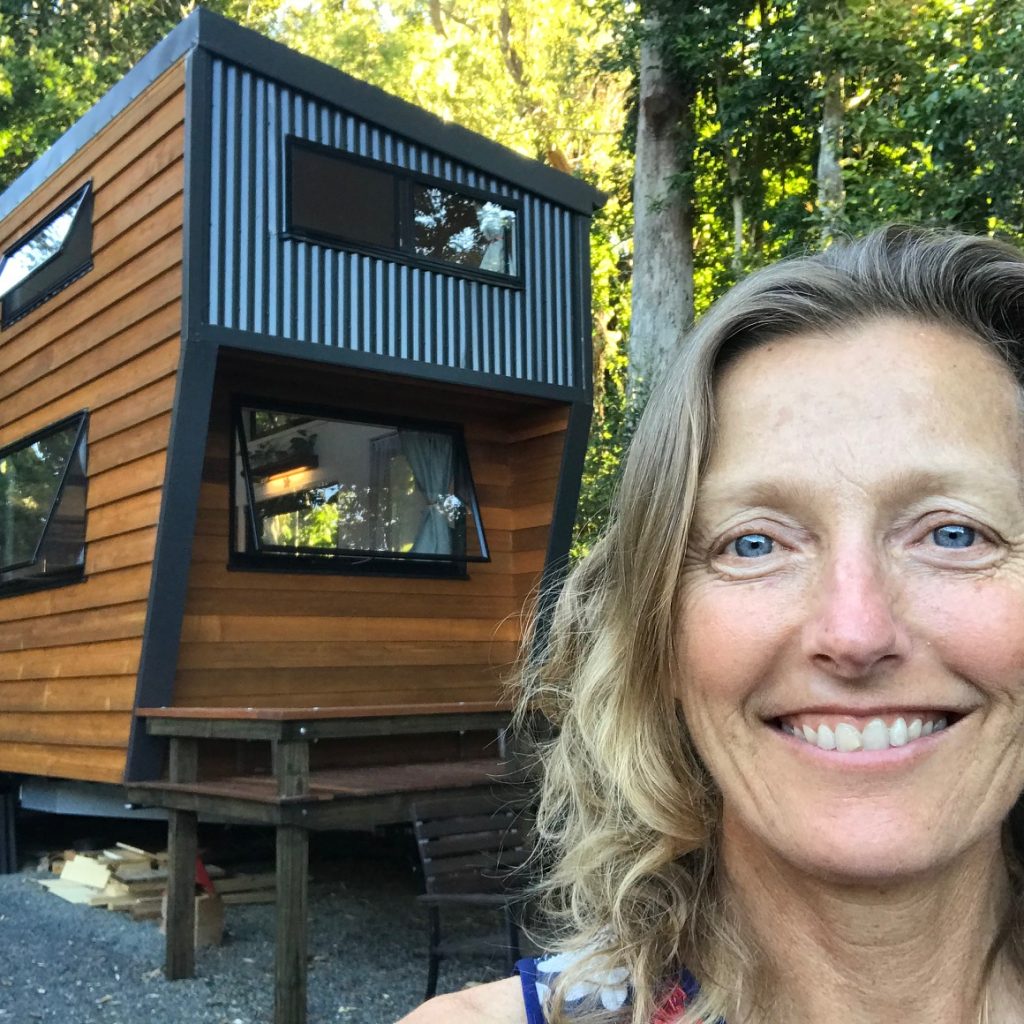
7.2 meter tiny house DIY built byron bay
Exterior view tiny house photo credit living big in a tiny house.png
Photo Credit "Living Big in a Tiny House"

Lou’s Tiny House Build Details

  • Trailer length: 7.2 m Hot Dip Galvanized

  • Width: 2400 mm (Option A)

  • Style: Flat top

  • Trailer received: September 2020

  • Build started: September 2020

  • Moved in: March 2021

Lou attended How To Build a Tiny House

You can do this too!

Lou started her tiny house building journey by attending a Weekend Workshop with Fred’s Tiny Houses.

She took all the knowledge that they gained in that course and bought a Fred’s Tiny House Trailer. She then built a successful tiny house which they lived in for three years, saving enough money to launch themselves into the next phase of life. 

Start Here:

learn how to build an off grid tiny house on wheels in Australia
Lou in completed tiny house interior stair case. Photo credit Living Big in a Tiny House

Lou Wrote A Memoir!

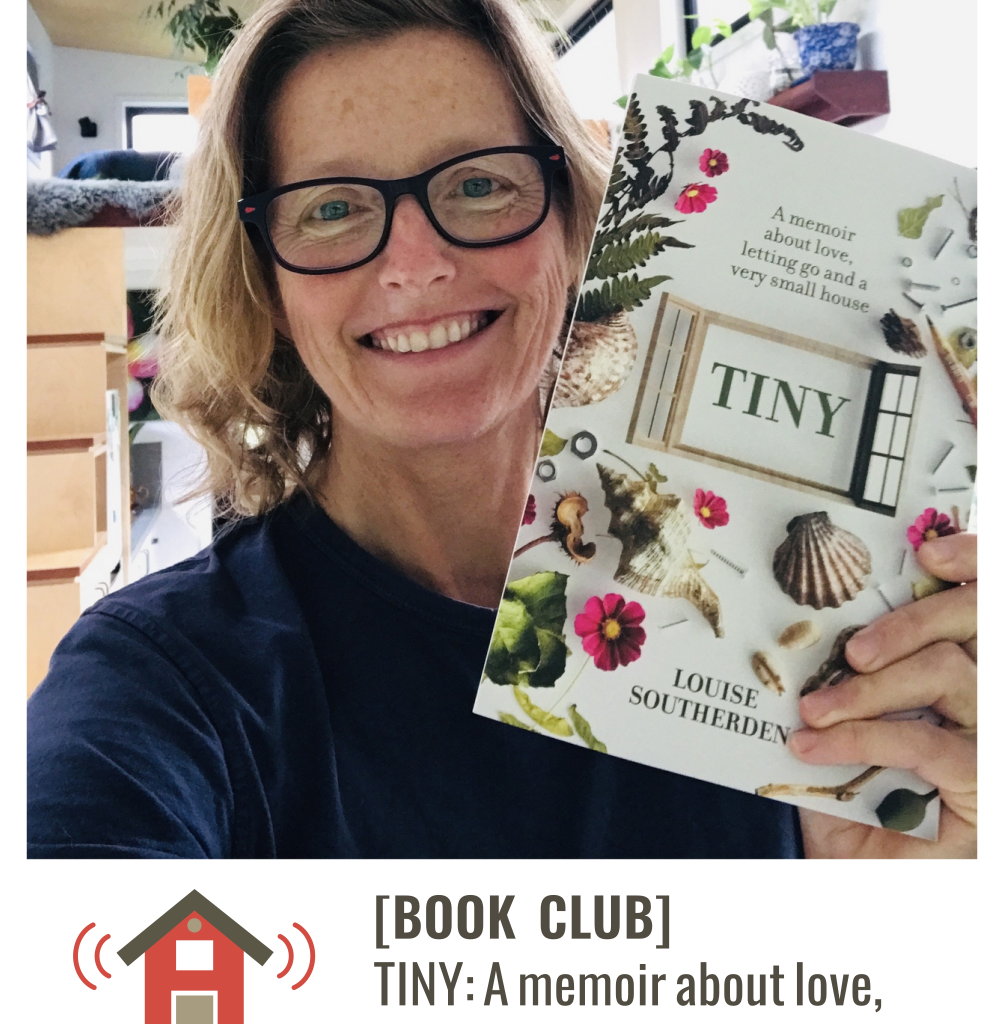
TINY: A Memoir about Love, Letting Go and a Very Small House

Tiny is a memoir by award-winning travel writer Louise Southerden about her quest to create a simpler way of life by building her very own tiny house. With no prior building experience, Louise decided to build a tiny house with her partner, Max, which tested an already unstable relationship. Over the year and a half of planning and construction of her tiny house, Louise witnessed her new home coming together as her relationship was falling apart. Alongside her burgeoning construction skills, Louise learned about love, home, forgiveness and what we really need to be happy.

This is an intensely personal story about searching for home and true love, two of life’s most fundamental needs, risking everything, failing and finding ways to cope, and discovering that what we need isn’t always what we thought we wanted.” ~From GoodReads. 

In our interview, Lou catches us up on what it was like to write about building the house while living in it, as well as moving the tiny house to a different property, setting up the site and things she’s learned along the way. Enjoy!

Lou Wrote a memoir about Building a Tiny House on Wheels